Spiritual Exercise?

spiritual exerciseThe Hebrew Epistle gives its readers a glimpse into the measure of sanctification we are exhorted to walk through. To some, this may be a grudge, but for others, it is a doorway into glory! In chapter 12, we read of bastards and sons. “Sons” are those who endure God’s dealings and chastisement, while “bastards” are those who flee the spiritual scene before the work is complete:

“…Ye have forgotten the exhortation which speaketh unto you as unto children, My son, despise not thou the chastening of the Lord, nor faint when thou art rebuked of him: For whom the Lord loveth he chasteneth, and scourgeth every son whom he receiveth. If ye endure chastening, God dealeth with you as with sons; for what son is he whom the father chasteneth not? But if ye be without chastisement, whereof all are partakers, then are ye bastards, and not sons. Furthermore we have had fathers of our flesh which corrected us, and we gave them reverence: shall we not much rather be in subjection unto the Father of spirits, and live? For they verily for a few days chastened us after their own pleasure; but he for our profit, that we might be partakers of his holiness. Now no chastening for the present seemeth to be joyous, but grievous: nevertheless afterward it yieldeth the peaceable fruit of righteousness unto them which are exercised thereby” (Heb. 12:5-11).

Interestingly, Paul tells us of the extent of such chastisement. He goes so far to say that we’re to be “exercised” in God’s dealings.

In the original Greek, this phrase is “Gumnazo” and literally means, “to exercise naked“. The term is borrowed from the Grecian Games, the Palaestra, or school of athletics, of Paul’s day, and is used as a parallel to the spiritual athlete, the Christian. In Paul’s day, these star athletes would compete in the nude. They were so outrageously toned, however, that they were not embarrassed or ashamed to bare all before the large crowds.. In fact, it was a point of pride that they could compete naked. How odd that Paul uses this term to parallel and define the extent of the believer’s chastisement! We too are to exercise to this extreme degree. We too are to become so thoroughly purged by God’s Word, that we can be likened to natural athletic perfection! Once this “training” is complete, no ounce of sin’s fat will rear it’s ugly head, all because of the furnace we’ve made our home; all because of the extreme degree of reckoning ourselves dead indeed unto sin and fully exercised “unto godliness” (Rom. 6:11; 1 Tim. 4:7).

Are you on the Holy Ghost treadmill today, sweating off your old man? Are you in the school of affliction evermore learning the spiritual art of faith, hope, patience, experience, humility, self-denial and resignation of will (Ps. 119:71)? Are you walking, as a son, in God’s perpetual dealing and chastening, being pounded upon by God’s sanctifying, holy Word (Jer. 23:29; 5:14)? Don’t jump off just yet; Don’t flee the “gym” prematurely. Stay upon this holy road until you likewise can exercise in the buff, unembarrassed and unashamed!

“A Fruitful Calling”

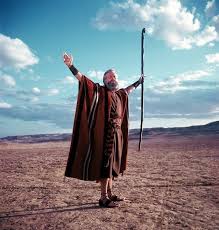
Moses with StaffExodus chapters 2 through 4 give the diligent student great insight into the divine processes of fulfilling one’s calling. These verses relate to Moses, both before, during and after his trial on the backside of the desert, and they relate to you and I as well. We will see that Moses began his journey in the flesh and, as a result, wound up a dismal failure. Later, however, he undergoes an interesting change: it’s a change that proves to alter the course of his life and ministry. Let’s observe.

Moses and the Flesh

Personally, I believe Moses was well-aware of his spiritual calling long before he ever walked in it. He was awake to God’s purpose for his life long before he ever received divine confirmation on Mt. Horeb. Acts chapter 7 shed some light upon this fact:

And Moses was learned in all the wisdom of the Egyptians, and was mighty in words and in deeds. And when he was full forty years old, it came into his heart to visit his brethren the children of Israel. And seeing one of them suffer wrong, he defended him, and avenged him that was oppressed, and smote the Egyptian: For he supposed his brethren would have understood how that God by his hand would deliver them: but they understood not” (Acts 7:22-25).

Moses knew of his calling to be a deliverer, albeit in part, and he supposed his Hebrew brethren would bear witness to it. They did not. The calling of God was alive deep within Moses’ heart, but he had to wait patiently for it to manifest in real-time. Sound familiar? Many of us have walked in such shoes. For Moses, this waiting period lasted 40 long years. He must have been quite frustrated as he witnessed the torture of his Hebrew family: He knew he was called to deliver them one day, but God had not yet released him. What is a man to do? Moses’ response to such turmoil proves to almost ruin him! He sought to fulfill his calling in the flesh. He sought to be God’s deliverer by the strength of his own hands, and he failed miserably!

And it came to pass in those days, when Moses was grown, that he went out unto his brethren, and looked on their burdens: and he spied an Egyptian smiting an Hebrew, one of his brethren. And he looked this way and that way, and when he saw that there was no man, he slew the Egyptian, and hid him in the sand. And when he went out the second day, behold, two men of the Hebrews strove together: and he said to him that did the wrong, Wherefore smitest thou thy fellow? And he said, Who made thee a prince and a judge over us? intendest thou to kill me, as thou killedst the Egyptian? And Moses feared, and said, Surely this thing is known. Now when Pharaoh heard this thing, he sought to slay Moses. But Moses fled from the face of Pharaoh, and dwelt in the land of Midian: and he sat down by a well” (Exod. 2:11-15). 

It’s very important to note the instruments of Moses’ failure: His hands. The original Hebrew reveals that Moses slew the Egyptian with his bare hands, not with a rock or a stone as so many interpretations suggest. Moses sought to become God’s deliverer with his own human hands, on his own carnal terms, by his own failing power, and on his own flawed timetable. His fleshy hands almost ruined his calling, and it’s these very hands that God will eventually alter and change. And why? Because “the gifts and calling of God are without repentance” (Rom. 11:29). This experience will prove to teach Moses the dire importance of walking by the Spirit.

This I say then, Walk in the Spirit, and ye shall not fulfill the lust of the flesh” (Gal. 5:16).

Moses and the Spirit

Thankfully, beginning in Exodus chapter 3, Moses’ story starts to change. His calling to be a deliverer remains intact, but this time (another 40 years later) Moses does it God’s way.

Now Moses kept the flock of Jethro his father in law, the priest of Midian: and he led the flock to the backside of the desert, and came to the mountain of God, even to Horeb. And the angel of the Lord appeared unto him in a flame of fire out of the midst of a bush: and he looked, and, behold, the bush burned with fire, and the bush was not consumed. And Moses said, I will now turn aside, and see this great sight, why the bush is not burnt. And when the Lord saw that he turned aside to see, God called unto him out of the midst of the bush, and said, Moses, Moses. And he said, Here am I. And he said, Draw not nigh hither: put off thy shoes from off thy feet, for the place whereon thou standest is holy ground. Moreover he said, I am the God of thy father, the God of Abraham, the God of Isaac, and the God of Jacob. And Moses hid his face; for he was afraid to look upon God. And the Lord said, I have surely seen the affliction of my people which are in Egypt, and have heard their cry by reason of their taskmasters; for I know their sorrows; And I am come down to deliver them out of the hand of the Egyptians, and to bring them up out of that land unto a good land and a large, unto a land flowing with milk and honey; unto the place of the Canaanites, and the Hittites, and the Amorites, and the Perizzites, and the Hivites, and the Jebusites. Now therefore, behold, the cry of the children of Israel is come unto me: and I have also seen the oppression wherewith the Egyptians oppress them. Come now therefore, and I will send thee unto Pharaoh, that thou mayest bring forth my people the children of Israel out of Egypt. And Moses said unto God, Who am I, that I should go unto Pharaoh, and that I should bring forth the children of Israel out of Egypt? And he said, Certainly I will be with thee; and this shall be a token unto thee, that I have sent thee: When thou hast brought forth the people out of Egypt, ye shall serve God upon this mountain” (Exod. 3:1-12). 

Let us notice the radical difference between Moses’ initial failure and his present spiritual equipping. This time, quite different from before, Moses’ actions were spurred by God’s glory. His hunger for Jesus caused him to turn aside to behold the greatness of His Maker (Exod. 3:1-4). This time, unlike the first, Moses was not so consumed by the cries of his flesh. In fact, he removed his shoes as he stood among God’s holiness (Exod. 3:5). Scholars tell us that these shoes were made of dried flesh! What a lesson for us! This time, Moses acted according to the voice of God, as opposed to his own carnal and zealous affections (Exod. 3:6-10; Rom. 10:2). This time, much unlike before, Moses was given a “token” or “proof” of his calling (Exod. 3:12)! What a difference divine accreditation will make!

Finally, let us notice the change in Moses’ instruments: His hands. Before, Moses’ hands were the very vehicle of his failure: they were but carnal hands of flesh and empty hands of failure. This time, however, the story significantly changes. God asks Moses a very pertinent question:

And the Lord said unto [Moses], What is that in thine hand?” (Exod. 4:2).

The answer to this question will prove to be a source of rich instruction. We can well-relate to Moses as God transforms him from hack to hero, and from wayward to victorious! We would be wise to take heed to Moses’ transformation as we too seek to make our own calling and election sure (2 Pet. 1:10). 40 years on the backside of the desert proved to humble Moses a great deal. Like Moses, we shouldn’t run from God’s furnace of change and renewal! It will be our hope for true fruitfulness and our catalyst for rich bounty. The languishing desert afforded Moses invaluable encounters with Almighty God, and the glory of such communion fitted his hands to be no longer empty!

And Moses answered and said, But, behold, they will not believe me, nor hearken unto my voice: for they will say, The Lord hath not appeared unto thee. And the Lord said unto him, What is that in thine hand? And he said, A rod. And he said, Cast it on the ground. And he cast it on the ground, and it became a serpent; and Moses fled from before it. And the Lord said unto Moses, Put forth thine hand, and take it by the tail. And he put forth his hand, and caught it, and it became a rod in his hand: That they may believe that the Lord God of their fathers, the God of Abraham, the God of Isaac, and the God of Jacob, hath appeared unto thee” (Exod. 4:1-5).

The Rod of Authority

Yes, Moses hands are no longer empty! And why? Because he is given a rod (Exod. 4:1-5)! This was to be a sign of Moses’ divine accreditation (Exod. 4:5). Throughout Scripture, the “rod” symbolizes authority, ruler-ship, guidance, stability, strength, and correction (Ps. 2:9; Rev. 2:26-27; 19:15; 11:1-1-2; 12:5; Ezek. 42:15-20; Ps. 23:4; 89:32; 110:2; Mic. 7:14; Prov. 13:24; 22:15; 26:3; 29:15). As such, God would use Moses to be His authoritative mouthpiece, and His guide for the nation of Israel. For Moses, this rod would prove to equip him with divine ability, strength, boldness and capability. The fact that this rod transformed into a serpent and then back into a rod proves Moses’ newfound dominion over the devil. No longer could the enemy successfully condemn Moses nor dissuade him from his divine purpose (Acts 28:3-6; Lk. 10:19). Oh that we too would but wait for God to move! The difference is night and day! Moses’ hands were no longer empty!

The LORD shall send the rod of thy strength out of Zion: rule thou in the midst of thine enemies” (Ps. 110:2).

Provision for Sin and Weakness

A final observation we will make concerning Moses’ hands is found in Exodus 4:6-7. Here, God tells Moses to put his hand into his bosom and then take it out. As he does, his hand becomes “leprous as snow” (Exod. 4:6). When Moses puts his leprous hand back into his bosom it becomes whole and healed again, as before. This was yet another sign that God was sending and endorsing him (Exod. 4:8).

And the Lord said furthermore unto him, Put now thine hand into thy bosom. And he put his hand into his bosom: and when he took it out, behold, his hand was leprous as snow. And he said, Put thine hand into thy bosom again. And he put his hand into his bosom again; and plucked it out of his bosom, and, behold, it was turned again as his other flesh” (Exod. 4:6-7). 

To properly interpret these miraculous events, we must consider the Scriptural use of leprosy. Similar to the “rod“, leprosy too carries thematic and spiritual significance as we consider it with open hearts (1 Cor. 2:11-16).

Throughout the Bible, leprosy symbolizes sin and transgression. It speaks of carnal uncleanness, defilement and filth (Matt. 8:3; 2 Chron. 26:19; Mk. 1:42; Lk. 5:12-13; Lev. 13:44; Num. 12:10; 2 Kgs. 5:27). The fact that Moses was now given divine power over the curses of leprosy are quite significant. Now, because he waited on God to fulfill his calling, Moses can no longer fret over the many weaknesses of his fallen flesh. He may still be defiled in his own eyes, and he may still wrestle with sin and uncleanness, but it no longer has to dictate the path that he walks. His calling and election can be made sure despite his countless human flops and failures! His leprous hand becomes whole as he obeys divine instruction. His calling too will become whole as he relies on God as the ultimate source of deliverance. God interposes His grace and cleansing power over the threat of filthy sin! What a wonder! Like Moses, we no longer need to rely on the ability and cleanliness of our own hands. We simply must trust and obey our great Guide. He will lead us to life everlasting and grow for us an abundance of fruit.

Oh what a difference the harsh desert will make! The hand of flesh caused Moses to fail, but the staff of his God made him prosper! Dear reader, what’s in your hand today? God has called you and set you apart; He is equipping you even now. But we mustn’t be hasty or zealous in a carnal sense. Just like with the Hebrew slaves, God is simply waiting for the earth to cry out to Him (Exod. 3:7-8). When they do, He’ll find a people in the furnace of preparation, hungry, ready and waiting in the glory. He will then fully equip us for our tasks, and gird us up completely. For Moses, 100 fold fruit was the proven result (Exod. 4:31), and it will be no different for us. God is trying to put something in our hands today, and whatever God does is forever. He doesn’t need our human hands, and neither do we (Col. 2:11-12; Mk. 14:58; Acts 17:24; 2 Cor. 5:1; Eph. 2:11)!

It is God that girdeth me with strength, and maketh my way perfect. He maketh my feet like hinds’ feet, and setteth me upon my high places. He teacheth my hands to war, so that a bow of steel is broken by mine arms. Thou hast also given me the shield of thy salvation: and thy right hand hath holden me up, and thy gentleness hath made me great” (Ps. 18:32-35).

“Wells and Cisterns”

living-waterPart 2 of 2

We’ve just recently seen several significant details surrounding Jesus’ identity as the “well” of living water in John chapter 4. He is the only true spring of salvation, and from Him flows the sweetest of all fountains! David reminds us, “For with Thee is the fountain of life: in Thy light shall we see light!” (Ps. 36:9).

All saints will agree with this glorious identity when it pertains to King Jesus (Rev. 21:6), but the diligent student of Scripture will no doubt glean a bit more from Jesus’ famous words. To the Samaritan woman He said, “Whosoever drinketh of this water shall thirst again: But whosoever drinketh of the water that I shall give him shall never thirst; but the water that I shall give him shall be in him a well of water springing up into everlasting life” (Jn. 4:13-14). Yes, the living water we now daily feast upon is to become a very “well” itself! The man who habitually partakes of God’s glorious out-pour will be a man who grows radically transformed into God’s well for dying creation! Life-giving water will now be seen “in him” and through him (vs. 14). No longer will he be but a recipient of refreshing, now he will be a conduit. The glory of God will spring up and leap out from the well that’s been created deep within. The Holy Spirit will readily flow through him, as a “well” sent to feed and water the famished of the earth. 

But as many as received (Jesus), to them gave he power to become the sons of God, even to them that believe on his name: Which were born, not of blood, nor of the will of the flesh, nor of the will of man, but of God” (Jn. 1:12-13). 

 Reader, the same special, inward qualities that Jesus displayed to the earth are to be worked within us, His sons, as well. We’re to become conduits of God’s loving-kindness, and vessels overflowing with His glory. This will be such a sweet feast for fallen creation (Rom. 8:18-19)! Mankind’s parched lips and arid hearts will finally taste living water once and for all! And God wants you and I to become the very “well” from which His gracious drink is offered. What an honor! We’ll light the way and lead humanity to the only sure spring!

Ye are the light(s) of the world. A city that is set on an hill cannot be hid” (Matt. 5:14).

“…Thou thyself art a guide of the blind, a light of them which are in darkness. An instructor of the foolish, [and] a teacher of babes, which hast the form of knowledge and of the truth in the law” (Rom. 2:19-20).

My little children, of whom I travail in birth again until Christ be formed in you” (Gal. 4:19).

Men will be able to drink of the fruit of your life! They will be able to partake of the well dug deep within you! Today, in our weakness, the bride of Christ may appear to be nothing more than “a spring shut up, [or] a fountain sealed” (Song. 4:12). Yet, God is faithfully completing His work deep within (Jas. 1:4). Eventually, this bride will channel God’s glory to the earth. She will be seen feeding God’s friends (Song. 5:1; 8:8-10)! Out of her belly will flow rivers of living water (Jn. 7:37-39). A well of glory will have been created inside! We will become what we’ve spent a lifetime beholding.

But friends, as always, there is a awful counterfeit! There’s always an easy route and a cheapened, pseudo-well that men may form. The Bible calls it a “cistern“.

For my people have committed two evils; they have forsaken me the fountain of living waters, and hewed them out cisterns, broken cisterns, that can hold no water” (Jer. 2:13).

broken-cisternA cistern is a vessel that only momentarily holds water; it cannot dispense or distribute it to others. Contrary to a well, a cistern does not possess a true life source within it. Instead, it must be filled and re-filled in order to be useful. A cistern is filled for it’s own sake. This is why the Bible tells us cisterns do not profit (Jer. 2:11). If left alone, a cistern’s water will soon turn stagnant or dry up. What a pertinent picture of our present day! Far too many Christians are nothing more than cisterns, and far too few give any care to becoming wells of life. The people of God are far too often in it for themselves; we’re spiritually selfish! Which sort of vessel would you rather be? A well or a cistern? Are we content with but a mere pot of water to quench our own thirsts? Or do we seek to grow God’s life within us, so that one day it can spring out unto others? The choice is ours.

Whether therefore ye eat, or drink, or whatsoever ye do, do all to the glory of God… Even as I please all men in all things, not seeking mine own profit, but the profit of many, that they may be saved” (1 Cor. 10:31-33). 

When the nations are weary, can they come and drink of the fruit in your life (Jn. 4:6)? Can they partake of the victory and refreshment God’s granted you? Friends, this is what Jesus is after! And this is what creation is desperate for.

“The Well of Salvation”

jesus-at-the-wellPart 1 of 2

Jesus therefore being wearied with his journey, sat thus on the well” (Jn. 4:6).

Dear friends, this short and simple verse of Scripture illustrates a supremely important principle of interpretation, the application of which will surely become a great aid toward a deeper and more profound understanding of a Biblical passage. In short, this verse is an example of the sort of truth that may be gleaned as we consider the location and scene in which a particular event has occurred, rather than limiting our view to words and characters only. Yes, the various locales of Scriptural events are often equally as important as the events themselves. Students of Scripture are well-acquainted with the idea that even the seemingly unimportant details of God’s Word will often prove to hold significant and eternal value. Biblical locations are no different. The specific details of a Biblical scene will often supply key information into the depth of meaning God has intended for us. We see this truth play out several times from cover to cover. We will observe but a few.

First, let’s consider Egypt. Because Egypt was the ancient place from which our Lord miraculously delivered the children of Israel, it thereby comes to symbolize our present-tense spiritual deliverance too. It typifies the awful place from which God’s mercy set us free upon our conversion. Before such deliverance, much like the Hebrew slaves, we were held in the harsh bondage of sin, groaning under the merciless taskmasters that pained us.

Secondly, consider the Bible’s use of its many deserts and wildernesses. In one instance, the Gospels portray the wilderness to be tied to John the Baptist’s message of repentance. This was the locale from which he proclaimed the coming Lamb of God, and the dire need of Israel’s attention to Him. The desert, therefore, comes to symbolize the spiritual barrenness and desolation of the Jewish people at that time, as well as any present-tense spiritual dryness and drought. Therefore, it should be quite clear that the scene in which a Biblical event transpired is often equally as important as the event itself.

So what does this have to do with John 4? What greater depth does it teach us about the verse of Scripture presently before us? Quite clearly, we see the very same degree of interpretive blessing! Let’s observe.

He left Judaea, and departed again into Galilee. And he must needs go through Samaria. Then cometh (Jesus) to a city of Samaria, which is called Sychar, near to the parcel of ground that Jacob gave to his son Joseph. Now Jacob’s well was there. Jesus therefore being wearied with his journey, sat thus on the well” (Jn. 4:3-6).

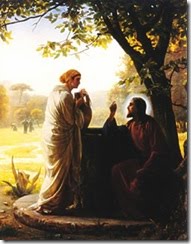
This famous meeting at Jacob’s well between our Savior and the Samaritan adulteress occurred at a very particular and important place. Jesus was in “Sychar“. The word Sychar means “purchased“, and so well-purchased was the “gift of God” that Jesus offered the Samaritan woman. As He revealed her soul’s deep need for living water, He did so as He Himself “sat thus on the well” (Jn. 4:6). As we will see, this “well” would become a figure of Himself, and its water would become an emblem of the salvation that will be found in Him alone. Truly, the certain locale of this Gospel event proves, yet again, to catalyze our understanding of the Lord’s deeper message. He has “purchased” a living well for you and I to feast upon when weary!

Not surprisingly, the prophet Isaiah accredits the personification Jesus uses. He says,

Behold, God is my salvation; I will trust, and not be afraid: for the Lord Jehovah is my strength and my song; He also is become my salvation. Therefore with joy shall ye draw water out of the wells of salvation” (Isa. 12:2-3).

What a remarkable statement! And how vital to our furthered understanding! As we couple John 4 with Isaiah 12, we witness an important interpretive key to the typical significance of many Old Testament passages. The “well” that’s discussed throughout the Old Testament serves as a foreshadowing of Christ Jesus, and as a directive toward what will be found in Him, namely, the most refreshing waters of life! As we continue to observe this theme a bit further, we will discover how remarkably the Bible foreshadows Jesus as the One who exchanges our bitter waters for sweet! This was true for the Samaritan woman and it remains true for the earth still today. Let’s begin.

(1.) The very first time a “well” is mentioned in Scripture is in the book of Genesis:

But Abram said unto Sarai, Behold, thy maid is in thy hand; do to her as it pleaseth thee. And when Sarai dealt hardly with her, she fled from her face. And the angel of the Lord found her by a fountain of water in the wilderness… And she called the name of the Lord which spake unto her, Thou God seest me… for she said, Have I also here looked after Him that seeth me? Wherefore the well was called, The well of him that liveth and seeth me” (Gen. 16:6, 7, 13, 14).

Here in Genesis, we see that the “well” and “fountain of water” was the place where the angel of the Lord found Hagar, a poor outcast. It was the place to which Hagar ran to escape her worldly woes and distresses. The present truth could not be more clear! Like Hagar, the well will be our crossroad too. Jesus is God’s well personified, and He must be seen as the only true place where God may meet with lost humanity, for “No man cometh unto the Father” but by Him (Jn. 14:6).

Not surprisingly, the well which Hagar fled to was located in the wilderness – a perfect symbol of this barren world, as we’ve just aforementioned. The “wilderness well” depicts the awful state of heart we were in when we first met our Lord for a drink! As such, this well becomes the place where God is revealed. As a result, Hagar termed it “the well of Him that liveth and seeth me“. We too will experience this reality, for Christ Jesus is the only true revelation of God, His Father (Jn. 14:9). All we must do it meet Him at His well!

(2.) Secondly, let us observe Genesis 21. Here, in verses 14 through 19, we read of yet another instance in which our Lord’s merciful “well” becomes most-manifest and apparent. Here, we learn further details regarding His well’s provision.

And Abraham rose up early in the morning, and took bread, and a bottle of water, and gave it unto Hagar, putting it on her shoulder, and the child, and sent her away: and she departed, and wandered in the wilderness of Beersheba. And the water was spent in the bottle, and she cast the child under one of the shrugs. And she went, and sat her down over against him a good way off, as it were a bow shot: for she said, Let me not see the death of the child. And she sat over against him, and lift up her voice, and wept. And God heard the voice of the lad; and the angel of God called to Hagar out of heaven, and said unto her, What aileth thee, Hagar? fear not; for God hath heard the voice of the lad where he is . . . and God opened her eyes, and she saw a well of water.”

Oh reader, how very dense is this passage in its typical suggestion! We have before us again an outcast, Hagar. She is seen as the one whose water had been lost, wasted and spent. She had but a small amount, a mere bottle, and it proved insufficient for the harshness of her long journey. Similar to the parable of the prodigal son, Hagar too “began to be in want” (Lk. 15:14). Hagar was in so much distress, in fact, that she chose to cast away her child to die! Wearied and broken, she gave up, sat down, and wept at her great misery. What a clear picture of the poor, desolate and despairing man lost in his own awful ways! Thankfully, the story does not end there. God suddenly “opened her eyes,” but what for? It was in order that she might see the “well” that had been there the whole time! Was this not the case with us too? Surely. Our betterment was and is never the result of our own mental elevation. Like Hagar, the fallen flesh will never discover that glorious One of whom the “well” here speaks. Rather, it was God who opened Hagar’s eyes to see Him, and it is God who will equip our needs just the same. He is the one and only answer to all human desperation, and He is the single-most source of life that will prove to propel us along our long journey (Phil. 4:13). He is the only healthy provision, and by Him alone will we be able to find it, for “The hearing ear, and the seeing eye, the Lord hath made even both of them” (Prov. 20:12). A thorough attachment to Jesus is the world’s only hope!

We know that the Son of God is come, and hath given us an understanding, that (in order that) we may know Him that is true” (1 Jn. 5:20).

(3.) Thirdly, in the very same chapter of Genesis (chapter 21), the “well” is seen in somewhat of a different light, that is, a covenantal light:

And Abraham took sheep and oxen, and gave them unto Abimelech; and both of them made a covenant. And Abraham set seven ewe lambs of the flock by themselves. And Abimelech said unto Abraham, What mean these seven ewe lambs which thou hast set by themselves? And he said, For these seven ewe lambs shalt thou take of my hand, that they may be a witness unto me, that I have digged this well. Wherefore he called that place the well of the oath; because there they sware both of them” (Gen. 21:27-31).

Here, we learn that the “well” is related to covenant and promise. This particular covenant, like all covenants, was ratified by an oath, and the well was therefore named “the well of the oath” (vs. 31). The symbolism for modern saints is quite rich. Jesus not only leads us toward the great well that resides within Himself, He also secures its provision and guarantees its efficacy! The blessings God bestows upon His children are super-abundant and dispersed beyond measure! He opens our eyes that we may discover His river, and He promises that it will never dry up or be lost. The covenant that He cut upon Calvary is our surety! Jesus simply will not repent of the water that gushes from His willing wounds! Paul brings this out in his letter to the Hebrew saints:

And inasmuch as not without an oath he was made priest: (For those priests were made without an oath; but this with an oath by him that said unto him, The Lord sware and will not repent, Thou art a priest forever after the order of Melchisedec:) By so much was Jesus made a surety of a better testament [covenant]” (Heb. 7:20-22).

(4.) Next, we see the “well” to be a place of prayer. In Genesis 24:10-12 we read,

And the servant took ten camels of the camels of his master, and departed; for all the goods of his master were in his hand: and he arose, and went to Mesopotamia, unto the city of Nahor. And he made his camels to kneel down without the city by a well of water at the time of the evening, even the time that women go out to draw water. And he said, O Lord God of my master Abraham, I pray thee, send me good speed this day.”

Because Jesus is our source of rich life, He also becomes the answer to life’s needs. The glorious well within Him is our place of communion and our help for every need. When we commune with God all our enemies will be scattered and our earthly needs will fade (Ps. 68:1; 23:1-6). Paul tells us to pray always and without ceasing, not with demands for God to be our errand-boy, but with a heart enveloped in the waters of the Holy Spirit (1 Thess. 5:17). It’s from this realm of glory, the well, that our prayers will be most appropriate and fruitful. Do we realize that the Bible actually links our communion with the Holy Spirit to God’s blessing us with “all things“? It’s true!

And be not drunk with wine, wherein is excess; but be filled with the Spirit; Speaking to yourselves in psalms and hymns and spiritual songs, singing and making melody in your heart to the Lord; Giving thanks always for all things unto God and the Father in the name of our Lord Jesus Christ” (Eph. 5:18-20).

(5.) Next, we learn that God’s well is the source of Christian rest. In Genesis 29:1-3 we read,
Then Jacob went on his journey, and came into the land of the people of the east. And he looked, and beheld a well in the field, and, lo, there were three flocks of sheep lying by it; for out of that well they watered the flocks.”
This is a very beautiful realization, and our God daily proves it to be true. Here, in Genesis 29, the “well” is used to provide rest for Jacob’s sheep, to water them, and to ensure continued strength to travel. Our heavenly Shepherd of course proves no different. The river flowing from His throne gives the sweetest of rest to the most weary of souls. John’s Gospel actually references Genesis 29 as a contrast: Our Lord’s well is seen as the source of true and far-better waters of rest. All carnal strength and striving can finally be ended! His well will quench our thirst!
Jesus answered and said unto her, If thou knewest the gift of God, and who it is that saith to thee, Give me to drink; thou wouldest have asked of him, and he would have given thee living water. The woman saith unto him, Sir, thou hast nothing to draw with, and the well is deep: from whence then hast thou that living water? Art thou greater than our father Jacob, which gave us the well, and drank thereof himself, and his children, and his cattle? Jesus answered and said unto her, Whosoever drinketh of this water shall thirst again: But whosoever drinketh of the water that I shall give him shall never thirst; but the water that I shall give him shall be in him a well of water springing up into everlasting life” (Jn. 4:10-14).
(6.) The very same reference from Genesis 29 sheds further light upon our present study: We learn that Jesus’ living “well” is the source of true Christian fruitfulness.
Then Jacob went on his journey, and came into the land of the people of the east. And he looked, and beheld a well in the field, and, lo, there were three flocks of sheep lying by it; for out of that well they watered the flocks” (Gen. 29:1-3).
The fact that Jacob’s well provided nourishment to his sheep typifies the rest that God’s well likewise gives, and the fact that Jacob’s sheep were resting upon a field of harvest shows us that fruitfulness is certain too. We aren’t given rest too foster laziness and apathy, but rather, we’re given rest to foster the sowing of seed and the reaping of harvest! The fields we rest upon are called “green pastures“, and they are green because they are fruitful!
The Lord is my shepherd; I shall not want. He maketh me to lie down in green pastures: he leadeth me beside the still waters. He restoreth my soul: he leadeth me in the paths of righteousness for his name’s sake. Yea, though I walk through the valley of the shadow of death, I will fear no evil: for thou art with me; thy rod and thy staff they comfort me. Thou preparest a table before me in the presence of mine enemies: thou anointest my head with oil; my cup runneth over. Surely goodness and mercy shall follow me all the days of my life: and I will dwell in the house of the Lord for ever” (Ps. 23:1-6).
Notice the abundant fruits that the psalmist connects to a habitation by Jesus’ living well. Our Lord’s perfect shepherding is that which leads us toward His well of “still waters“, and a drink from His waters bears both natural and spiritual fruit (Isa. 25:6; 30:23; Jn. 15:4). More specifically, we’re promised restoration and righteous paths (vs. 3). We’re made-able to overcome the darkest valley, the fear of pain and death, and the influx of evil that our world is so well-known for (vs. 4). We will be seen to bear fruit even where fruit should not grow: A bountifully-set table will be our testimony, even in the presence of our enemies (vs. 5)! We will grow in our anointing for ministry, and we will find our cups running over unto harvest (vs. 5)! We’ll become a people overwhelmed by goodness and mercy, and God’s habitation will be our very own (vs. 6). What fruit!
I am the door: by me if any man enter in, he shall be saved, and shall go in and out, and find pasture. The thief cometh not, but for to steal, and to kill, and to destroy: I am come that they might have life, and that they might have it more abundantly” (Jn. 10:9-10).
(7.) In Exodus 2 we are shown that the “well” is a place of refuge. What was a natural truth for Moses has become a spiritual truth that flows from a spiritual well of life.
Now when Pharaoh heard this thing, he sought to slay Moses. But Moses fled from the face of Pharaoh, and dwelt in the land of Midian; and he sat down by a well. Now the priest of Midian had seven daughters: and they came and drew water, and filled the troughs to water their father’s flock. And the shepherds came and drove them away: but Moses stood up and helped them, and watered their flock” (Exod. 2:15-17).
How great is this type! Pharaoh, the king of Egypt, serves to prefigure Satan as the god of this present world. Pharaoh, like Satan, was set on attacking and destroying God’s own. Moses “fled from the face of Pharaoh“, and, likewise, modern saints are told to “resist” Satan and his wiles (Jas. 4:7; 1 Pet. 5:8-9; Heb. 12:4). Like Moses, how often the great enemy frightens us and gets us on the run. But we would be wise to note the very next action Moses takes: Fleeing from Pharaoh toward Midian, the first thing that we find Moses doing is sitting down “by a well” (vs. 15)! Thank God these conditions still hold true today! There is One to whom we can flee for refuge – the Lord Jesus Christ, to whom this “well” points in type. Verily, our lives are “hid with Christ in God” (Col. 3:3). A place has been carved out for you and I! Yet, much like Moses experienced, we too must choose to neglect Pharaoh and exchange him for the well Jesus provides. The daughters of Jethro also sought out this well; they needed water for their sheep. Yet, much unlike Moses, the women were scattered and driven away – their refuge was aborted by their fear and unbelief. Friends, we have a conscious choice to make when seeking refuse from our troubles. Are we content to live in fear of evil? Are we satisfied to give in to sin and temptation? Will the tactics of our enemy prove to dissuade our thirst for true living water? Who do we most resemble, Moses or the daughters of Jethro?

(8.) Next, we learn that the “well” is made the object of song! The personified “well” evokes praise!

And from thence they went to Beer: that is the well whereof the Lord spake unto Moses, Gather the people together, and I will give them water. Then Israel sang this song, Spring up, O well; sing ye unto it” (Num. 21:16, 17).

What a word is this! No interpretation is needed here.. Reader, are you singing unto the living well today?

(9.) Further, the Bible shows the “well” to very particular and distinct. The living well within King Jesus cannot be duplicated, copied, replicated or counterfeited. No other pseudo route to true water has ever existed, and nor ever will. David shows us this illustration in 2nd Samuel:

And David longed, and said, O that one would give me drink of the water of the well of Bethlehem, which is by the gate!” (2 Sam. 23:15).

For David, nothing but water from the well of Bethlehem would ever truly satisfy. And why? Because the sort of well God’s saints are drinking from is particular and certain. It is a famous fount and cannot be falsified. All other streams must be fed by our Lord’s own before any thirst will be quenched or any crop will be grown. The countless pseudo-streams of man-made religion and worldly philosophy are but stagnant pools of waste. They feed from the human intellect, from carnal ambition, and they spring from evil heritage. The fallen nature of these far-lesser wells assures us that they can hold no water: They are but broken cisterns.

For my people have committed two evils; they have forsaken me the fountain of living waters, and hewed them out cisterns, broken cisterns, that can hold no water” (Jer. 2:13).

Jesus saith unto him, I am the way, the truth, and the life: no man cometh unto the Father, but by me” (Jn. 14:6).

(10.) Lastly, but certainly not least, the Bible informs us that this great “well” is to become our own! What a man partakes of day by day will be the very thing he transforms into (Prov. 23:7). Those continually feasting on alcohol become alcoholics, those abiding with drugs become addicts, and those given over to perversion become adulterers. Thankfully, this tendency is true for spiritual habits too (Rom. 8:29; 2 Cor. 3:18). A man who attaches his heart to the living well within King Jesus will be a man who grows that well within his very own heart too! He will become the very life-source Jesus has dispersed upon him years before.Jesus’ well will be called “thine own“!

Drink waters out of thine own cistern, and running waters out of thine own well” (Prov. 5:15).

What a blessed climax to our study! The living “well” flowing from Jesus is not an object of greed for Him. Of course He reserves all the glory unto Himself, but His image is to be patterned and grown deep within us. All we must do is partake! We can even “encamp” by His waters, and make it home of homes (Exod. 15:27)! The more we encamp by His waters the more His waters will flow from us. The world is waiting to feast on the sweet fruit Jesus is growing in you and I (Rom. 8:18-22)! We will see this truth in greater detail very soon.

Oh the wonder of Scripture’s counsel! I’m so grateful! Jesus makes wise use of every single jot and tittle! Dear reader, I pray we never take it for granted. The plethora of divine cohesiveness seen today could never be merely imaginative. The Bible contains no accidents or coincidences, for even the minute details will feed the hungry. I pray that we will learn to sit upon God’s “well“, like Jesus, and receive strength for our journey and rest for our weariness. Jesus is the pattern Son, and we would be wise to model our lives after His words and actions. The well of salvation awaits us!

“I Have Been Crucified”

cross

I have been crucified with Christ; it is no longer I who live, but Christ lives in me” (Gal. 2:20).

There is so much of the natural that needs to go to the cross. This altar is the divine sanitation system, for fire is a great sanitizer, a never-failing disinfectant. This altar is not an educational system, it is a burning process. The answer to our flesh is not pampering, controlling, or hiding; the answer to all carnality is the fire of God’s brazen altar – the cross of Jesus.

However, I guess that once I really know the altar is for worship as well as for burning, I should always approach the burning as a worshiper.

When our life is hid with Christ in God, the old shell that once hid that life is going to be burned. It is like the seed planted in the earth and warmed and moistened until germination starts. Does the seed cry, “Wait a minute; stop it; you’re destroying me?” No, of course not. To come forth in the new, the old has to die. The only alternative would be to dig the seed out, dry it, and put a little sign next to it saying, “This is the seed of God”. If we just leave it in the ground to go through the death process, we don’t need a sign, for people will see the fruit that life has produced. That’s one of the purposes of the cross – to break the hull, to kill the old, in order to release the life principle so we can be restored to the Father’s eternal purposes..

– Judson Cornwall, “Let Us Draw Near

“Jesus Creates a Superior Experience”

gloryPart 20

Finally, as we end our present study on the vast superiority of King Jesus, we now find Paul’s instruction about the superior encounter Jesus furnishes and creates. Paul explains this by contrasting two famous mountains found in Scripture, Mount Sinai and Mount Zion. He likens these mounts to a contrast of spiritual experience. He shows Zion to bear the sweetest of experiential fruit, while Sinai blooms nothing but waste. Our Lord is so superior because He promises a superior encounter with Himself! We can know a far-richer climb through life, far different than the sort seen upon Sinai.

First and foremost, let us prove what mountains represent: What can they typify and symbolize throughout the Bible? And what part does a mountain’s name play? The answer is quite plain: We find both general symbolism as well as specific.

In a general sense, mountains most-often reference varied aspects of God’s nature, such as His total supremacy and steadfastness (Ps. 97:5; 18:7; 125:2; 11:1; 90:2; Isa. 54:10). This is communicated as a mountain’s natural and earthly features are viewed poetically: Like God, mountains are firm and un-moving; they are constant and unchanged.

Certain mountains may also possess more specific symbolism. The two mountains under our present consideration, Zion and Sinai, prove to be fitting examples of this fact, as these mountains in particular are symbolized a bit further throughout Scripture, and even used by Paul allegorically. In following their unique, thematic threads, we find that they both symbolize man’s personal experience with God, be it a positive experience or a negative one. They’re likened to the place of divine encounter, and of the location of divine testing and judgment. They serve as figures of two conflicting ascents toward the same holy God, and two different sorts of spiritual climb. According to which of the two mountains are named, and what contextual events took place thereupon, we’re directed toward various details of this differing experience, climb, and encounter. One mount is deemed lesser and the other deemed better: One is found fruitless and the other found fruitful. Let’s start with Mount Sinai.

Mount Sinai, also called Mount Horeb, is the place where God required holiness from His people, having given them His laws and establishing covenant with them as His own possession (Exod. 19:10-15; 20:1-17; 24:12; 31:18; Neh. 9:13-14). This mount is entirely earthly: It may “be touched” by mere physical hands, and it burns with mere natural fire (Heb. 12:18). The divine voice spoken from Mt. Sinai was reckoned dreadful by God’s people, so much so in fact, that they required Moses as their mediator (Heb. 12:19; Deut. 5:24-27). Approach unto God was limited and veiled for fear of certain death (Heb. 12:20; Exod. 19:21); even Moses feared and quaked (Heb. 12:21). Sinai is likened to a place of desolation and “wilderness” (Deut. 1:19; Num. 10:12).A place of which the people were very fearful: they had no desire to draw near to their Maker (Exod. 20:18)!

Paul describes man’s relational climb and ascent of this lesser mount as one “unto blackness, and darkness, and tempest” (Heb. 12:18). It represents carnal fear of divine revelation, and thereby the place where God remains veiled and concealed. It is the mount upon which but a chosen few can find God and scarcely get to know Him, and even they end up more-so likened to legalistic bondage than true Godly intimacy (Gal. 4:24-31). The result of a trek up this mount will be one of barren fruit, and we find all those “beneath the mount” to be given to sin and idolatry (Exod. 32:19). It is the place of corporately veiled and aborted glory (Exod. 34:29-35)! What a barren existence Sinai has come to represent!

The Bible’s description of Mount Zion is quite different! Paul uses this contrast to teach of the fruits that are born from a life well-marched upon God’s better mount. It points us toward quite the opposite of spiritual experiences – the better sort that only Jesus can furnish and create. Mount Zion is not one so readily “touched” (Heb. 12:18-22). It tells of a spiritual journey, not a mere natural, and it burns with the spiritual fire of God’s glory (Isa. 4:5; Heb. 12:29). It is the place of sweet spiritual communion, and it’s a people with God “in the midst” (Isa. 12:6). Yes, we serve One whose “fire is in Zion” (Isa. 31:9), and it is “devouring” and “everlasting” (Isa. 33:14). Mount Zion is called God’s eternal city, even the “heavenly Jerusalem” (Heb. 12:22). It is the antitype of glory that Sinai’s veiled shadow only pointed to (Gal. 4:23-26; Heb. 11:16). Zion is “founded” by God Himself (Isa. 14:32). The Bible calls it “the perfection of beauty” (Ps. 50:2). It is the place of God’s rest and habitation (Ps. 132:13-17), a mountain full of ministering angels (Heb. 12:22), and the most-fruitful and most-glorious of sanctuaries from which help and strength can be sent (Ps. 20:2). As such, Zion is the mount from whence the enemy always scatters (Ps. 68:1). It is defended by God Himself (Isa. 37:34-35)!

Paul declared Zion to be a mount of great freedom, great liberty, and much permission to approach God in His glory (Eph. 3:12). It shows us boldness in place of rejection, and confidence instead of shame. It is a superior reality, a life of rich glory instead of empty and unprofitable law. There is no fear of death on Zion because the shed blood of Jesus cries out for “better things than that of Abel”, even mercy in place vengeance (Heb. 12:24; Gen. 4:10).

Finally, Mount Zion also pertains to the firstborn blessing and birthright (Heb. 12:23), and it tells of that rich realm of glory where such a birthright will be imparted and inherited. This identity is quite the opposite of the desolation likened to Mount Sinai (Num. 10:12; 33:15; Deut. 1:19). Paul’s letter to the Hebrews likened Sinai’s wilderness to that which births men more-so like Esau than Jacob (Gen. 27:41; Rom. 9:13; Heb. 12:16-17). These are men with unchecked idolatry and excess carnal appetite (Exod. 32:8; 16:8). Esau forfeited his entire inheritance and was thereby rejected and refused. All this needless waste was due to him despising his inheritance, him choosing flesh over spirit, wilderness over glory, and Sinai over Zion. Only Mount Zion turns boys into men and orphans into sons (Jn. 1:12; Gal. 5:16; 6:8; 1 Pet. 1:22).

What will our response consist of? Which mountain will we choose to climb? The encounter Jesus creates for us is radically best!

“Jesus Awards a Superior Inheritance”

crownPart 19

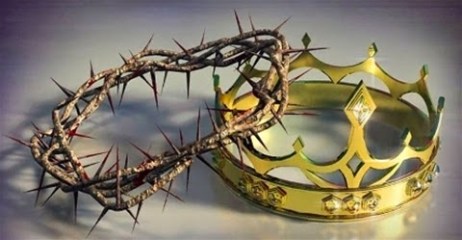
As we’ve been thoroughly discovering, the rich fruit which our Lord bore upon His rugged cross is found most-superior to all others: It far outshines any provision found for Old Testament saints: it is varied in its scope, multifaceted in its blessing, and gracious in its direction toward us. Today, we can partake of Jesus’ very own ripeness, that we too be declared fruitful “unto God” (Rom. 7:4). Those ancient believers could never declare such a thing. They died in hope: hope for better fruit to one day grow upon mankind, at the coming of the true Vine, and by their feast upon His sap. Dear reader, you and I are the fulfillment of that hope! We are now called to eat from that holy “Branch” which ancient saints could only dream of (Lk. 10:24; Jn. 8:56; Heb. 11:13, 39; 1 Pet. 1:10-12)! The manner of wine poured into our heart’s glass proves to embarrass all other vintage: It’s a “new and living way” for God’s sheep (Heb. 10:20; Jn. 10:7-9). We’ve been invited to produce whole gardens where only few branches once grew! What an honor for New Covenant believers! What great cause for our appreciation! And what obligation now given to us!

According to Paul’s letter to the Hebrews, such better fruitfulness is true with regard to spiritual heritage as well: Jesus awards a superior inheritance. As always, Paul made this a case for our Lord’s total supremacy: Judaism was losing its appeal. But why? And for what reasons? There are many.

Firstly, Jesus bears us a corporate inheritance. It’s deemed a corporate inheritance because it’s one that’s dispersed. Jesus does not hoard the fruit wrought upon Calvary’s hill, but rather, He lovingly shares it. No longer is He to be the only Son with an inheritance, for we are now given “power to become the sons of God” too (Jn. 1:12). As sons, we can expect heritage and reward. We reap all the benefit while He paid the highest of costs. As saints, we are brought into the family of God: we’re no longer called servants, but “children” and “sons” (Heb. 12:5-6). This allows us now share in our Lord’s fruitful reward, to “an inheritance incorruptible, and undefiled… reserved in heaven” (1 Pet. 1:4).

The road toward such rich inheritance has finally been fully-paved; Our “Forerunner” has entered “for us” and for our sharing of His prize (Heb. 6:19-20; 9:24)! Like Jesus, we can now partake of a holy reward: Rich inheritance can now be our report too! We’re led “to the obtaining” of his noble glory (2 Thess. 2:14), and we’re appointed unto his regal kingdom (Lk. 22:29-30). We’re now permitted to be with Him instead of standing afar off (Jn. 17:24). Old Testament saints were not fed such honorable fruit (Exod. 20:19; 33:20; Jn. 1:18). They often lived in great fear of God’s nearness, for certain death was the expected result (Exod. 33:20; Isa. 6:5). But now we’re invited , not only to be near Him, but to sit with Him upon His very throne (Gen. 32:30; Rev. 3:21). The “Spirit of adoption” now reaps us a new royal bloodline; we can now cry “Abba” ourselves:

For ye have not received the spirit of bondage again to fear; but ye have received the Spirit of adoption, whereby we cry, Abba, Father. The Spirit itself beareth witness with our spirit, that we are the children of God: And if children, then heirs; heirs of God, and joint-heirs with Christ; if so be that we suffer with him, that we may be also glorified together” (Rom. 8:15-17).

And secondly, Jesus bears us an assured inheritance. It is said to be assured because it’s born among our earthly trials, which are certain. God has designed it this way with great wisdom. The very thing that used to slay the men of earth now serves to catalyze their inward maturity, and thereby lend us toward great spiritual riches. What’s the one thing that humanity can be assured of, as we trek through daily life? You guessed it: trial and tribulation! Each and every man, woman, and child will undoubtedly feed from this tree many times (Eccl. 5:15-17). Man has been “shapen in iniquity” (Ps. 51:5), and  even “born unto trouble, as the sparks fly upward” (Job 5:7). Just as the warm rays of blessing rise upon both evil and good, so do the harsh rains of life’s circumstance fall upon both just and unjust (Matt. 5:45). Our wicked and fallen nature is what absolutely ensures it! We cannot escape it! Of course God is not the author of such suffering and anguish, but He certainly is the sovereign ruler over it, for the bride blossoms most in the valley (Job 1:6-12; 1 Cor. 14:33; Song. 2:1-2). As another has well-said, “The Lord allows in His wisdom what He could prevent by His power”. He is both “good to all” those who love Him and yet tolerant of their sufferings (Ps. 145:9; Jn. 9:2-3). Verily, “Time and chance happeneth to [us] all” (Eccl. 9:11). He works all things, both pleasant and harsh, “after the counsel of His own will” (Eph. 1:11). Who can say “what doest Thou?” (Dan. 4:35).

It’s because of our assurance of trials we can now have assurance of glory as well. Such trouble was the very thing that made Job so doubly-blessed in the end (Job 42:10); So why should we expect to be different? Suffering and inheritance are intimately linked together, and inheritance, therefore, can be assured! Christian struggles are no longer to be those things so-avoided and despised, for God has seen fit to realign their role and purpose: They no longer have to bring us down to the dust! On the contrary, we may now bear the sweet fruit of purposeful refinement, as we’re faithful to embrace the fiery furnace. These will be our Lord’s most beloved branches, for God prunes whom He loves, and He chastises all those He calls sons. And what can be the expected result? A glorious and abundant inheritance!

And ye have forgotten the exhortation which speaketh unto you as unto children, My son, despise not thou the chastening of the Lord, nor faint when thou art rebuked of him: For whom the Lord loveth he chasteneth, and scourgeth every son whom he receiveth. If ye endure chastening, God dealeth with you as with sons; for what son is he whom the father chasteneth not? But if ye be without chastisement, whereof all are partakers, then are ye bastards, and not sons. Furthermore we have had fathers of our flesh which corrected us, and we gave them reverence: shall we not much rather be in subjection unto the Father of spirits, and live? For they verily for a few days chastened us after their own pleasure; but he for our profit, that we might be partakers of his holiness. Now no chastening for the present seemeth to be joyous, but grievous: nevertheless afterward it yieldeth the peaceable fruit of righteousness unto them which are exercised thereby” (Heb. 12:5-11).

Personally, I find this to be quite an amazing truth. What would kill other men serves as our inward cleansing and perfection. What would depress and defeat those attached to the earth is that which actually prunes God’s children unto maturity and abundance (Jn. 15:1-3)! What great cause for joy! Our afflictions have become our servants, and the furnace has become our friend!

To be continued…

“Jesus Delivers a Superior Salvation”

faith-3Part 18

As we begin to wind down our great feast upon the rich fruitfulness of King Jesus, we learn of yet further produce grown by Him: a superior salvation. Paul taught that our Lord should be deemed far superior because of the sort of salvation He provides. It’s declared to be a superior salvation primarily because it’s salvation by grace. Old covenants are far lesser because they could not succeed with regard to salvation: They proved weak and unprofitable because they depended on men’s obedience (Heb. 7:18-19; Gal. 3:1o-12; Rom. 10:5). Humanity has well-proven that it simply cannot keep the law to God’s standard, for “all have sinned, and come short of the glory of God” (Rom. 3:23).

As it is written, There is none righteous, no, not one” (Rom. 3:10).

Who can bring a clean thing out of an unclean? Not one” (Job 14:4).

Salvation, as a result, was never fully-realized (Heb. 11:13, 39)… Until now!

Today, most thankfully, we’re given salvation fueled by “better promises“, that is, salvation fueled by grace (Heb. 8:6)! This sort of gracious salvation is called “a better hope“, and it’s the route by which we now may draw near unto God! It is better because grace makes it entire (Jas. 1:4), it is better because grace makes it eternal (Heb. 5:9), and it’s better because grace makes it manifold (1 Thess. 5:23; 2 Cor. 1:10). God not only pardons us undeservedly, but also enables us to walk in the victory of that pardon, and feeds us with that victory’s reward! Paul used this newfound grace as an appeal for his readers to “lay aside every weight” of sin, and to loosen their firm grasp of lifeless Judaism: Grab hold of the gracious and true Vine instead (Jn. 15:1; Heb. 12:1)!

For there is verily a disannulling of the commandment going before for the weakness and unprofitableness thereof. For the law made nothing perfect, but the bringing in of a better hope did; by the which we draw nigh unto God” (Heb. 7:18-19).

Let us now ask: What is grace? Paul calls it a mystery because the Scriptural definition is quite rich (Eph. 3:1-3). Throughout the Bible, grace is seen as the unmerited favor of God. Such favor is said to be both saving as well as enabling: We find unmerited favor toward pardon as well as unmerited favor toward obedience. Let’s observe:

Firstly, grace is unmerited favor toward pardon. It is saving-grace, or rather, grace that pardons men unto salvation (Eph. 2:8-9). It is the fuel behind God’s gift of atonement. Our Lord willingly laid down His life so that humanity would grab hold of redemption. Grace is why Jesus loves evil men! It’s unmerited!

For ye know the grace of our Lord Jesus Christ, that, though he was rich, yet for your sakes he became poor, that ye through his poverty might be rich” (2 Cor. 8:9).

It was God’s grace that led Him to become the Word made flesh, for He dwelt among men being “full of grace and truth” (Jn. 1:14). He chose to tabernacle among men and offer His own blood for our redemption, not because we deserved it, but because of gracious, unmerited love. Grace abounded unto fallen creation despite the fact that sin abounded too! Regardless of our innate evil natures, the “riches of [God’s] grace” have given us pardon, and thereby made us “accepted in the beloved” (Eph. 1:6). What sweet and superior fruit!

For when we were yet without strength, in due time Christ died for the ungodly. For scarcely for a righteous man will one die: yet peradventure for a good man some would even dare to die. But God commendeth his love toward us, in that, while we were yet sinners, Christ died for us” (Rom. 5:6-8).

For as by one man’s disobedience many were made sinners, so by the obedience of one shall many be made righteous. Moreover the law entered, that the offence might abound. But where sin abounded, grace did much more abound: That as sin hath reigned unto death, even so might grace reign through righteousness unto eternal life by Jesus Christ our Lord” (Rom. 5:19-21).

And lastly, grace is God’s unmerited favor toward obedience. It is enabling-grace, or rather, grace unto enabled obedience. It is God’s holy influence upon the soul, and it furnishes the desire and ability to walk in the great pardon we’ve just received, rather than only accept is judicially. Grace is our Lord’s own ability and steadfastness at work among our earthen weaknesses, despite our total unworthiness, and our natural attraction to sin (2 Chron. 30:12; Isa. 26:12; Jn. 3:27; Acts 11:21).
The grace of God, and our faith in His divine blood, has already declared us perfect in spirit (Heb. 12:23); we are made to be judicially righteous (Phil. 3:9; Rom. 3:21-22). But grace is not finished yet! It continues to flow toward us, allowing such righteousness to become evident in our soulish side too! Grace is that which yields practical righteousness: It teaches mankind of his potential for entire purity, despite the endless evils of “this present world“:
For the grace of God that bringeth salvation hath appeared to all men, teaching us that, denying ungodliness and worldly lusts, we should live soberly, righteously, and godly, in this present world. Looking for that blessed hope, and the glorious appearing of the great God and our Saviour Jesus Christ; who gave himself for us, that he might redeem us from all iniquity, and purify unto himself a peculiar people, zealous of good works” (Tit. 2:11-12).
Truly, it’s only by grace that we can live free from sin’s dominion. Mere religious works will never do it (Rom. 11:6). Only grace makes our internal righteousness to become evident in daily life:
Let not sin therefore reign in your mortal body, that ye should obey it in the lusts thereof. Neither yield ye your members as instruments of unrighteousness unto sin: but yield yourselves unto God, as those that are alive from the dead, and your members as instruments of righteousness unto God. For sin shall not have dominion over you: for ye are not under the law, but under grace” (Rom. 6:12-14).

Such grace was not seen like this in ages past, but today, because we’re now ripening upon the far-better “Branch of the Lord”, we can find grace to help in times of need (Isa. 4:2). Jesus bore it first upon His own fruitful Vine and now gifts it to us by impartation.

Seeing then that we have a great high priest, that is passed into the heavens, Jesus the Son of God, let us hold fast our profession. For we have not an high priest which cannot be touched with the feeling of our infirmities; but was in all points tempted like as we are, yet without sin. Let us therefore come boldly unto the throne of grace that we may obtain mercy, and find grace to help in time of need” (Heb. 4:14-16).

Oh the blessedness of such fruit! Again, such bounty far surpasses that of lesser covenants. This grace was not so-readily available then, but now has appeared in the person of the Lord Jesus Christ. He was sacrificed and sent to hell, only to resurrect and bear gracious fruit. This fruit is for us: It’s a “horn of salvation” (Lk. 1:68-69). It’s fruit which the law could never reap:

For the law was given by Moses, but grace and truth came by Jesus Christ” (Jn. 1:17).

Be it known unto you therefore, men and brethren, that through this man is preached unto you the forgiveness of sins: And by him all that believe are justified from all things, from which ye could not be justified by the law of Moses” (Acts 13:38-39).

We now have a liberal dispersal of God’s grace and truth, and Jesus promised it would “make you free” (Jn. 8:32). Day by day, and faith by faith, God’s own sons are made free from the power of sin, and free from the restraints of absolute carnality (Jn. 1:12). By grace we perform the will of God, for “it is God which worketh in you both to will and to do of his good pleasure” (Phil. 2:13). Yes, His gracious power makes us “willing” for the many “beauties of holiness” (Ps. 110:3), and thereby anxious to refuse our own. Grace is that which “inclines my heart” unto God’s good Word, and then lights the way toward it’s outworked obedience (Ps. 119:36; Prov. 21:1; ; Jn. 6:65; 1 Jn. 2:6). Grace actually “quickens” our fallen flesh and alters our sinful hungers (Eph. 2:4-5)! The tongue’s once-innate taste for “wicked dainties” now flourishes with holy taste buds (Ps. 141:4). We discover ourselves hungering for far different fruit (Matt. 5:6; Rev. 7:16). Our previous proclivity toward sin and uncleanness is no longer so absolute! And why? Because Jesus has become that better well which now feeds us: He turns our bitter waters sweet (Jn. 7:38-39; 4:14; Isa. 49:10)! He’s the source of all our gracious goodness, and the fount of all holy influence. This grace has both revealed and empowered mankind’s righteous destiny. It both proclaims it judicially and empowers it experientially! The law could only tell of God’s demands and then judge man for his failures, but grace now fosters endless clouds of divine favor: they shower rains of God’s wherewithal upon us. Jesus forms and fashions His own works deep within us (Isa. 26:12; Jn. 14:12). He assumes personal responsibility for our inward ripening and sweetness, and He removes the awful stench of those former, filthy “rags” of self-effort (Isa. 64:6).

For he saith to Moses, I will have mercy on whom I will have mercy, and I will have compassion on whom I will have compassion. So then it is not of him that willeth, nor of him that runneth, but of God that sheweth mercy” (Rom. 9:15-16).

To be continued…

“Jesus Provides a Superior Faith”

faithPart 17

As we’ve seen with various other Old Testament fruits, the bounty which Jesus reaps among His saints proves to pale all else by comparison. This is true regarding the faith He gives us too. Any weakness of faith that may have existed in covenants past can now be duly-girded and made well because Jesus is its very spring (Heb. 11:13, 39; Lk. 10:23-24; 1 Pet. 1:10-12; Jn. 8:56). It is His very own faith that we now live by, even “the faith of the Son of God”, and it deemed better for countless reasons (Gal. 2:20; 1 Tim. 1:14). Observe.

Firstly, our Lord’s faith is an abundant faith. Jesus gives a measure of His faith to each man at salvation: it is the fruit of His Spirit’s new residence (Gal. 5:22). It is a gift – a generous housewarming present (Eph. 2:8; Rom. 12:3). He then sits back and watches it grow, from one measure of faith to the next (Rom. 1:17)! It may begin as small as a mustard seed, but it possesses much divine potential within, and soon it will be seen in abundance, having been nurtured, grown, and matured (Lk. 17:5-6). It is a thriving and flourishing faith (2 Thess. 1:3; 2 Cor. 10:15). It is abundantly increasing and being ever-added to (2 Pet. 1:5).

Next, our Lord’s faith is a living faith, and it thereby able to furnish rich spiritual life. Habakkuk says we “shall live by His faith” (Hab. 2:4), and Paul teaches of our utter reliance upon it (Gal. 2:20). Jesus is the very life we now live, and we live it by His faith (Gal. 2:20). “He that believeth” in Jesus is he who walks the surest route unto “everlasting life” (Jn. 3:36). Verily, God has given us life, and “this life is in His Son”, Jesus (1 Jn. 5:11-12). Those branches who stay attached to the true Vine will be those most fruitfully living “By [God]” (Jn. 6:57).

Thirdly, Jesus’ faith is a protecting faith. The Bible calls it a “shield” and a “breastplate” (Eph. 6:16; 1 Thess. 5:8). By it we’re able to quench all darts of the wicked. His dispersion of His own faith unto us is our freedom from the fear of flesh (Ps. 56:3-4), and the very confidence we stand upon (2 Cor. 1:24). His faith is hard at work within us: It prevents us from falling (Jude 24), and it overcomes the world (1 Jn. 5:4-5). We can now “resist” the roaring lion because we are steadfast “in the faith” (1 Pet. 5:8-9). Those full of such protecting faith can have no worrisome fear (Matt. 6:25-33; 8:23-27). Carnal doubt and insecurity can now well-flee (Matt. 14:22-23), and fleshly strife and reasoning can be declared homeless (Matt. 15:5-12)!

Furthermore, His faith is a loving faith. This “breastplate of faith” is one of “faith and love” (1 Thess. 5:8). It is not gifted upon us by obligation: Jesus has no ulterior motives. The single most key that unlocks this blessed flow is that of divine love and tender mercy. The life of God’s rich faith that I can live from day to day is simply because God “loved me, and gave Himself for me” (Gal. 2:20). It is the fruit of His loving descent into hell, and His triumphant victory over death and the grave. We too must now fuel our faith with love (2 Cor. 13:1-3), for it will be faith’s sweetest fruit.

Next, Jesus’ faith is a substantial faith. It’s substantial because it has power to justify all of creation. Those who partake of this faith are thereby declared just (Rom. 1:17; Phil. 3:9). This is something that the law could never accomplish (Gal. 2:16; 3:11-12). God’s own dispersed faith has made us substantially righteous! We finally have the wherewithal to “please God” (Heb. 11:6)!

Our Lord’s faith is also an enduring faith. It endures every fight (1 Tim. 6:12) and abides throughout both peace and war (1 Cor. 13:13). Again, our hope and faith can now endure because our hope and faith is now “in God” (1 Pet. 1:21). That which God plants will always eternally remain (1 Jn. 2:24; Heb. 5:9)!

His faith is a ministering faith. God gives “the gift of faith” by His Spirit, and He gives it for our profit, both corporate and personal (1 Cor. 12:4-9; Matt. 11:22-23). He divides such gifting “severally” and “as He will” (1 Cor. 12:11); He does so to bless the many members of His body (1 Cor. 12:12-30). It is our faith within us that believes “and therefore speaks” to creation (2 Cor. 4:13). The nations of the world are looking to nest upon such fruitful branches (Mk. 4:30-32)! God’s faith alive within us is their hope! It is only “through faith” that God’s people have “subdued kingdoms, wrought righteousness, obtained promises, stopped the mouths of lions, quenched the violence of fire, escaped the edge of the sword, out of weakness were made strong, waxed valiant in fight, [and] turned to flight the armies of the aliens” (Heb. 11:33)! What fruit!

Next, Jesus’ faith is a precious faith. It is declared precious among the saints because it is “tried with fire”, and thereby found “unto praise and honour and glory” at the appearing of our Lord (1 Pet. 1:7). The glorious fruit grown upon our tried faith will prove more costly than the finest of gold (Lk. 12:20-21). It is for this reason that we can rejoice over tribulation (1 Pet. 1:6).

And finally, our Lord’s faith is a productive faith. It is the only route toward abundant harvests. According to Paul’s letter to the Hebrews, an absence of this faith would yield but failed and withered fruit, for “whatsoever is not of faith is sin” (Rom. 14:23). A fruitless adherence to the withered tree of Judaism would equate to a refusal of God’s rest (Heb. 3:18), a failure to profit from His Word (Heb. 4:2), great hardness of heart (Num. 14:11), and a choice to snub the possession of “the land” that was promised (Num. 20:12; Ps. 106:21-24). Such a rejection of God’s faith, the only truly-fruitful kind, would yield but kindled fire and willful sin (Ps. 78:21-22, 32). These men will grow no spiritual foundation (Isa. 7:9), nor would they witness God’s miraculous power (Mk. 16:17). They would see no prosperity (2 Chron. 20:20) nor feel true assurance (Heb. 10:22). As is quite clear, Paul’s Hebrew audience was at risk of repeating the many errors of their fathers, all because they maintained a fruitless faith, even disbelief in Jesus. Why should men eat such unbelieving fruit? Why should we allow a ruined harvest? Simply look unto Jesus for His perfect and divine pattern, and our harvests will be likewise-abundant. Like Abel, all our offerings must be “by faith” (Heb. 11:4), and we mustn’t trust in our own works. Like Enoch, our faith must remain even amidst great evil and temptation (Heb. 11:5-6).

To be continued…