“Songs In the Night”

skyGod, my maker, who giveth songs in the night” (Job 35:10).

Any man can sing in the blissful light of the daytime. When wealth and joy roll in abundance around him, any man can praise his Maker well! His heart’s melody proves sweet because the south winds are duly blowing – they are fine and tropical winds, winds of glory, and winds of warm relief (Job 37:9, 17; Ps. 126:4). But what about when seasons turn cold? What is our heart’s song when the north winds roll in? Can that same harp play it’s melody when winds have turned harsh, cold and gloomy (Song. 4:16; Prov. 25:23; Jer. 4:6)? Will that once singing tongue then possess “joyful lips” and will it “remember Thee upon [its] bed“, or “meditate on Thee in the night watches” (Ps. 63:5-6)? Will we find ourselves, like Peter, rejoicing even while suffering great shame (Acts 5:41)? Friends, it is easy to sing when we can read the tune by God’s daylight; but he is spiritually better who yet sings when there is not a ray of light to read by.. he who sings from his heart, rather than from his blessed or cursed circumstance.

In the night his song shall be with me” (Ps. 42:8).

It’s simple to sing when beautiful flowers are upon the paths we daily tread.. they’re always growing, thriving, and releasing their sweet fragrances. But the true measure of a man will be his ability to sing in the most arid of deserts, where no green thing grows for miles, and the only scent you can find is that of your own languishing flesh! Here, in the anguish of night, we will find our true test.. will we remember “Thy faithfulness every night” (Ps. 92:2), and continue to shout our praises unto God (Acts 16:25)? Will we, even here, “sing aloud upon [our] beds” (Ps. 149:5)?

It’s effortless to sing when our cups are overflowing, when our health remains strong, or when our night is turned to day. But what will we do “a great while before day“, or in “a solitary place” (Mk. 1:35)? What will the melody of our hearts be then? A true test of one’s character is the constant flow of praise which ever-exudes from his lips, despite the temperature, the trial, the test, or the turbulence around him:

At midnight I will rise to give thanks unto thee because of thy righteous judgments” (Ps. 119:62).

It was this sort of song which Habakkuk sang, when in the night he said, “Although the fig-tree shall not blossom, neither shall fruit be in the vines; the labor of the olive shall fail, and the fields shall yield no meat; the flock shall be cut off from the fold, and there shall be no herd in the stalls: yet I will rejoice in the Lord, I will joy in the God of my salvation” (Hab. 3:17-18).

The world is waiting for such a manner of saints to come forth! And Jesus wants to feast upon such sweet fruit! I pray we all find ears to hear His longing and grace to furnish His desire. Amen.

Rejoice in the Lord always: and again I say, Rejoice” (Phil. 4:4).

“For His Name’s Sake”

jesus-christFor His name’s sake they went forth…” (3 Jn. 7).

Here we have a Scriptural key to devotion, and more particularly, evangelistic devotion. It was so for the early church, and should be so for us today. Why do we do the things we do? Why do we seek heavenly glory? Why do we chase God’s purpose in the earth? And why should we forsake the world’s puny offers while attempting to spread the good news of Jesus? Dear friends, it’s for His great name’s sake! “For His name sake they went forth“.. often to mocking, imprisonments, and even their very deaths! What manner of God is He that even the threat of death is laughed at and embraced by its victims (Acts 7:59-60)? What a glorious Lord He must be! How precious He must be that His followers count themselves as but sheep for the slaughter, dying daily for His very sake – the spread of His Gospel (Rom. 8:36)! Such is the willing testimony of those in love with the Lamb of God!

The Psalmist too had this conviction: “For thou art my rock and my fortress; therefore for thy name’s sake lead me, and guide me” (Ps. 31:3). What is your motivation? What is your charge toward Godly devotion, and earthly ministry? Is it His perfect name? Is it the name which is above all names; the name that alone is found worthy? Or is it the name of some other?

Friends, it’s for His great name’s sake that He’s purged us and cleansed us with His own holy blood (Ps. 25:11; 79:9), and thus “for His name’s sake” shouldn’t we likewise serve Him back, and “go forth“, taking heed if He’s called us? Such love for His name is to be our highest charge:

So when they had dined, Jesus saith to Simon Peter, Simon, son of Jonas, lovest thou me more than these? He saith unto him, Yea, Lord; thou knowest that I love thee. He saith unto him, Feed my lambs” (Jn. 21:15).

It’s for His great name’s sake that God has delivered us into His kingdom (Ps. 109:21; 143:11), and thus shouldn’t we, “for His name sake” go forth and partner with Him in drawing the rest of the world unto Himself (Song. 1:4)? I believe so. It’s “For His name’s sake they went forth…“.

The key to such devotion means being attached to nothing and no one except our Lord Himself. May we never go forth of our own accord, for our own sake, or the sake of any other. May mere reputation never be our cause, nor the influences of our fallen natures. Nothing is to be our conviction, except His great and worthy name! That alone is sufficient. May our earthly detachment and heavenly charge always be towards Jesus alone! May His name be the only name that sends us forth!

“The Friend of God”

joyous-christ…there is a friend that sticketh closer than a brother” (Prov. 18:24).

Oh what a wondrous thought to behold! And could it be true? Can we be a friend of God? What a priceless possession.. What a theme worthy of our meditation! What a friendship to be sought after!

Yes reader, it is true. Jesus’ friendship is to be in our continual custody.. That blessed “friendly title” tells of the great sympathy that Jesus bears us in all of our suffering, temptation and infirmity.. “in all their affliction He was afflicted.. in His love and His pity He redeemed them; and He bare them, and carried them all the days of old” (Isa 63:9). What vast demonstrations of His blessed friendship! Surely, He is the only friend that sticketh closer than a brother, for His humble condescension has made it ever so. His willing and submissive decrease into the realm of carnal humanity has paved the way for a glorious friendship to be birthed, fashioned, formed and matured.. Don’t you want to reciprocate such friendly enjoyment? Almighty God has chosen you to be His only eternal inheritance and companion, don’t you want to honor such a high and holy privilege (Deut. 7:6; 1 Kgs. 8:51)?

Jesus is many things to His people; many and varied are the relationships in which our Lord stands to us, and we are much worse if He is ignored in any of them. He is God, Lord, Head and Savior of the church. Officially He is our Prophet, Priest and King. Personally He is our Kinsman-Redeemer, our great Intercessor, and our Husband (Eph. 5:25-32). He is also to be our Friend – our closest Friend at that: He is to be nearer in relation than any earthly brother, mate or ally. So close in fact, that we are said to be “members of His body, of His flesh, and of His bones” (Eph. 5:30).

Anyone who was of any significant regard in Scripture was always a friend of God.. And not only a friend of God, but a friend to God. The Shulamite bride, for example, is said to be “altogether lovely“; she is the “beloved” and “friend” of her Bridegroom (Song. 5:16).. Abraham too knew such grace, for “Abraham believed God, and it was imputed unto him for righteousness: and he was called the Friend of God” (Jas. 2:23; 2 Chron. 20:7; Isa. 41:8; ). The Bible shows Moses to be ever-friendly and ever-intimate to God, his Maker. “And the LORD spake unto Moses face to face, as a man speaketh unto his friend” (Exod. 33:11). Furthermore, to Jesus’ remnant of disciples He said, “Henceforth I call you not servants; for the servant knoweth not what his lord doeth: but I have called you friends; for all things that I have heard of my Father I have made known unto you” (Jn. 15:15; Lk. 12:4; Jn. 3:29). The list goes on and on. Those who were reaching for their divine potential were those who recognized and sought after this glorious and divine friendship!

Let us now consider the excellencies of this great Friend…

Jesus is our ancient Friend.. The Lord Jesus is probably the only Friend who befriended us while we were yet His enemies! What a Friend indeed! We fell in Adam, but He did not cease to love us; rather, He became the last federal Adam to redeem us and to “lay down His life for His friends” (Jn. 15:13). He is an old Friend, an ancient love, present from the start.. and the oldest friends are the most highly prized.

Jesus is our faithful Friend.. The Bible tells us, “A friend loveth at all times” (Prov. 17:17). Jesus will be your closest companion through all the storms of life – He is no mere fair-weather friend who will fail you when you need him most. He won’t desert you in the valley of the shadow of death.. even there “Thou art with me” (Ps. 23:4). He is our friend in the day of adversity equally as much as in the day of prosperity. He is “a very present help in trouble” (Ps. 46:1), and a very present friend in peace. Such constant faithfulness transcends our shortcomings, and often surpasses our understanding too. How can such a Friend exist? How could One so glorious be unashamed to call us His brethren (Heb. 2:11)? Reader, it’s because He’s a true and faithful Friend, eager to bear our wounds (Prov. 27:6) – He’s a Friend like no other!

Jesus is our omnipotent Friend.. Most friends I know have a desire to help, but no wherewithal to see it through. In this respect too, Jesus is the closest Friend I have! Not only does He see my aching need, but He also has the power to see it accomplished. He alone is the Possessor of unsearchable riches, and all that He has is at our disposal: “The glory which Thou gavest Me I have given them” (Jn. 17:22).

What a Friend I have in Jesus! I wonder, have you met Him?

“Faithful to the Furnace”

paul-and-silas-in-prisonFew people seem to be as impressive as the Apostle Paul. He was a man who not only spoke and taught of God’s mysteries, but also lived such truth: His lifestyle was altogether married to his revelation of the Word of God… Paul’s life was literally not his own!

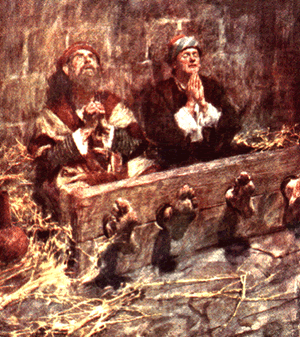
One such instance where this is displayed is Acts 16. Here, we find Paul and Silas unjustly captured by the Romans. They were beaten, tortured, and thrown into the “inner prison“. Verse 25 continues:

And at midnight Paul and Silas prayed, and sang praises unto God: and the prisoners heard them. And suddenly there was a great earthquake, so that the foundations of the prison were shaken: and immediately all the doors were opened, and every one’s bands were loosed. And the keeper of the prison awaking out of his sleep, and seeing the prison doors open, he drew out his sword, and would have killed himself, supposing that the prisoners had been fled. But Paul cried with a loud voice, saying, Do thyself no harm: for we are all here. Then he called for a light, and sprang in, and came trembling, and fell down before Paul and Silas, And brought them out, and said, Sirs, what must I do to be saved? And they said, Believe on the Lord Jesus Christ, and thou shalt be saved, and thy house. And they spake unto him the word of the Lord, and to all that were in his house. And he took them the same hour of the night, and washed their stripes; and was baptized, he and all his, straightway” (Acts 16:25-33).

What a marvelous occurrence! But doesn’t it seem a bit strange to you? Paul and Silas are being tortured! Their feet are being held “fast in the stocks” (vs. 24), a common method of torture in which prisoner’s feet were thrust widely apart and forced through holes in wooden walls. It was utter agony, no doubt. Thankfully, relief comes suddenly as they begin to worship the Lord Jesus “at midnight” (vs. 25). Without warning, the foundation of the prison is shaken by an earthquake, their bands loosen, and all prison doors fling wide open! “We’ve made it! We can go free! God has heard our cries“, Paul and Silas must have exclaimed! However, quite interestingly, the men stay put. They don’t fly out of the prison like other carnal men would do, even when God has seemingly answered their urgent prayers… But why?

As I said, Paul’s life was no longer his own. For Paul, this was a genuine and most-sincere reality. Time and time again, day after day, he proved faithful to God’s “furnace of affliction” (Isa. 48:10). Many men may recite such nice, and spiritual platitudes, but few men actually mean it at heart, and even fewer men ever truly demonstrate it.

What a heart Paul must have had! As he got up from the cold prison floor, finally loosed from his painful bonds, his prayers answered, he sees a single sleeping Gentile out of the corner of his eye… Finally, he realizes the divine purpose of this painful venture: God wants to use Paul to minister mercy to his enemy, and affect salvation for his entire household! And Paul, unlike most of us, actually agrees to God’s sovereign plan. Instead of fleeing to his own comfort and safety, Paul chooses to stay behind, to endure the furnace once more, and continue to bare the reproaches of the Gospel (2 Tim. 1:8).. “Do thyself no harm: for we are all here“, he cries. Paul’s own bonds were utterly insignificant when compared to the glorious salvation of the one who was persecuting him! What a man of God! And what a marvelous example for us to follow. It was no longer about Paul, but about the bigger and divine picture. Likewise, if our lives are not our own, it cannot be about us either. Will we be faithful in God’s dealings? Will we say yes to His sovereignty, even when it hurts our flesh, reputation, image, or freedom? Of Paul, it could rightly be said, “there is that maketh himself poor, yet hath great riches” (Prov. 13:7).

How interesting that God even granted Paul an optional escape. It was almost as if He was testing him, soliciting a proper response. But Paul was a bondservant, or a “doulos” in the Greek, a love-slave (Rom. 1:1; Phil. 1:1; Tit. 1:1). He continually proclaimed, “I love my Master… I will not go out free” (Ex. 21:5)! These were no mere platitudes, for it was well-evidenced in his actions.

Friends, we must likewise choose to remain faithful to God’s furnace, for it’s the furnace that yields the truest character and maturity. God makes His choices from such a place (Isa. 48:10)! Like Paul, our bonds are oftentimes optional: God will only ever deal with us according to the extent that we allow Him: He will never force Himself upon anyone. In the dealings of God, often times, He may even give you a way of escape, and even bless you as you go. But your glorious potential will never be fully realized. You can be a happy Christian, have a happy life, etc., but the investment God has put on the inside of you will never come to fruition if you don’t allow Him to have His perfect and complete work within you (Jas. 1:4; Lk. 21:19)..

And let us not be weary in well doing: for in due season we shall reap, if we faint not” (Gal. 6:9).

Friends, what point is there to have true substance if it’s not to become meat for creation? So many of us want real spiritual substance, we want the anointing, we want the power of God – but we often want it unto ourselves. God, quite contrarily, is looking for a people who will willingly choose to go low and die to the flesh, so that His glory will manifest through them, not just for them (Jn. 3:30)! Like Jesus, Paul here is a pattern of this kind of Christian! He followed the pattern set by King Jesus, and now admonishes us to follow the same (Phil. 3:12-17). Do we have it within us to plead for God’s purging flame (Song. 4:16)? Can we, like Paul, honestly say, “keep me in my bonds until the work is complete!”? This was the heart of Jesus, and this will be the heart of those coming sons that are found with His image! Can we be grateful for our trials and tribulations? Can we thank God for our trial, being assured of the glory to follow after it? Can we be so genuine, in fact, that when the chance comes for us to flee we choose not to. The sleeping Gentiles all around us, though they hate us, are looking to feast upon the God we house inside.. And friends, this great glory inside will be ever-perfected by God’s flame:

For I reckon that the sufferings of this present time are not worthy to be compared with the glory which shall be revealed in us” (Rom. 8:18).

For our light affliction, which is but for a moment, worketh for us a far more exceeding and eternal weight of glory” (2 Cor. 4:17).

Dear reader, there’s a new breed of Christians coming forth in the earth! Christians who care more for the glory of God and His purposes than they do for their own earthly lives! These will be Christians who covet God’s anointing, not unto themselves or to their own end, but for those unto whom they are sent! What will be said of us? I pray the Word of God makes us free.

“The Mercy Seat”

As we know, the TArk 2abernacle erected in ancient times was but for a shadow, built according to the heavenly pattern, and meant to cast it’s shade of truth upon our modern New Testament understanding (Rom. 15:4; 1 Cor. 10:11; Heb. 8:5). What were temporary and natural truths for natural Jews have become eternal and spiritual truths for spiritual Jews, that is, the “Israel of God” (Gal. 6:16). The Tabernacle’s many articles of furniture, the ministry of its priesthood, its sacrifices, etc. all point to a much greater truth concerning Jesus and His church. This is the case when observing the Ark of the Covenant and the mercy seat. We’re given the honor of discerning such rich truth (Prov. 25:2).

Its Special Significance..

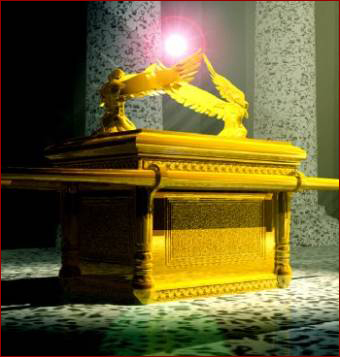
The Ark was composed of wood, overlaid with pure gold. The lid of the Ark was called the mercy seat: it was made of pure gold, having no wood in its composition. It was set “above upon the Ark” (Ex. 25:21).

There was only one other piece of furniture in the Tabernacle made solely of gold: the golden candlestick. The candlestick was much smaller in size and weight, and therefore, according to intrinsic value, the mercy seat was the most valuable of all the holy vessels! This greatly tells us of the preciousness that the mercy seat foreshadowed!

Inside the Ark, underneath the mercy seat (lid), was placed the law on tables of stone, Aaron’s rod that budded, and a golden pot of manna (Heb. 9:4). These items were kept as a memorial (Ex. 16:33:34; 25:21; etc.).

To the earthly Jew, the Ark of the Covenant came to represent God’s manifest presence in the earth. After all, it was considered the throne of God, or the seat upon which He rested in His great glory, beheld by the cherubim. In the New Testament, Paul interprets the special significance of the Ark for us:

Being justified freely by his grace through the redemption that is in Christ Jesus: Whom God hath set forth to be a propitiation through faith in his blood, to declare his righteousness for the remission of sins that are past, through the forbearance of God” (Rom. 3:24-25).

The verb “propitiate” means “to appease, to placate, to make satisfaction.” As is commonly taught, the word “propitiation” is also translated “mercy seat“. Jesus is the personification of the mercy seat! God the Father has been calmed and settled in His holy wrath against sin, all because of the personified “propitiation” of His Son, Jesus. The righteous demands of the Law have been wholly satisfied! His is the only sacrifice that pacifies God’s offended justice. King Jesus is the single, costly, precious article to which we owe our nearest and dearest affections: He is the Chief focus of God’s tabernacle; He is its end. In Him alone do we find true fruitfulness (Aaron’s rod that budded), freedom from law (tables of the covenant), and the bread of life (golden pot of manna)!

Its Role and Function..

As one writer duly notes, there were no chairs in the tabernacle. How odd? There was a table, but no chairs. Why? Because the work done therein was never completed! Its demands were perpetually heard by the ministering priests; sin was never fully and completely dealt with. Therefore, who could take his rest? What purpose would a chair serve? None at all. However, there was indeed a rest to come. There was seat behind the second veil – namely, the mercy seat. The mercy seat that rested upon the Ark well-foreshadowed the wondrous truth to come: God would find His rest in that perfect work which His incarnate Son would perform. This was the place of God’s rest – finally a seat, a throne upon which He could sit and meet with a purged creation:

And thou shalt put the mercy seat above upon the ark; and in the ark thou shalt put the testimony that I shall give thee. And there I will meet with thee, and I will commune with thee from above the mercy seat, from between the two cherubims which are upon the ark of the testimony, of all things which I will give thee in commandment unto the children of Israel” (Ex. 25:21-22).

The fact that the mercy seat formed God’s restful throne in the midst of Israel is referred to in a number of Scriptures. In 1 Samuel 4:4 we read, “So the people sent to Shiloh, that they might bring from thence the ark of the covenant of the LORD of hosts, which dwelleth between the cherubims“. 2 Samuel 6:2 says, “And David arose, and went with all the people that were with him from Baale of Judah, to bring up from thence the ark of God, whose name is called by the name of the LORD of hosts that dwelleth between the cherubims“.

Hezekiah addressed his prayer to God as “O Lord God of Israel, which dwellest between the cherubim” (2 Kgs. 19:15), while the Psalmist cried, “Give ear, O Shepherd of Israel, Thou that leadest Joseph like a flock; Thou that dwellest between the cherubim, shine forth” (Ps. 80:1)! The references are endless.

But how could such a holy God dwell, sit and rest in the midst of such a sinful and rebellious people? The answer is only seen upon the grounds of accepted sacrifice. His throne was a blood-sprinkled one (Lev. 16:14). The blood of the sin offering was sprinkled upon the mercy seat, and there that blood was left to remain. It was left as a testimony that God’s justice had been met, though temporarily (Heb. 10:4). Because of this blood, God could righteously dwell in the midst of a people who had broken His law. Their sin had been covered-over for the time being! What a glorious type this is! Reader, can we realize the great benefit that has become our very own? If the blood of bulls and goats could provide a dwelling of God among His people, how much more can the shed blood of Jesus enable a holy housing of the same (Heb. 9:12-14)! By this perfectly-substantial and sinless blood, redemption has been wholly obtained (Heb. 9:12); God’s dwelling is to become our inheritance!

Its Measurements..

As we know, anything and everything of any typical import was recorded in Scripture in a scrupulous manner, as to never miss a detail in its description, format or appearance. Of course, this is the case with the mercy seat as well. What do the detailed descriptions tell us of this throne’s lid? What special significance’s do these measurements and numbers display? Let’s observe..

The length of the Mercy Seat was two and a half cubits; the breadth was one and a half cubits (Ex. 25:17). Nothing, however, is told us of its thickness. What an interesting omission when compared to Psalm 103:11-12:

For as the heaven is high above the earth, so great is his mercy toward them that fear him. As far as the east is from the west, so far hath he removed our transgressions from us“.

Firstly, let’s consider the length: two and a half cubits. The number two in Scripture repeatedly speaks of witness and separation (Deut. 19:15; 17:6-7; 2 Cor. 13:1; Jn. 8:17; Heb. 10:28; Mk. 6:41; Matt. 24:40-41). The Ark then, and it’s mercy seat, was to be both a witness of God’s revealed presence in the earth, as well as a dividing line between God’s people and His foes: It was a witness to Israel and a separation to her foes. It was both a proof (witness) and a barrier (of separation). What was a blessed symbol to one (the Israelite), was a wretched symbol to another – a symbol of utter and imminent defeat! Wherever the Ark went, disaster was sure to strike for the enemies of God. Dear reader, the same is so with all New Testament saints. The merciful presence of God is our very life-blood, our victory, and our only means of overcoming the world! It is our witness and separation too!

Next, let’s consider the breadth: one and a half cubits. The number one in Scripture is representative of unity, God who is the beginning, or that which is first (Deut. 6:4; Jn. 17:20-22; Acts 4:32; 1 Pet. 3:8; Jn. 1:1-3; Rev. 1:11; Isa. 41:4; 44:6; 48:12). This tells the studious reader that the Ark of God was to be a unifying factor for His people. For New Testament saints, we see that such communion in the Holy Ghost is the only true means by which we can achieve true corporate unity (Eph. 4:16). The body of Christ, apart from an attachment to God’s Ark, proves to be an utter, tangled, and dis-unified mess!

Furthermore, the number one here also represents how God has, from the very beginning, desired to make His abode with mankind. In fact, this was our Lord’s first and chiefest motive in creating the world, and His basis for slaying His Lamb from the foundation of it (Rev. 13:8). He has created man for rich fellowship:

Thou art worthy, O Lord, to receive glory and honour and power: for thou hast created all things, and for thy pleasure they are and were created” (Rev. 4:11).

Yes, the Lord hath made all things for Himself (Prov. 16:4), and  therefore “of Him, and through Him, and to Him” are all things (Rom. 11:36). What wonderful evidence we find for this in the dimensions of the mercy seat – God’s throne of communion in the earth!

Its Ornamentation..

Upon the mercy seat were two “cherubims“, one at either end. These figures were made of the same slab of gold as the Mercy Seat, and were beaten into shape (Ex. 25:17-19). The identity, role and purpose of these figures seems to have baffled most scholars for centuries. Who are these cherubim? Why are they atop the mercy seat? What do they represent for us?

In short, the significance of these cherubim are found in the fact that they “overshadow” God’s throne, ever-protecting, as it were, His precious glory (Heb. 9:5). That there is some profound import connected with these figures is quite obvious from the words of Paul:

And over it the cherubims of glory shadowing the mercy seat; of which we cannot now speak particularly” (Heb. 9:5).

How peculiar? Paul says there is much to be said of these creatures, yet the Hebrews could not yet hear it. They were likened to spiritual babes and would inevitably choke if fed such “strong meat” (Heb. 5:12-14). Only those saints who are “exercised” in God’s truth will ever properly glean what these cherubim point to.

The first time these cherubim are mentioned in Scripture is the account in Genesis, directly after the fall of man:

So he drove out the man; and he placed at the east of the garden of Eden Cherubims, and a flaming sword which turned every way, to keep the way of the tree of life” (Gen. 3:24).

Here, they are said to have a flaming sword, guarding the way to the Tree of Life. This account, coupled with their description on the mercy seat, seem to tell us that these cherubim have some association with administering God’s judicial authority in the earth. Much can be said regarding their identity, their position, and their role, but we cannot address it now. Let it be sufficient for now that we acknowledge the great volume of truth held therein: there is much more about these beings than first meets the eye. You’ll want to tune in at a later date for a detailed research.

Its Blessedness..

It is no accident that the Ark and its mercy seat are completely hid from natural view, and had very restricted access. They reside behind the Tabernacle’s second veil, far away from all natural sunlight, and even far from the candlelight of the Holy Place. The only light in this realm is that of the visible glory of God shining forth off the Ark (Ps. 80:1, 3; 50:2; 94:1; Ezek. 43:2; Dan. 9:17; Rev. 21:23). As such, we see this final veil to be that realm reserved for those who choose to wholly seek after it (Jer. 29:13; 3:10; 24:7; Deut. 30:2, 10; Ps. 119:2, 10, 58, 69, 145; Joel 2:12; Acts 8:37). It is only the hungry and the thirsty who will readily be filled with what God is offering to humanity’s race (Matt. 5:6). God is One who desires to be sought after; why else would He rend His heart in such a way, even sending His own incarnate Son to purchase a people for Himself? He has done so to draw forth all men (Jn. 12:32; Rom. 5:17-19; 1 Tim. 2:6). Whosoever will, let him come! Let him push pass the throngs of mere form and  religion, through the bloody outer court, through all natural sunlight, through the Holy Place and the ministry focused upon men (Ezek. 44)! God is waiting for a people to apprehend Him! He is patiently waiting upon His throne of mercy, ever-looking for the fruit of the earth to fully ripen (Jas. 5:7). Will you be one who follows after your inheritance? Will you be one who recognizes God’s great desire? Will you fully follow after Jesus, the blessed Forerunner? He has gone to that realm as a trailblazer, and now enables us to follow (Heb. 6:19-20)! His most-holy blood has been well-sprinkled, the privilege of access can be ours! Communion with your Maker is awaiting! These precious details of the mercy seat prove such to be so.

Let us therefore come boldly unto the throne of grace, that we may obtain mercy, and find grace to help in time of need” (Heb. 4:16)!

“Doves Eyes”

dove

Behold, thou art fair, my love; behold, thou art fair; thou hast doves’ eyes” (Song. 1:15).

What a field of divine treasure we would miss if we limited God’s Word to it’s natural circumstance! What a blessing we would avoid if we neglected His deeper truths! In fact, Scripture itself identifies the complexity and density of meaning that God’s Word possesses: “Have not I written to thee excellent things in counsels and knowledge?” (Prov. 22:20). The word “excellent” here actually means “threefold; weighty“. There is at least a three-fold application of God’s Word: it possesses a natural and literal significance, a spiritual significance, and a prophetic significance. Friend, we should seek each and every application, not only those of which we are accustomed to. Why should we neglect God’s counsel here? Let’s seek His weighty truth! The Psalmist has rightly said, “thy commandment is exceeding broad” (Ps. 119:96)! Oh what a wonder!

Such is so regarding the above verse, from the Song of Solomon. So many believers limit the Song of Solomon to a natural love story, and while this is true and beneficial, don’t you see more? If Paul likened the union of Christ and His church to that of a husband and wife (Eph. 5:25-32), shouldn’t we search the Scriptures to see the many aspects of this relationship? Of course. Paul’s metaphor was not for a vain reason! It was divinely inspired.

What are doves’ eyes, and what do they have to do with the bride who “hath made herself ready” (Rev. 19:7)? As always, there is much to be discovered and gleaned for the serious Bible student.

Naturally speaking, the doves of Syria had very large eyes, and many think this to be the meaning of the compliment given by Solomon to his lover, the Shulamite woman. “She must have had such remarkably fine eyes“, according to many Bible expositors. But is that all we are to receive from this verse of Scripture? I don’t believe so. How does this glorious attribute apply to One “greater than Solomon” (Lk. 11:31), and to the bride that He is longing to possess, as is clearly typified by Solomon and his Shulamite lover? Let’s see..

A fixed and certain gaze. Interestingly, doves are able to see a remarkable 300 degrees peripherally. However, they are only able to focus on one thing at a time. Can’t we determine the obvious spiritual significance of this truth?

One thing have I desired of the LORD, that will I seek after; that I may dwell in the house of the LORD all the days of my life, to behold the beauty of the LORD, and to enquire in his temple” (Ps. 27:4).

And again we read concerning Mary’s attendance to the Word of God:

But one thing is needful: and Mary hath chosen that good part, which shall not be taken away from her” (Lk. 10:42).

And finally concerning Paul the Bible says,

Brethren, I count not myself to have apprehended: but this one thing I do, forgetting those things which are behind, and reaching forth unto those things which are before, I press toward the mark for the prize of the high calling of God in Christ Jesus” (Phil. 3:13-14).

How appropriate then that this attribute is to be applied to the emerging bride of Christ! Such a forward focus is to be her goal.. Such a single-eyed devotion is to be her prize and possession.

A faithful and unrelenting love. The second attribute concerning doves’ eyes is related to the first. A dove, once it has begun its focus on its mate, is not easily distracted; doves mate for life! Once they have decided on something to behold, they are able to keep their gaze forever, whereas most other birds are fleeting. How wonderful that God Himself attributes this characteristic to the bride of Christ. She too is continually and steadfastly tending to Jesus, no matter what distractions and “other lovers” may come her way. She simply cannot look away. When other lovers appear to entice her, she remains faithful.. The world may ask “what is thy beloved more than another beloved, O thou fairest among women? what is thy beloved more than another beloved, that thou dost so charge us?” (Song. 5:9). But her answer will faithfully be “My beloved is white and ruddy, the chiefest among ten thousand” (Song. 5:10)! Such is the heart of the true bride; she is the personification of faithfulness:

Who can find a virtuous woman? for her price is far above rubies. The heart of her husband doth safely trust in her, so that he shall have no need of spoil” (Prov. 31:10-11).

Another translation reads, “Her husband trusts her with all his heart, and he does not lack anything good” (Prov. 31:11, GWT). How can this bride posses such a marvelous quality? Because her “eyes” have been enlightened!

That the God of our Lord Jesus Christ, the Father of glory, may give unto you the spirit of wisdom and revelation in the knowledge of him: The eyes of your understanding being enlightened; that ye may know what is the hope of his calling, and what the riches of the glory of his inheritance in the saints” (Eph. 1:17-18).

These “doves’ eyes” are in sharp contrast to those of “a high look” (Ps. 101:5), those with an “evil eye” (Matt. 20:15), and those with “eyes full of adultery” (2 Pet. 2:14). What will our own testimony be?

“Disciples and Multitudes”

john the belovedPart 2 of 2

As we have before mentioned, Jesus had differing “ranks” of believers following Him even in His earthly ministry. Multitudes met Him for His healing gift, His bread in the wilderness, etc. Within those, at least 70 disciples called Him master, while only 12 of the 70 actually left all to follow Him. Furthermore, even within the 12, there were 3 who were singled out: Peter, James and John. These were especially and peculiarly close to Jesus, being with Him in His hours of trial, and during His glorious Transfiguration. But even within the 3, there was 1 man, John the beloved. John was the only one of the entire mass who found the heart of God! I dare say he was the highest ranking “official” of the whole lot.

Let’s examine the stark difference between these said ranks, as present within the pages of Holy Writ. What saith the Scriptures concerning these schisms that were and are yet present within the Christendom of yesterday, today and tomorrow? You just may be surprised… In examining these precious gems, we will better understand what it really means to be “a disciple“.

The Greek word used for “disciple” literally means, “a pupil, a disciplined one, a learner“. It comes from a root that means “to understand“. We will soon see this definition to be especially accurate.

On the contrary, the Greek word used for “multitude(s)” literally reads “a company, a throng, a riot, a casual collection of people; the ignorant masses“. Wow! What more must be said of such a rank? These were they whose shallow dedication to our Lord kept them at a distance. How sad. Sadder still that these “multitudes” are yet present today.

Concerning the disciples, the Bible has much to say. After all, God’s great book is living and active (Heb. 4:12), and thankfully continues to speak to the bowed down ear. The very first mention of the word “disciple” is found in Isaiah’s prophecy. He tells us that disciples are full of and sealed with God’s law (8:16). We see this a constant theme, for Jesus also said “If ye continue in my word, then are ye my disciples indeed…” (Jn. 8:31). What a wonderful foundation for anyone who seeks King Jesus – a true disciple will always be one who radically clings to the Word of God!

What else does Scripture say in defining a disciple? What more do the Pages of Wonder display? Let us observe..

A disciple is he who is radically attached to the person and presence of Jesus (Matt. 8:21), continually meeting Him in the mountain, a clear type of Zion (Matt. 5:1). A disciple follows King Jesus to his or her own detriment. Long after the multitudes have left with a full belly, the disciples follow our Lord into a boat, and endure a mighty storm (Matt. 8:23), seeing Him even tread upon their troubles (Matt. 14:26)! A disciple is he who sits with, eats with, and ministers to the sinner (Matt. 9:10). A disciple fasts for the Bridegroom (Matt. 9:15). A disciple prepares for the harvest, and prays for laborers (Matt. 9:37). A disciple has power over unclean spirits, and ministers God’s healing graces (Matt. 10:1). A disciple is seen “as” the Master (Matt. 10:24-25). A disciple is not weighed down with mere religion (Matt. 12:1-5), actually being despised by it (Jn. 9:28). A disciple is likened to and equated with King David (Matt 12:3-4), even eating God’s great shewbread, “the Bread of Faces“!

A disciple is he whom Jesus calls His “brethren” (Matt. 12:49). A disciple is initiated into the deeper truths of God (Matt. 13:10-11). A disciple is close to the Lord, and has first-hand revelation of His will (Matt. 13:36). A disciple is who God uses to feed the multitudes (Matt. 14:15-16; 15:36). Disciples are they who prepare the way of the Lord (Matt 14:22), they who forsake the many traditions of men (Matt. 15:2), and they who don’t grow offended at God’s Word (Matt 15:12). A disciple has a deeper revelation and knowledge of God (Matt. 16:13-17), possesses privileged information (Matt. 16:20), and sees God in all of His glory (Matt. 17:1-9). A disciple is he who denies his own carnal flesh (Matt. 16:24), he who is continually “going up” to Jerusalem, the City of God in the Spirit (Matt. 20:17-18). A disciple is obedient to the Word of God (Matt. 21:6; 26:19). A disciple receives the “sign” of His coming (Matt. 24:3)! Hallelujah! Do you want to be a disciple?

Disciples are they eat the flesh of the Son of Man, and drink of His blood, thus receiving His Divine life (Matt. 26:26). Disciples beg and care for God’s body (Matt. 27:57), while getting a glimpse of His heart (Matt. 14:32-39). Disciples are marching onward to perfection (Lk. 6:40). Disciples sit at God’s feet (Lk. 10:38-42). A disciple loves Jesus more than all else (Lk. 14:26), takes up his cross (Lk. 14:27), and forsakes all that he has just to follow the Lord (Lk. 14:33). A disciple is he or she who continues with Jesus in His temptations (Lk. 22:28). A disciple ministers to Jesus’ needs (Jn. 12:1-8). A disciple is especially loved of the Lord (Jn. 13:23). A disciple reciprocates that love back to God and to his fellow man (Jn. 13:34-35), and bears much fruit (Jn. 15:7-8). A disciple is the first to walk in resurrection power (Jn. 20:2), the first to witness to God’s truth (Jn. 21:24), and the first to receive the promise of the Spirit (Acts 2:1-3)! A disciple has vision (Acts 9:10), is full of good works and deeds (Acts 9:36), and through much tribulation do they enter the kingdom of God (Acts 14:22 with Heb. 4:6)!

What a sharp contrast from the mere multitudes of Christians on the outer fringe of Christianity! The multitudes are sent away (Matt. 13:36; 14:22) because Jesus well-knows the apathy resident within them (Rev. 3:15-20). The multitudes are spiritually weak and therefore grow weary after a mere three days with Jesus (Matt. 14:14). The multitudes follow no shepherd, and are therefore utterly scattered and confused (Matt. 9:36). The multitudes are content to simply have their earthen needs met (Matt. 12:15; 19:2; 15:30; Lk. 5:15), never deeply investing into God’s kingdom. Earthly blessing and physical healing seem to be their highest priorities (Matt. 15:30-31). The multitudes cry “Hosanna” one day, and “crucify” Him the next (Matt. 21:9; Mk. 15:13). In fact, the multitudes (along with Judas, the tainted disciple) are the very ones who led Jesus to his captives (Matt. 26:55; Lk. 23:1)! The multitudes represent a people of mixture (Ex. 12:38; Matt. 13:24-26). They are a people who “fell a lusting” for flesh (Num. 11:4). The multitudes hear the Word of God but do not rightly respond to it (Matt. 23:1). They have a shallow understanding of Jesus (Matt. 14:5; 21:11). The multitudes follow Jesus “because they saw his miracles which he did” (Jn. 6:2). Multitudes are scorned (Job 39:7), and, like the Pharisees, often possess but the empty shell of religion, while lacking the true loving substance deep within (Lk. 19:39). The multitudes exalt sin and sinners (Mk. 15:7-11). God’s wisdom is said to be hidden from the multitudes (Matt. 13:34), and Jesus spoke to them in parables because they were so spiritually insufficient. The multitudes do not walk in love, even persecuting and slandering the 5-fold ministry (Acts 16:22-24). They bring no significant fruit to perfection (Lk. 8:14), and serve God from a distance (Matt. 13:2). The multitudes seem to trust in their large numbers (2 Chron. 32:7), but this mindset will never yield much fruit (Ps. 33:16; Isa. 5:14). The multitudes are religiously deceived (Matt. 27:20). They are largely ignorant of the power of God and thereby unable to draw on His glory (Mk. 5:31). The multitudes represent a divided people, rather than a unified people (Acts 14:4). They are riddled with strife (Acts 23:7). Jesus is grieved by these multitudes because of their obvious weakness and lack. He has compassion upon their insufficiency (Matt. 14:14). They cannot spiritually feed themselves (Matt. 15:33), but rely on the “bread” of another (Jn. 5:3). The multitudes are greedy for earthly blessing (Mk. 3:9). They are said to be impotent, blind, halt, and withered (Jn. 5:3). Scripture says the multitudes “are gone into captivity, because they have no knowledge”; They are “famished, and dried up with thirst” (Isa. 5:13). The multitudes are seen hindering the move of God and refusing the liberty of the Holy Spirit (Matt. 20:30-31). The multitudes represent a people who are content to merely look upon the power of God, rather than partake of it themselves (Acts 2:6). The multitudes are often quick to do evil (Exod. 23:2). Jesus called the multitudes “a generation of vipers” (Lk. 3:7).

Who can fail to see the dramatic difference that Scripture places upon these differing ranks? May we receive fresh vision to follow Jesus like never before!

“The Ranks of Christian Believers”

disciplesPart 1 of 2

Very many Christians are unaware of the idea that there are ranks within the body of Christ. Yes, ranks. Just as the many armies of our world are duly composed, so it is within the mystical body of Christ (Rev. 19:19). In fact, Scripture says of the bride that she is “terrible as an ARMY with banners” (Song 6:10). Dear reader, armies are composed of several different parts, of course each one being vital (1 Cor. 12:21), but separate and distinct nonetheless. As another has well said, “A building in its formative stages appears to be but one vast conglomeration of scaffolds, framework, brick and steel–and it is not too evident how many rooms there will be, and for what purpose the rooms are intended. But in the day of its completion it is all quite evident. So shall it be with the Church of Christ. For there are celestial bodies and terrestrial bodies; one glory of the sun, another of the moon, and another of the stars–and even one star differeth from another star in glory. So shall it be in the day of Christ, when each man is revealed in His own order according to the plan and purpose of God” (George Warnock, The Feast of Tabernacles).

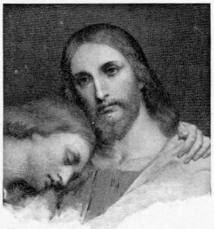
Yes, some are spiritual Generals while others are new recruits in God’s great army. Such was the case even in Jesus’ day, and in the early days of Christianity. Jesus had multitudes and disciples. Even within the disciples He had the 70, then the 12, then the 3 (whom He brought with Him on the Mount of Transfiguration), and finally the one, John, who was the “disciple whom Jesus loved” (Jn. 13:23), the one who was intimate with God, laying his head upon Jesus’ chest, and receiving the great revelation (Rev. 1:1).

Paul confirms these thoughts several times. He repeatedly used military terms when referring to the body of Christ. He primarily used these words when speaking of the resurrection to come:

For as in Adam all die, even so in Christ shall all be made alive. But every man in his own order: Christ the firstfruits; afterward they that are Christ’s at his coming” (1 Cor. 15:23).

The word used here for “order” literally means “to arrange, a band, a troop, a class in arrangement“.

Later he again says,

There is one glory of the sun, and another glory of the moon, and another glory of the stars: for one star differeth from another star in glory. So also is the resurrection of the dead” (1 Cor. 15:41-42).

Yes, it is true. As one star outshines another in our natural universe, so it will be among believers: “The path of the just is as a shining light, that shineth more and more unto the perfect day” (Prov. 4:18). In the ages to come, some shall sing “this little light of mine“, while others will have paid a greater price, and consequently shall shine with a greater degree of splendor.

Paul has said, “Some must enter therein…” (Heb. 4:6). Notice he says “some” and not “all“. Could it be true that only a high-ranking remnant will ever fully appropriate God’s best, and fully apprehend that for which they’ve been apprehended of? Perhaps.

There are threescore queens, and fourscore concubines, and virgins without number. My dove, my undefiled is but one; she is the only one of her mother, she is the choice one of her that bare her. The daughters saw her, and blessed her; yea, the queens and the concubines, and they praised her” (Song. 6:8-9).

We should not be shocked at the potential for such a truth. The Scriptures themselves plainly reveal the existence of both “wise” and “foolish” virgins (Matt. 25:1-12). We are so quick to divide these people with heaven and hell, but that is not always the case. “Virgins” in Scripture are a thematic constant: they most always speak of the people of God. These “virgins” are indeed heaven-bound, but will lose the prize of the high [ranking] calling which they should have been attaining (Gen. 15:1; Phil. 3:14), namely, a position as the bride of Christ. Friend, the bride will be she who “hath made herself ready” (Rev. 19:7-8).

Jesus too accredits this truth. To His many followers He said, “But many that are first shall be last; and the last first” (Mk. 10:31). He further said that the publicans and the harlots go into the kingdom of God “before you[Pharisees]” (Matt. 21:31), thus ascribing some a higher rank than even the ecclesiastical powers that be. What a wonder! He speaks in another place of “much” and “little” love (Lk. 7:40-47). Those who are forgiven much love much; the greatly forgiven seem to chase Jesus up the ranks more fervently than those who have been forgiven little. In Luke 18:14, Jesus continues to say that the humble shall be exalted (in rank?).

In His Parable of the Sower, Jesus speaks of 30, 60 and 100-fold fruit (Mk. 4:8). Could it be true that Christians can actually birth differing measures of fruit? Of course, the Word is plainly clear. The fruitful one will likewise rank fruitfully, while the fruitless will rank fruitlessly: all dependent upon the state of one’s heart! No wonder Paul’s counsel to us was to be “filled with fruits of righteousness” (Phil. 1:11)! God would that every man, woman and child become a General in His great army, filled to the brim with fruit, 100-fold! And why 100-fold fruit? Because only 100-fold fruit will be full enough to spill over onto the paths trodden daily by sinners and heathen. 100-fold fruit is the only measure of fruit that will be duly given to the nations; only an overflowing well can quench the thirst of those standing by it (Song. 5:1)!

Scripture illustrates the rank principle for us with the vision of first ripened fruit. James tells us, “Of his own will begat he us with the word of truth, that we should be a kind of firstfruits of his creatures” (Jas. 1:8). The firstfruits are the first-ripened fruit. In every harvest there is always fruit that matures early. There’s also what is called the “first of the firstfruits“. If the early ripened fruit is not picked early, it will simply rot on the vine. In the Old Covenant economy, the firstfruits (of man, cattle and harvest) ALWAYS belonged to the Lord:

Speak unto the children of Israel, and say unto them, When ye be come into the land which I give unto you, and shall reap the harvest thereof, then ye shall bring a sheaf of the firstfruits of your harvest unto the priest” (Lev. 23:10).

Reader, it’s no different in our day. There will be a high-ranking company of firstfruits who come to fruition before the remainder, and consequently must be plucked and harvested to avoid spoilage. Perhaps this is the overcomer, the manchild’s ascension, as noted in Revelation 12? We think so. The book of Revelation goes on to tell us of the character of these firstfruits:

And I looked, and, lo, a Lamb stood on the mount Sion, and with him an hundred forty and four thousand, having his Father’s name written in their foreheads. And I heard a voice from heaven, as the voice of many waters, and as the voice of a great thunder: and I heard the voice of harpers harping with their harps: And they sung as it were a new song before the throne, and before the four beasts, and the elders: and no man could learn that song but the hundred and forty and four thousand, which were redeemed from the earth. These are they which were not defiled with women; for they are virgins. These are they which follow the Lamb whithersoever he goeth. These were redeemed from among men, being the firstfruits unto God and to the Lamb” (Rev. 14:1-4).

To be continued…

“God’s Furnace Is My Friend!”

the furnaceI am the rose of Sharon, and the lily of the valleys. As the lily among thorns, so is my love among the daughters” (Song. 2:1-2).

It never ceases to amaze me of the wonderful truths we found hidden in Scripture! I often pray for a heart to glean God’s mysteries. One such truth is regarding God’s furnace. Yes, you read that correctly: His furnace! Did you know that His furnace is to be your friend?

Here, in the Song of Solomon, we find the blossoming bride in a valley. Yes.. a valley (Ps. 23:4)! Soon after however, we see her bridegroom (Jesus) distinguishing her out from among her apathetic peers, the Daughters of Jerusalem: “As the lily among thorns, so is my love among the daughters!” But what could cause such? What could be the source of such a dramatic contrast as this, a lily among thorns? Reader, could it be the valley? Yes, I believe so. What men have avoided and shamed for centuries is actually God’s road to a double portion! No wonder I am to befriend and embrace it!

As the prophet has said, “Behold, I have refined thee, but not with silver; I have chosen thee in the furnace of affliction. For mine own sake, even for mine own sake, will I do it: for how should my name be polluted? and I will not give my glory unto another” (Isa. 48:10-11). It seems that this “valley” or “furnace” is the very place from which God plucks His sweetest fruits. This tells us a very important truth: my response in the valley, and my response in the furnace is absolutely vital! For it is here that God makes His choices. Reader, your furnace will either make you a lily or it will make you a thorn! Befriend this harsh wilderness? Embrace this beloved enemy? Yes! For this place is God’s avenue toward real fruitfulness (Song. 6:11).

Finally, let’s examine Job’s life.. He is one of the most persecuted men in all of Scripture. But what was his response to such a valley?

Then said his wife unto him, Dost thou still retain thine integrity? curse God, and die. But he said unto her, Thou speakest as one of the foolish women speaketh. What? shall we receive good at the hand of God, and shall we not receive evil? In all this did not Job sin with his lips” (Job 2:9-10).

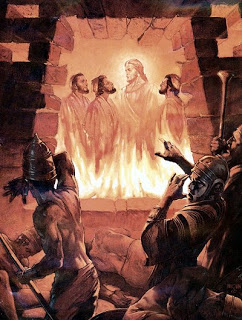
Even when his own wife counseled him to flee the furnace, Job remained true! Why so? Because Job knew that the furnace is God’s avenue to real fruitfulness! The valley is God’s choosing ground! He believed it to be absolute foolishness to jump out of the very thing God has ordained for his fruitfulness. Friends, if we could only endure the dealings of God (Heb. 6:12-15)! If only we would listen to the counsel of Scripture and be “excercised” thereby (Heb. 12:8-11)! If we could only stay and remain in God’s furnace, and let patience have her perfect work! What a people we would become! Oh the lilies our Lord would discover!

But who may abide the day of his coming? and who shall stand when he appeareth? for he is like a refiner’s fire, and like fullers’ soap: And he shall sit as a refiner and purifier of silver: and he shall purify the sons of Levi, and purge them as gold and silver, that they may offer unto the LORD an offering in righteousness. Then shall the offering of Judah and Jerusalem be pleasant unto the LORD, as in the days of old, and as in former years” (Mal. 3:2-4).
It’s only as we’re purged from ALL of our evil influences that we can be offered “pleasant unto the Lord“. Let’s allow the fire of God to do it’s job (Isa 40:4)! The furnace is my friend.