“A Superior Sanctuary Grows Superior Fruit”

arkPart 16

As we’ve said, because of the superior glories of our Lord’s heavenly sanctuary, we now find ourselves graced with potential for superior fruit. What sort of fruit? Fruits of a goodly sort! These particular inward crops are seen in Paul’s discussion of the tabernacle’s inner contents. Each article of furniture is symbolic, and serves as a “figure of the true” bounty Jesus grows upon His saints (Heb. 9:24). They typify the sort of spiritual production to be harvested by each New Covenant priest, as he treks down his tabernacle journey. Observe.

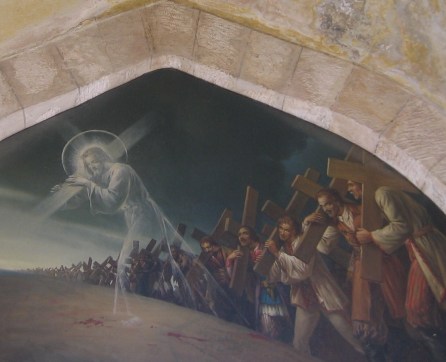
First and foremost, we learn of a better spiritual walk. This particular fruit isn’t seen by the tabernacle furniture, but by the priest’s walk through the tabernacle structure. The Bible uses this trek in a metaphorical sense, as a symbol of our spiritual journey toward God’s fullness (Heb. 4:6). Like those priests within the earthen tabernacle, we too are on a race toward the throne-room.

Know ye not that they which run in a race run all, but one receiveth the prize? So run, that ye may obtain. And every man that striveth for the mastery is temperate in all things. Now they do it to obtain a corruptible crown; but we an incorruptible” (1 Cor 9:24-25).

The heavenly sanctuary is far superior simply because it furnishes a spiritual path, not a natural. It’s called “the path of the just” (Prov. 4:18) and the “narrow way” unto life (Matt. 7:13-14). It’s named “a new and living way… through the veil” (Heb. 10:20-23), and “the way of holiness” that no wayfaring man may pass over (Isa. 35:8; 19:23). We walk this passage as we grow from “strength to strength” (Ps. 84:7), from little faith to increased faith (Rom. 1:17), from one measure of glory to another (2 Cor. 3:18), and from spiritual infancy to aged maturity (Gal. 4:19; Heb. 5:12-14). Paul compared this road to a physical race that is run (1 Cor. 9:24): It will bring us to an “expected end”, that is, the ultimate fruition of our spiritual growth, the very top of God’s “secret stairs”, and the very throne of God (Jer. 29:11; Song. 2:14; Rev. 3:21; Gal. 4:19).

To refuse this priestly trek is to embrace an alternative road. All other paths will be “broad” ones, and they lead only to spoilage and misery (Matt. 7:13). The Bible calls it “the way of Cain” (Jude 11), and “the way of the wicked” (Prov. 4:19). It is a blindly-led path, and a walk full of stumbles and darkness (Matt. 15:14; Jn. 12:35; 1 Jn. 2:11; Jer. 13:16). Any true priest must embrace our Lord’s better and righteous path. The Lord Jesus has already paved the road for us – all we must do is follow in His steps (Heb. 6:19-20; 4:14; 9:12, 24; 1 Pet. 3:22; Jn. 14:2).

 “Blessed is the man that walketh not in the counsel of the ungodly, nor standeth in the way of sinners, nor sitteth in the seat of the scornful. But his delight is in the law of the Lord; and in his law doth he meditate day and night. And he shall be like a tree planted by the rivers of water, that bringeth forth his fruit in his season; his leaf also shall not wither; and whatsoever he doeth shall prosper” (Ps. 1:1-3).

Secondly, our Lord’s superior house births superior illumination: it is superior because it is spiritual in nature, not only natural. We see this fruit as we enter the first door of the tabernacle structure: Here, we find “the [golden] candlestick” (Heb. 9:2).

This candlestick was a very important instrument because it was the Holy Place’s only source of light for the. No natural light could seep through the structure, so the candlestick was essential for priestly duties to be performed (Lev. 24:1-4). As such, the candlestick is a clear symbol of the “light” and illumination given by the Holy Spirit, as well as the brightness of God’s presence amidst the great darkness of our world (Ps. 18:28; Jn. 1:9; 7:17; 8:12; 12:35, 46). Like the priests in the natural sanctuary, believers too need for God to light the way – He’s our only hope for a path trodden aright (Isa. 50:10; Job 33:28). We mustn’t rely on the Outer Court’s light, that is, on worldly light or intellectual instruction: Such a dim glare will never furnish a fruitful path. If we ignore the golden candlestick’s provision then our illumination, if any, will be scarce. We will know only of blood and know nothing of glory. Let us rather seek the Holy Spirit’s bright guidance, and let us trust in the shining of His wisdom alone. May we be a people who faithfully trim our wicks and thereby have light without end. Reader, this is the better fruit which our Lord’s sanctuary will furnish!

Thirdly, we learn of promised rich spiritual meat. This fruit is well-seen in the next article found in the Holy Place, “the table of shewbread” (Heb. 9:2). The table of shewbread held the fresh bread the priests ate: they ate it together as a memorial unto the Lord (Lev. 24:7-9). This shewbread is symbolic of the person of the Lord Jesus Christ (as the bread of heaven) and of His nourishing and sustaining Word (Jn. 1:1; 6:32-35, 50, 55, 58). This spiritual sanctuary is more fruitful because it feeds us with spiritual manna, not natural: Yes, the Lord’s Table is a spiritual one (1 Cor. 10:17-22). Paul taught the Hebrews that a grasp upon the mere natural pattern would be to insist on far-lesser fruit (Matt. 9:36; Jn. 10:1). Jesus should be the winner of our gaze, for He sustains His flock through every wilderness (Jn. 10:9) and He furnishes feast after feast of spiritual meat (Jn. 6:55; Ps. 23:1-6; Heb. 5:12-14).

This shewbread has also been called “the bread of faces”, as it is the place from which we grow most-intimate with God and receive great glimpses of His character (2 Cor. 4:6; Lk. 10:22; 1 Jn. 1:9; Jn. 1:14; 3:13; 14:9-10; Col. 1:15; Heb. 1:3). How much greater is this heavenly bread! How much more fruitful is the Lord of this heavenly sanctuary! Yes, Jesus bakes the richest of all manna, for His bread reveals the very “face” of God (2 Cor. 4:6). Why should Paul’s readers cling to the earthly and lesser? King Jesus bears far-sweeter fruit.

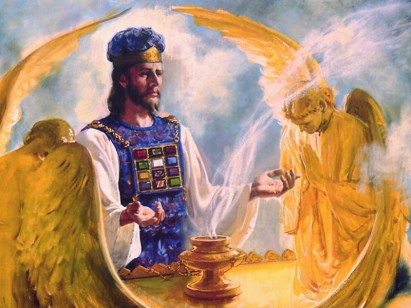
Next, Paul tells us of the great spiritual communion we may now share. The depths of this truth are figuratively seen in the third instrument, “the golden censer”, also known as the altar of incense (Heb. 9:4). This “censer” was the structure upon which priests burned their continual incense: It was then brought within the veil, into the Most Holy Place (Lev. 16:12-13). The list of ingredients used for this incense was very specific, and it was considered “holy for the Lord” (Exod. 30:1-10, 34-38). Again, these details become symbolic for us. The censer represents the intercession and pure worship that ascends toward God’s spiritual throne (mercy seat), as it wafts through the veil of the heavenly sanctuary (Rev. 8:3-4; Jn. 4:23-24; Rom. 8:26-27, 34; Heb. 7:25). The incense we offer is spiritual in nature (Ps. 141:1-2; Rev. 5:8; 1 Cor. 1:2; Mal. 1:11).

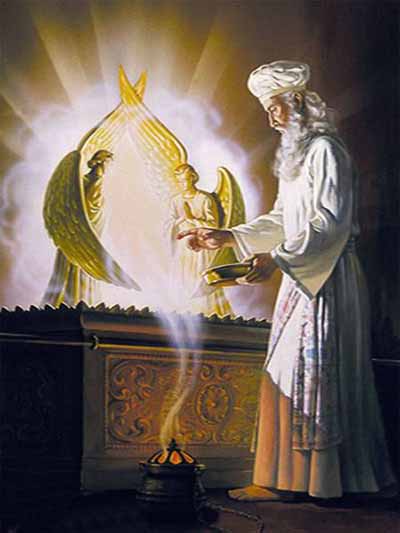
Lastly, but certainly not least, we learn of our coming spiritual fullness. This, yet again, is seen by the figurative nature of the tabernacle’s final piece of furniture, “the ark of the Covenant” (Heb. 9:4). The Bible uses the ark as an emblem of victory (Ps. 132:8; Num. 10:35-36), of blessing (2 Sam. 6:11), and of God’s glory (Lev. 16:2; Josh. 7:6; Jdg. 20:27; 2 Sam. 7:2; Ps. 78:61; 80:1; 99:1). Furthermore, because of the ark’s unique location in the tabernacle, its also used an emblem of God’s fullness.

The ark was uniquely located in the Most Holy Place, the final and most holy division of the sanctuary structure (Exod. 25:16). It’s was the only article of furniture found there. As we’ve said, there was a veil hanging at the entrance of the Most Holy Place in times past; it was to separate the two divisions of the sanctuary. (Exod. 26:33). This division served to display the great breach that existed between God’s perfect glory (the ark) and man’s sin. In by-gone days, no provision had yet been made for mankind’s total redemption, and thus a veil must be hung to bar his entrance into God’s presence. This veil, however, was rent from top to bottom when Jesus offered His life on the cross (Mk. 15:38). As such, mankind now has access into the very fullness of God’s presence and glory. The ark, and the Most Holy Place in which it resides, is symbolic of our attainment of God’s glory, and our full union unto Him as a bride without spot (Eph. 5:25-32). The Bible likens such fullness to the “hope” of the church, and to our coming inheritance (Heb. 12:3-17). Indeed, we have “hope” set before us to “entereth into that within the veil” (Heb. 6:19). We can readily hope for such glory because Jesus has already entered as our Forerunner (Heb. 6:20). It is our very calling (1 Thess. 2:12)!

Therefore being justified by faith, we have peace with God through our Lord Jesus Christ: By whom also we have access by faith into this grace wherein we stand, and rejoice in hope of the glory of God” (Rom. 5:1-2).

To whom God would make known what is the riches of the glory of this mystery among the Gentiles; which is Christ in you, the hope of glory: Whom we preach, warning every man, and teaching every man in all wisdom; that we may present every man perfect in Christ Jesus” (Col. 1:27-28).

To be continued…
“Jesus Ministers from a Superior Sanctuary”

tabernaclePart 15

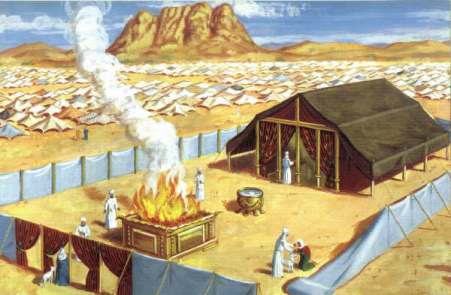
In addition to the particular covenant that guides him, each and every priest must also have a sanctuary (tabernacle) from which his duties are performed. Like all previous proofs given by Paul in his letter to the Hebrews, Jesus’ priestly sanctuary is likewise far superior to that of all old covenant shadows. But why? Paul gives several reasons.

First of all, Jesus’ sanctuary is far-superior because it’s a heavenly sanctuary. Old covenant sanctuaries were of the earth and Paul called them “worldly” (Heb. 9:1), while the New Covenant sanctuary is that of heaven and thus superior (Heb. 8:2-5; 9:11; 1 Cor. 15:50; Jn. 3:3-6).

Next, our Lord’s sanctuary is a powerful and miraculous sanctuary. All old covenant sanctuaries were directed by God, yet built by men. The heavenly sanctuary is deemed far-more fruitful because it was “not made with [human] hands” but was that which “the Lord pitched, and not man” (Heb. 8:2; 9:11; Acts 7:48).

Thirdly, Paul calls it an accessible sanctuary. The heavenly sanctuary is accessible (Heb. 9:25-28), while the earthly was most-often unapproachable (Heb. 9:6-7). The complete and total redemption that Jesus won upon Calvary’s cross has given us access into rich glory-realms that were before off-limits! The old sanctuary gave such access but once a year, and this privilege was limited to a single high priest. Today we have “boldness to enter” the throne room whenever we please, night and day, and our access is of a corporate nature, as we follow our Lord through the veil which He tore (Heb. 10:19-20; 6:19-20; Mk. 15:38). We now have rich “access… unto the Father” (Eph. 2:18), and entrance into glory (Rom. 5:2).

Furthermore, our Lord’s tabernacle is an eternal sanctuary. This is in sharp contrast to the temporal nature of the earthly tent (Heb. 9:8, 16-23). Because our new sanctuary is eternal, the fruits that are yielded thereof will never wither or spoil (Heb. 13:8).

And finally, Paul declares it to be a most-fruitful sanctuary. Yes, the heavenly is far-more successful than the earthly, and Paul expertly reveals this by his treatise of the tabernacle furniture. In short, the varied articles of furniture found in the earthly tabernacle are used in a symbolic manner to show the heavenly fruit of our new heavenly house. As we journey through the sanctuary, from one piece of furniture to the next, we’re directed toward the certain spiritual fruits that will grow upon the hearts of those made into God’s “spiritual house” (1 Pet. 2:5). What served natural function for natural priests in a natural sanctuary, now serves spiritual function for spiritual priests in a spiritual sanctuary. This is why Moses was told to build the tabernacle with great attention to even the smallest of details: Because it would serve as a “pattern of things in the heavens”, which Jesus would later bring forth in His priests (Exod. 25:40; Heb. 8:5; 9:23). It tells of the glories surrounding our Lord’s spiritual priesthood and the fruit grown among their spiritual disciplines. Let’s now examine them each, one-by-one…

To be continued…

“Jesus Executes a Superior Covenant”

new-covenantPart 14

Not only is Jesus’ priesthood of a far-more fruitful order and rank, it is also ministered through a better and more fruitful covenant. The grand supremacy of this covenant proves all other covenants grossly insufficient. Paul shows the reason for this vast superiority: It’s established by a better executor, God Himself, and established upon “better promises” (Heb. 8:6). Observe.

Firstly, we find the New Covenant to contain the promise of grace (Heb. 8:7). The various covenants of old were not corrupt in and of themselves, but they were lacking this special ingredient, grace, and therefore they became altogether insufficient with relation to redemption. Man’s great weakness proved him lacking (Rom. 7:14). The New Covenant, quite contrarily, contains the gracious power mankind requires. When Jesus cut covenant, He also poured out the grace and wherewithal for us to inherit the covenant’s rewards (Rom. 8:3; Tit. 2:11-14; Heb. 8:8-9).

Next, we find the promise of transformation (Heb. 8:10). The law was written upon tables of stone, while the new and greater has been written upon the fleshy tables of the heart. What a sharp contrast! The old was primarily external while the new lives deeply within. We know by now that an external mandate can never duly change the human heart, for “the letter killeth”, and only the inward working of the Spirit “giveth life” (2 Cor. 3:3-11; Ps. 40:8). We now have a better promise of transformation, even into the very “same image” of God (2 Cor. 3:18).

Thirdly, we have the covenantal promise of knowing God (Heb. 8:11). In times past, a deep knowledge of God was quite rare. The priesthood ministered in a teaching ministry, but the corporate knowledge of God was most-unseen (2 Chron. 15:3). Only few men ever cared to know God in an intimate manner, such as Moses for example (Ps. 103:7). The old dispensation was shadowy, dark, full of mere ritual, and therefore less-understood. Paul declares that the New Covenant dispensation would be quite different, and far more fruitful. The Holy Spirit would now be our teacher, and man’s newly-redeemed spirit would now better-lead him toward richer and more fruitful communion with God (1 Jn. 2:20, 27; Matt. 28:19-20; Jn. 14:16-17, 26; 16:13; Hos. 2:16; Hab. 2:14).

Next, we have the promise of total forgiveness (Heb. 8:12). All old covenants could never accomplish the total removal and forgiveness of sins. The blood of bulls and goats only covered the sins of the people, but they were never actually removed or taken away (Heb. 10:1-4, 11). As such, there was a continual remembrance of sin and iniquity, especially on the Day of Atonement (Lev. 16:21). The New Covenant is far more fruitful in this respect. We are now made righteous in Christ, by faith in His abundant provision at Calvary. Our sins are no longer merely covered up temporarily, but rather, they’ve been wholly removed and radically obliterated (Acts 13:39). Jesus laid down His life as the only truly fruitful sacrificial Lamb, and thereby He literally “taketh away the sin of the world” (Jn. 1:29; 1 Jn. 3:5). Because our sins have now been removed instead of hidden, total forgiveness can now grow upon our branches. A complete and absolute pardon will be the grateful testimony of the repentant.

And lastly, we know the promise of eternity (Heb. 8:13). All old covenants were, at the time of Paul’s letter to the Hebrews, “ready to vanish away”. The old has been replaced by the new (Rev. 21:5), and the new is “everlasting” (Heb. 13:20). The old bondwoman must be cast out (Gal. 4:21-31). These aged treaties were to bow to the supremacy of the new covenant and to the authority of its executor. Jesus’ far-more abundant and superior fruit will be eaten for all time. Paul calls it an “eternal redemption” (Heb. 9:12) and an “eternal inheritance” (Heb. 9:15). It truly is an “everlasting salvation”, and it is the ultimate fulfillment of all old covenant promise (Isa. 51:6-8; 45:17; Ps. 103:17). The New Covenant will endure throughout all eternity simply because it is the very personification of King Jesus: He Himself was given “for a covenant of the people” (Isa. 42:6; 49:8). If Jesus is eternal then His contract with humanity is too (Rev. 1:11, 17; 2:8; 21:6). Jesus will always bear His wounds as a title deed to the human heart; He will ever reveal “a Lamb as [though] it had been slain” (Rev. 5:6), even slain from the world’s foundation (Rev. 13:8).

To be continued…

“Jesus is Chief of a Superior Priesthood”

new-priesthoodPart 13

Paul not only revealed Jesus’ supremacy to be on account of His few priestly duties, but he also declared such preeminence to be on account of His newly-borne rank of priesthood. Jesus, as high priest, did not perform a few great tasks and then stop, but rather, He’s enacted an all-new priestly order, one far better than the Levitical or the Aaronic. It’s a priesthood of spiritual priests, not mere natural. We know the Father has called Jesus to such a high priestly office (Jn. 8:54), but do we realize He’s also the chief of a new, corporate order?

And being made perfect, he became the author of eternal salvation unto all them that obey him; Called of God an high priest after the order [rank] of Melchisedec” (Heb. 5:9-10).

“…Which hope we have as an anchor of the soul, both sure and stedfast, and which entereth into that within the veil; Whither the forerunner is for us entered, even Jesus, made an high priest for ever after the order of Melchisedec” (Heb. 6:19-20).

The fact that our Lord is called a “forerunner” is evidence of His new priesthood’s corporate nature. Jesus is the forerunner because He’s made provision for us to likewise follow Him. A “forerunner”, by definition, is he who first spies out the land, and he who enters first to prepare for others to soon-follow. Like Jesus, we’re also called to be New Covenant priests: those who serve His New Covenant priesthood:

Ye also, as lively stones, are built up a spiritual house, an holy priesthood, to offer up spiritual sacrifices, acceptable to God by Jesus Christ” (1 Pet. 2:5).

But ye are a chosen generation, a royal priesthood, an holy nation, a peculiar people; that ye should shew forth the praises of him who hath called you out of darkness into his marvelous light: Which in time past were not a people, but are now the people of God: which had not obtained mercy, but now have obtained mercy” (1 Pet. 2:9-10).

But ye shall be named the Priests of the Lord: men shall call you the Ministers of our God: ye shall eat the riches of the Gentiles, and in their glory shall ye boast yourselves” (Isa. 61:6).

And [God] hath made us kings and priests unto God and his Father; to him be glory and dominion for ever and ever. Amen” (Rev. 1:6).

Reader, not only does this spiritual priesthood readily exist, it is also seen as vastly superior! Paul declares such superiority on several accounts. We’re made better New Covenant priests because of our Lord’s better New Covenant terms. Let’s observe.

Firstly, we serve a priesthood of higher order. Melchizedek’s rank is much higher than the Levitical or Aaronic. Paul shows this to be true by his explanation of our new priesthood’s title, “the order of Melchizedek”, and the era in which it appears.

In Genesis 14, we find Melchizedek’s story and significance. He’s called the “king of Salem”. Melchizedek ministered bread and wine unto Abraham, and Abraham, in turn, paid him tithes of all his possessions (Heb. 7:1-2; Gen. 14:18-20). The ministration of communion and reception of tithes are considered priestly duties, and therefore Melchizedek is said to be both “king of Salem” as well as priest, existing long before Aaron’s priesthood ever came into existence. It’s because of this priestly time-lapse that Scripture teaches the ultimate identity of Melchizedek to be Christocentric. In other words, his appearance in Genesis 14 was but a Christophany, that is, a veiled Old Testament appearance of Christ in human form. The Lord Jesus is the only eternal King-Priest, and thus it was Jesus who met with Abraham in the Genesis account, as Melchizedek. His priesthood exists on an eternal plane, and therefore must be of highest order and honor (Ps. 110:4). The Levitical priesthood proved but earthly and temporary, while that of Melchizedek is called “forever” (Heb. 5:6).

Secondly, Paul shows it to be a priesthood of better power. The Melchizedek priesthood is not a priesthood of mere human terms, like that of the Levites, but a priesthood of priests “made like unto the Son of God” (Heb. 7:3). Unlike the Aaronic, it isn’t made “after the law of a carnal commandment”, but after great power, that is, “after the power of an endless life” (Heb. 7:16).

Thirdly, it’s a priesthood of better honor. It receives such high honor because of its most-honorable high priest, God Himself. Melchizedek (Jesus) is called “great” because he received tithes of Abraham, whom the Jews greatly revered (Heb. 7:4). When Abraham paid tithes to Melchizedek, he did so while holding the entire Aaronic priesthood in his loins, still yet to come. This was a signal of the Aaronic priesthood’s submission to Melchizedek’s far-greater authority. When Melchizedek later blessed Abraham, he “blessed” the Aaronic priesthood within him as well. And if “the less is blessed of the better”, we know Melchizedek (Jesus) must be of far greater honor (Heb. 7:7; 11:20-21).

Next, it is a priesthood that’s better-ordained by an oath (Heb. 7:20-22, 28). While we do have record of all the ceremony that went along with the Aaronic priesthood, we have no evidence of any divine oath to seal it (Exod. 28-30). It was not affirmed as Melchizedek was because it wasn’t meant to be eternal. It was only the coming Melchizedek priesthood that God would swear over and never repent of!

And inasmuch as not without an oath he was made priest: (For those priests were made without an oath; but this with an oath by him that said unto him, The Lord sware and will not repent, Thou art a priest for ever after the order of Melchisedec” (Heb. 7:20-21).

Next, it is a priesthood with divine duty and charge. This priesthood will minister to the needs of creation. How do we know? Because Melchizedek ministered bread and wine unto Abraham, whose name means, the “father of nations” (Gen. 14:18). Paul reveals this to be but a divine foreshadowing of our Lord’s better priesthood which ministers the very life-blood of God unto creation, found only in feasting upon the body and blood of Jesus:

I am the living bread which came down from heaven: if any man eat of this bread, he shall live for ever: and the bread that I will give is my flesh, which I will give for the life of the world. The Jews therefore strove among themselves, saying, How can this man give us his flesh to eat? Then Jesus said unto them, Verily, verily, I say unto you, Except ye eat the flesh of the Son of man, and drink his blood, ye have no life in you. Whoso eateth my flesh, and drinketh my blood, hath eternal life; and I will raise him up at the last day. For my flesh is meat indeed, and my blood is drink indeed. He that eateth my flesh, and drinketh my blood, dwelleth in me, and I in him. As the living Father hath sent me, and I live by the Father: so he that eateth me, even he shall live by me. This is that bread which came down from heaven: not as your fathers did eat manna, and are dead: he that eateth of this bread shall live forever” (Jn. 6:51-58).

And lastly, it is a priesthood of better fruit, even the fruit of perfection (Heb. 7:11). According to Paul, the mere fact that another priesthood has arisen is evidence enough of the former priesthood’s insufficiency! The weak and former priesthood, and the little fruit born thereof, has been duly “changed” into something far greater, and thereby perfected (Heb. 7:12). An all new “tribe” is coming forth, and the rite of priesthood is no longer according to mere human heritage and pedigree (Heb. 7:14). These priests will, instead, be priests “made after power”, and they will disannul all former weakness and “unprofitableness” (Heb. 7:16, 18). They are a priesthood of “peace” and of “righteousness” (Heb. 7:2). They are a priesthood unchangeable (Heb. 7:24). They will minister not from an altar of bloody judgment, but from an altar of great glory! Such fruit could never be borne from a priesthood that was imperfect and passing away. The Aaronic priesthood was but for the harvest of a single race of people, the Jews. The rich glories realized among our Lord’s superior priesthood will answer the totality of creation’s ailments, because it is a priesthood made in God’s image, not Aaron’s (Rom. 8:18-23; Jn. 1:12; Gal. 4:19; Jn. 6:51-58).

To be continued…

“Jesus Offers a Superior Sacrifice”

cross-altarPart 12

Paul’s final comparison of the 2 high-priestly offices has to do with priestly sacrifice. Paul shows Jesus’ priestly function to be so much better on account of his better priestly offering: The perfect sacrifice He offered at Calvary continues to bears fruit even today! It will eternally continue to be so-exceedingly fruitful, and, as such, radically outshine all other gifts!

Priestly sacrifice was a big deal for the Jews of Paul’s day: It was their primary point of approach unto God. Without it, the people would remain covered by their sin, for no propitiation would have been made, and no atoning blood would have been shed for their sin’s covering. This responsibility, as we’ve said, fell upon the priesthood. Only a priest could offer sacrifice, and only a high priest could sprinkle blood for man’s atonement (Lev. 4:20).

“…without shedding of blood is no remission” (Heb. 9:22).

According to Paul, the priestly sacrifice which Jesus offered is far more fruitful and superior simply because it was the sacrifice of Himself. He became the “Lamb of God” (Jn. 1:29, 36), being slain but “once” upon the altar of Calvary, and thereby given for sin’s outright removal (Heb. 9:28). Reader, this just cannot be said of Aaron’s meager offering, for the blood of bulls and goats simply does not take sins away (Heb. 5:4)! Aaron was forced to offer and re-offer such gifts, for each one only briefly covered one’s sin, unable to actually remove it, and causing “remembrance” of yet further need for atonement (Heb. 10:1-3). However, when Jesus laid down His own bodily offering, it was done so in absolute righteousness and perfection (Jn. 14:30; 1 Pet. 1:19; 2:22; 2 Cor. 5:21). Because it was divine blood, and not that of mere animals, the offering’s efficacy overwhelmed every power sin yielded. Divine blood-shed was the final answer to sin’s habitation, and the final remedy which would wholly atone for sin past, sin present, and sin future (Heb. 7:26-27)! Sin has been readily “taken away”, not just covered (1 Jn. 3:5-8)!

For the law having a shadow of good things to come, and not the very image of the things, can never with those sacrifices which they offered year by year continually make the comers thereunto perfect. For then would they not have ceased to be offered? because that the worshippers once purged should have had no more conscience of sins. But in those sacrifices there is a remembrance again made of sins every year. For it is not possible that the blood of bulls and of goats should take away sins.Wherefore when he cometh into the world, he saith, Sacrifice and offering thou wouldest not, but a body hast thou prepared me: In burnt offerings and sacrifices for sin thou hast had no pleasure. Then said I, Lo, I come (in the volume of the book it is written of me,) to do thy will, O God” (Heb. 5:1-7).

To be continued…


“Jesus Feels Superior Sympathy”

sympathyPart 11

A second reason Paul gives for Jesus’ priestly superiority over Aaron is in regard to His own priestly sympathy. Because Jesus endured so much suffering and death in our stead, He is now perfectly acquainted with our tribulation, and thereby perfectly sympathetic to our heart’s cry for deliverance and salvation . Such compassion far outshines that of Aaron, for he mostly lived a life of high regard and privilege, scarcely relating to the sufferings and reproaches of those men “outside the camp” which he stood on behalf of (Heb. 13:13). Jesus is the only high priest to ever be put to the ultimate test, to ever bear the ultimate reproach, and to fully drink the cup of God’s wrath (Matt. 27:46; Heb. 12:2-3). He’s the only high priest to ever suffer the greatest of all agonies, and even sweat great drops of blood (Lk. 22:44). As a result, Jesus most-perfectly relates to mankind’s frail and needy state. He was far more tempted and far more smitten than Aaron, and therefore His high priestly fruit guarantees to be far sweeter. He alone knows the full price that had to be paid in order to “subdue all things unto himself” (Phil. 3:21; Lk. 22:46). His divine and tender heart, as a most-blessed result, now points directly at you and I!

For every high priest taken from among men is ordained for men in things pertaining to God, that he may offer both gifts and sacrifices for sins: Who can have compassion on the ignorant, and on them that are out of the way…” (Heb. 5:1-2).

For we have not an high priest which cannot be touched with the feeling of our infirmities; but was in all points tempted like as we are, yet without sin” (Heb. 4:15).

To be honest, Aaron’s humanity is actually what hindered his priestly mediation! He was hindered on the divine side because he was conceived in iniquity (Ps. 51:5; 58:3). Much to the contrary, we find the Lord Jesus’ suffering to be that which betters His office! What marvelous and superior fruit! Our Lord has capitalized on Gus journey to hell’s depths! Much fruit has been grown toward His body. I find it amazing that one priest’s hindrance can become another priest’s fruit!

For in that [Jesus] himself hath suffered being tempted, he is able to succour them that are tempted” (Heb. 2:18).

The eyes of the Lord are upon the righteous, and his ears are open unto their cry. The face of the Lord is against them that do evil, to cut off the remembrance of them from the earth. The righteous cry, and the Lord heareth, and delivereth them out of all their troubles. The Lord is nigh unto them that are of a broken heart; and saveth such as be of a contrite spirit. Many are the afflictions of the righteous: but the Lord delivereth him out of them all” (Ps. 34:15-19).

Now unto him that is able to keep you from falling, and to present you faultless before the presence of his glory with exceeding joy, to the only wise God our Saviour, be glory and majesty, dominion and power, both now and ever. Amen” (Jude 24-25).

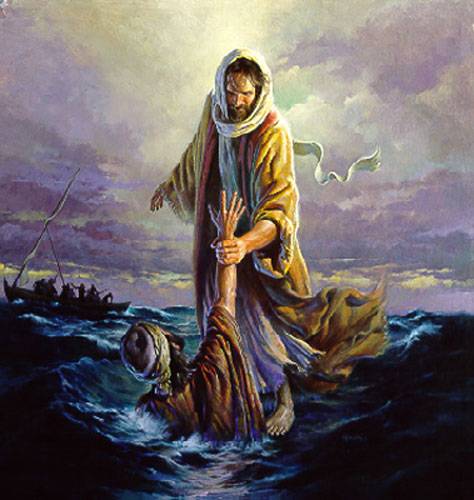
How thankful we should be that Jesus perfectly sympathizes with the boundaries of our human flesh (Job 5:19; Ps. 34:15-19). He tasted great temptation Himself, and, as such, now lights the way of way of His escape! He becomes most-compassionate toward our struggles, and thereby furnishes the strength required to fix our every weakness! He provides each and every measure of grace that mankind needs to likewise overcome (2 Cor. 12:7-10)!

There hath no temptation taken you but such as is common to man: but God is faithful, who will not suffer you to be tempted above that ye are able; but will with the temptation also make a way to escape, that ye may be able to bear it” (1 Cor. 10:13).

The Lord knoweth how to deliver the godly out of temptations, and to reserve the unjust unto the day of judgment to be punished” (2 Pet. 2:9).

To be continued…

“Jesus is a Superior Mediator”

jesus-my-high-priestPart 10

Paul now shifts his focus toward Aaron, Moses’ brother. Aaron was likewise very highly-regarded, mainly due to his significant role in the Hebrew’s miraculous exodus out of Egypt (Exod. 7:19; Ps. 77:20). Because Moses was a man “slow of speech” and of a “slow tongue” (Exod. 4:10), Aaron was appointed to be his interpreter. He’s called the very “mouth” by which Moses spoke to Pharaoh, and the organ of his communication with God’s people (Exod. 4:16, 30; 7:2).

As well-used and appreciated as Aaron must have been for the Jewish economy, Paul yet declares our Lord’s supreme preeminence! Similar to his recent treatise on Moses and Adam, Paul displays such preeminence via comparison and contrast. Both Jesus and Aaron display high priestly significance, but they differ with regard to the fruit born among their priestly duties. The Lord Jesus is to be the most-honored of all high priests because He is the only high priest called “great” (Heb. 4:14). Aaron was but a dim foreshadowing of our Lord’s priestly greatness, and, as such, proves to grow far-less significant fruit.

The very first premise Paul contrasts is with regard to high priestly mediation. By mediation we simply refer to the high priest’s function as a “go-between” between a holy God and a sinful people. This was the high priest’s principal duty, something only he could do, for he served as the priesthood’s chief leader (2 Chron. 19:11); it was a right given to him by his genetic heredity (Exod. 28:1; Num. 18:7).

Once a year, on the great Day of Atonement, the high priest dared to enter the final division of the tabernacle, the Most Holy Place. While there, he sprinkled innocent, shed-blood upon God’s ark (Lev. 16:14-15). It was a sacrifice for sin, done firstly on his own behalf, and then on behalf of God’s people (Lev. 4:3-35; 16:11). The result was temporary mediation: The priest was forced to return, time and time again (Heb. 10:11).

The role of such mediation proved to be of very high importance. The high priest sought to mediate between Israel’s iniquity and God’s holiness: He offered shed blood in an effort to “go-between” the vast expanse that sin created between God and His creation. By mediation, the high priest looked to reconcile the needs of both parties, that is, to satisfy man’s need for redemption while also satisfying God’s demand for holiness. He could do this because he served as a representative of both sides. He represented humanity because he was human, and he represented God because he lived as a holy high priest (Lev. 21:1-8). Such reconciliation simply must be achieved before any relation between God and men can occur. And why? Because the divine simply cannot embrace the flawed and fallen! Our holy God is said to be “of purer eyes than to behold evil”, and One who simply “canst not look on iniquity” (Hab. 1:13). Because the high priest was entirely human, and not actually divine, his representative mediation was but momentary, and it’s on this point that the Lord Jesus is found so much better and far-supreme.

Jesus offers a better ministry of meditation because Jesus is both Son of Man and Son of God! He is the one-and-only high priest in history ever to be fully acquainted with both parties involved. He doesn’t merely partake of divine nature, nor does He but represent the divine. Much unlike Aaron, Jesus is both fully man and fully God (Phil. 2:5-8; Jn. 8:58; 10:30). This has made Him the only truly-fruitful mediator between the two:

For there is one God, and one mediator between God and men, the man Christ Jesus” (1 Tim. 2:5).

But now hath [Jesus] obtained a more excellent ministry, by how much also he is the mediator of a better covenant, which was established upon better promises” (Heb. 8:6).

As God, the Lord Jesus is able to meet each and every divine demand (Heb. 5:1), and yet, as a man, Jesus also fully sympathizes with our need for merciful redemption (Heb. 2:17; 5:2). Reader, this can never be said of Aaron’s priestly ministry! His mediation was mostly toward the earthen-side, and therefore it proved ever-limited with regard to heaven’s requirement. But Paul declared the mediation of Jesus to be quite different and unrestricted. He is the only High Priest who has “passed into the heavens” (Heb. 4:14). As such, our Lord, though a man, remains free from earth’s stain and “separate from sinners” (Heb. 7:26). His mediation toward God is all-together perfect because it is not hindered by His humanity (Heb. 4:14). Because He ensures perfect mediation we now gain perfect reconciliation: Such perfection of our reconciling builds the final repair of the broken-bridge between God and men! Our union to God is now permitted: it’s said to be “uttermost” instead of widely-gulfed:

Wherefore he is able also to save them to the uttermost that come unto God by him, seeing he ever liveth to make intercession for them” (Heb. 7:25).

To be continued…

“Jesus is a Superior Leader”

mosesPart 9

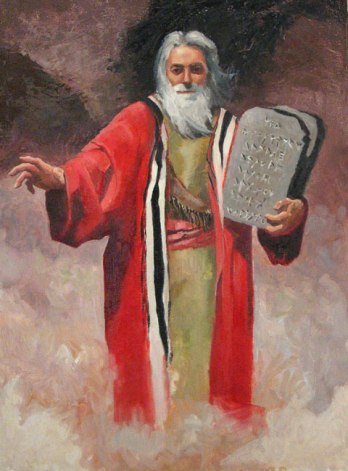
As we’ve been seeing, the Jews of Paul’s day prided their religion on many accounts. One of the most significant reasons for this esteem was because of their relation to Moses. He was considered a their leader and hero! Such fame was due to the fact that God used Moses to impart His special laws, thus making him the most notable legislator in all of human history! He became the very founder of the Jewish, religious economy, and the very medium by which God related to mankind. How can Jesus of Nazareth ever compete with such a famed man? Especially when many Jews misinterpreted Jesus’ humility as a weakness. How will the Lord ever be properly viewed as superior and far-more fruitful? This was Paul’s difficult conflict! Yet, as has been the norm up to this point, Paul skillfully declared the total supremacy of the Lord Jesus by revealing an abundance of spiritual contrast. Jesus is a superior hero! But how so?

The first premise Paul describes is our Lord’s superior rank. Even though Moses was undoubtedly a faithful man, he was faithful as a “servant”, while Jesus proved faithful as a “Son” (Heb. 3:5-6). The contrast is quite clear. Moses indeed can be declared a great man: he was firm and unwavering toward the provocation and rebellion of the Jews (Num. 12:7). And yet, the entire bounty of such faithfulness existed within the lesser confines of human servitude (Exod. 14:31). Jesus proves quite superior. He was faithful to His appointment even when He didn’t have to be; He was not faithful out of subservience and obligation. He entered His Father’s house as the very Master over it, while Moses entered as a servant within it. The home-owner is certainly ranked above any servants working inside.

Secondly, Jesus proclaims a better calling than that of Moses. His ministry was one that awarded a great “heavenly calling”, while the ministry of Moses was primarily of the earth (Heb. 3:1). Moses ministered to an earthly people, namely, natural Israel. Though not absolute, the promises and callings that they sought were primarily related to their temporary, earthen home: They sought mere natural blessing and an earthen promised land. The Lord Jesus proves so far fruitful because His calling is altogether different and supreme: His calling is upward and heavenly: It’s directed toward a people who are strangers and pilgrims on the earth, rather than contented with it (1 Pet. 2:11).

Next, Jesus displays a greater witness than Moses. Moses only spoke of God’s will for creation, while Jesus both declared and displayed it. In Moses, we have but an incomplete shadow – a figure of the true. But in Jesus we see the true and full light (Heb. 8:5; 10:1; Jn. 1:9). He meets our need for a newly-softened heart, while Moses only warned against the threat of evil hardness (Heb. 3:7-8; Ezek. 36:26; Eph. 2:10; Gal. 6:15; Rev. 21:5). To regard Moses over Jesus is to retreat back unto the shadow! Our Lord bears far sweeter fruit!

For the law was given by Moses, but grace and truth came by Jesus Christ. No man hath seen God at any time; the only begotten Son, which is in the bosom of the Father, he hath declared him” (Jn. 1:17-18).

Further, Jesus functions within a greater ministry. He is the only true “High Priest” of God, while Moses only executed temporary priestly functions (Ps. 99:6; Exod. 24:6-8; Heb. 3:1). Jesus is also the truest of all other “Apostles”, and therefore the finest “sent one” ever to trek through planet earth (Heb. 3:1). His apostleship is eternal while Moses’ ministry was but for a moment.

Next, Jesus wins a  better victory than Moses. Moses was not very successful in imparting his love for God to the people that he led through the wilderness. He taught them but could not do much more than that. Despite all his efforts, Moses’ followers ended up ignorant, rebellious, and in deep error (Heb. 3:9-11). They did not know the Lord whom they followed (Ps. 103:7). Jesus, much on the contrary, proves radically different! He offers instruction and imparts the ability to perform it (Jn. 17:1-4, 8). He is far-more fruitful because His personified goodness well-leads us to repentance (Rom. 2:4). We can know God because of His efforts (1 Jn. 5:20; Lk. 10:22). What a help! What a hero!

And finally, Paul reveals the better rest that Jesus awards. The old covenant rest which Moses spoke of was but a natural and temporary rest, while the Lord Jesus shows us rest which is most-substantial, deeply spiritual, and entirely eternal! Old covenant rest was incomplete in this respect: it was only a partial rest. How do we know? Because there were many enemies yet present within the land of Canaan, even after the people of God had possessed it. Paul instructs the Jews toward a far-superior land of rest found in Jesus, that is, a more-perfect and more-total triumph over each and every enemy, and a thorough freedom from all havoc of war (2 Cor. 1:10). God even gives us rest from our religious labors! In Paul’s day, the natural Jew would be well-accustomed to the laborious traditions of his religion. Most of these traditions were but man-made and man-imposed (Mk. 7:1-9). Contrarily, the Lord Jesus offers the sweet fruit of religious liberty, and even shows us how to be made partakers (Heb. 3:14). All we must do is heed Him, not Moses, and enter in to His richer rest (Heb. 3:16-19; 4:1-3). Jesus truly is “Lord of the Sabbath” (Mk. 2:28), something that Moses could never proclaim.

To be continued…

“Jesus Offers Superior Empathy”

jesus-sympathizesPart 8

Next, Paul tells us of yet another sweet fruit grown by our Lord’s deep engagement with the human condition. Jesus allowed such painful resignation so that He could well-relate to our human infirmities. Oh reader, what great love He must have for us! How dare any man handle it lightly! How dare any man use such humility as an arrow to pierce and deflate our Lord’s worthiness! Jesus desires a perfected bride so much more than He requires His reputation to be fed. This does not negate His divine side, but rather displays what divinity truly looks like! How lovingly admirable of Him to be born with the purpose of suffering death – all so that He’d relate to us in our temptations, be touched by our earthen infirmities, and well-know our proclivity toward weakness.

In allowing such lowliness to occur, Jesus became the most-perfect High Priest, for high priests must be acquainted with mercy. The high priest’s office is to help the wretched and raise the fallen: such a ministry will only be found within one of identical feeling and affliction, even as Jesus well-knew while on earth:

For we have not an high priest which cannot be touched with the feeling of our infirmities; but was in all points tempted like as we are, yet without sin” (Heb. 4:15).

Almighty God, in order to save us, needed to take upon Himself our manhood, even with all its sorrows. This qualified Him, by experience, to become our sympathizing High Priest. Such merciful relation is our certainty that He is able to relieve and “succor” us when tempted (2 Cor. 6:2; Mk. 9:22). Jesus knows how to offer compassion toward the contaminated, benevolence toward the bothered, and sincerity toward the suffering because He has walked through such trials Himself. The earth taught Him many troubling things! He experienced weariness (Jn. 4:6), anxiety (Matt. 26:39), hunger (Matt. 4:2), and loneliness (Jn. 16:32). He knows betrayal (Matt. 17:22), and has been made-accustomed to outward pain and torture (Matt. 26:67). He knows what it feels like to be scourged, mocked, and humiliated (Matt. 27:29)! He knows the frustration of being misunderstood (Mk. 2:16), and the tension of unmet desire (Matt. 26:40). Yes, Jesus very-well-tasted the bitter fruit of life’s harsh storms, and yet, He overcame each one, even death (Matt. 8:24; 27:34; 28:6; Lk. 4:1-13). In each and every necessary respect, our Lord has been made “like unto His [earthen] brethren” (Heb. 2:17, emphasis mine). He verily “hath borne our griefs, and carried our sorrows” (Isa. 53:4). He is now perfectly sympathetic to our human woes, and all-the-more in love with the sacrifices we daily-make to be more like Him (Exod. 23:9; Matt. 9:36; Jn. 1:12; Gal. 4:19; 2 Cor. 3:18; Prov. 4:18; 1 Jn. 3:2). We can now find boldness to call upon Him, and grace to help the troubles we’ve shared:

Seeing then that we have a great high priest, that is passed into the heavens, Jesus the Son of God, let us hold fast our profession. For we have not an high priest which cannot be touched with the feeling of our infirmities; but was in all points tempted like as we are, yet without sin. Let us therefore come boldly unto the throne of grace, that we may obtain mercy, and find grace to help in time of need” (Heb. 4:14-16).

A bruised reed shall he not break, and a smoking flax shall he not quench, till he send forth judgment unto victory” (Matt. 12:20).

When the even was come, they brought unto him many that were possessed with devils: and he cast out the spirits with his word, and healed all that were sick: That it might be fulfilled which was spoken by Esaias the prophet, saying, Himself took our infirmities, and bare our sicknesses” (Matt. 8:16-17).

To be continued…