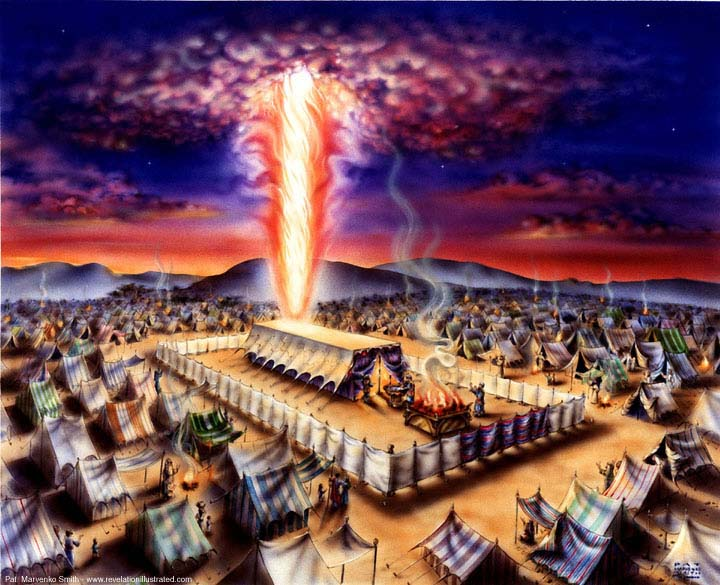
The Tabernacle of Witness

But ye shall receive power, after that the Holy Ghost is come upon you: and ye shall be witnesses unto me both in Jerusalem, and in all Judaea, and in Samaria, and unto the uttermost part of the earth” (Acts 1:8).

Ye are my witnesses…” (Isa. 43:10).

What does it really mean to be a “witness”? Jesus’ words in Acts 1:8 (above) create a deep desire within us to exude God’s glory and give true witness to His greatness… but what does that all look like? What do we automatically think of when we think of being God’s witnesses? Do we think about roaming from house to house, passing out Gospel tracks, hoping to make a difference in a person’s life? Do we imagine crowded, evangelistic crusades or special Easter programs at church? When sincere, these all can be valuable experiences, however, we must make an important distinction: witnessing is not an exercise. Rather, to be a true witness is a state of being. Let’s look at an Old Testament pattern to better elaborate on this truth…

The Old Testament Pattern

In the Old Testament, the tabernacle of Moses was called the “tabernacle of witness“. The Bible says, “Our fathers had the tabernacle of witness in the wilderness, as he had appointed, speaking unto Moses, that he should make it according to the fashion that he had seen” (Acts 7:44; Num. 17:7-8; 18:2; 2 Chron. 24:6). 

Jesus’ words throughout the New Testament were most likely borrowed from this label, which had been assigned to the tabernacle thousands of years before. The question must be asked, How can a humble, lone-standing, and voiceless structure be a “witness” for God? It’s because being a witness often has little to do with our modern, carnal efforts! As we look to the tabernacle for instruction, we can determine why it was divinely given such a label, and what being a witness actually means! As we observe a few of the qualities of the tabernacle of witness, let’s examine our own “witnessing” hearts and see how well they align to God’s perfect truth (2 Cor. 13:5)!

  • First of all, the tabernacle of witness contained the revealed presence of God (Exod. 40:33-35; Lev. 16:2; etc). In my humble opinion, this was its greatest attribute of all! What a powerful testimony this must have been to the surrounding foes of Israel! Even so, now WE are to possess and display this same revealed glory, as God’s new covenant temples. Such an attribute will surely draw all men to the Jesus residing within us (Jn. 12:32). The Bible tells us that such a display of genuine glory is actually what our devastated earth is crying out for (Rom. 8:18-20)! Let us ask, Does my life give true testimony to the love and glory of God living within me? Do I shine with God’s character even in difficult situations? Is the report of my life one of God’s glory, or one of self? Help, Lord! This is the only means by which we can be true witnesses!

  • The tabernacle of witness also contained the articles of furniture that were necessary for the ministry of the priesthood to properly operate. This tells me that as believers function in their respective roles (Eph. 4), the earth will look and see a beautiful spiritual organism, blessed of the Lord (1 Cor. 14:24-25; 1 Pet. 4:11). Real and genuine fellowship can be achieved at the table of shewbread, the brazen laver, the altar of incense, etc. As this organically occurs, the love that is evident among God’s priests will be a witness and a testimony to the unifying and sanctifying power of the Holy Spirit! What fruit!

    A true witness delivereth souls…” (Prov. 14:25).

  • Though the priesthood did minister among one another at the tabernacle furniture, they primarily ministered to the Lord in service and worship. He was their ultimate audience. He was their worship’s sole recipient. Likewise, I believe that our own pure worship becomes a genuine witness to the earth around us. In Scripture, the bride of Christ had a remarkable effect upon those other “daughters of Jerusalem” who watched her life (Song. 5:9-16; 6:1). The sort of heart that is steadily created within a man or woman totally surrendered to the Lord in intimacy is one that resembles the very heart of God Himself. It is the Lord Jesus’ own image formed within us (2 Cor. 3:18). It is a pure witness. How could the earth resist?

  • Next, the tabernacle of witness contained the golden pot of manna within the ark (Heb. 9:4; Exod. 16:33-34). How can manna act as a witness? Well, in the manna, we are directed to God the Son: He who came down from above and condescended as the Bread of Life. He, as the eternal Bread, is our sustenance during our earthly wilderness wandering, even as the natural manna was food for the Israelites during their time in the desert. As men look upon us and see the miraculous, real, physical, emotional, and spiritual provision that Jesus gives, we truly will be a witness! Real witnesses are those who partake of such abundantly-provided glories as the earth looks on and grows hungry for the very same!

  • The tabernacle of witness is the place where Aaron’s rod budded (Num. 17:8-10), and the place where his rod was kept as a memorial (Heb. 9:4). In Aaron’s rod, life came out of death; fruitfulness sprang from drought. This is to be typical of the believer too, as a witness of the Lord Jesus. The new creation man is to be so dramatically different than the old man, that it can be likened to life coming out of death. Such a wonderful display of our new nature is surely a witness to those around us (1 Pet. 3:1).

    For the LORD hath chosen Zion; he hath desired it for his habitation. This is my rest for ever: here will I dwell; for I have desired it. I will abundantly bless her provision: I will satisfy her poor with bread. I will also clothe her priests with salvation: and her saints shall shout aloud for joy. There will I make the horn of David to bud: I have ordained a lamp for mine anointed. His enemies will I clothe with shame: but upon himself shall his crown flourish” (Ps. 132:13-18).

  • Next, the tabernacle of witness contained the two tablets of stone, upon which were inscribed the Law of God (Exod. 40:20-21). These too were found in the ark. This occurrence is symbolic of the power and authority that the believer is to confidently possess, via the Law (Word) of God. Power over demonic influences and personal carnality will surely bare witness to the peoples of the earth that Jesus is indeed Lord over all! Reader, the earth needs to see a people who have been genuinely transformed by the Word of God! For Paul, this was his reality. His testimony of changing from murderer to preacher was one that reaped great power in the early church. It will be no different for us. We too are His witnesses! Simply eat up the Word of God – eat it up until it starts to come out of you!

    “…to him that ordereth his conversation aright will I shew the salvation of God” (Ps. 50:23).

  • Finally, the tabernacle of witness was in the center of the camp (Num. 2:17). In other words, it was continually and perpetually looked upon as a witness, not only on certain days of the week, and in certain “religious conditions”, but everyday, and at all times. Mere “Sunday morning Christians” have done more damage to the witness of true Christianity than can be adequately expressed! We should rather take heed to the witness that was perpetually exhibited by the tabernacle (Ps. 34:1; Acts 16:25; etc). True witnesses are at the center of the camp – they aren’t ashamed to shine for Jesus.

    If ye be reproached for the name of Christ, happy are ye; for the spirit of glory and of God resteth upon you: on their part he is evil spoken of, but on your part he is glorified. But let none of you suffer as a murderer, or as a thief, or as an evildoer, or as a busybody in other men’s matters. Yet if any man suffer as a Christian, let him not be ashamed; but let him glorify God on this behalf” (1 Pet. 4:14-16).

Such glorious attributes of this tabernacle are just some of the reasons why it was labeled as a “witness” and “testimony” for God! Though it was located in the wilderness, it accurately expressed (and bore witness to) the reality, power, provision, mercy, love and holiness of the Lord! The Shekinah glory that abode in that place was the divine seal and accreditation of it being a witness: Until God possessed it, it was no witness at all! Can you see the wonderful relation here? True witnesses are only those who have their fill with God, even as the tabernacle was God’s abode! The only manner by which we, as believers, can be a similar, fruitful witness is to increasingly possess these same qualities within our own personal temples (Eph. 2:19-22). To go about as “witnesses” without proper regard for these qualities is to be a vain witness, and is to ignore the enabling shade that Calvary’s Cross supplies! What a fruitless disaster that would be! One writer has said, “If the Holy Ghost is not filling us, our testimony is but empty prattle”. I could not agree more.

“Ye are the light of the world. A city that is set on an hill cannot be hid. Neither do men light a candle, and put it under a bushel, but on a candlestick; and it giveth light unto all that are in the house. Let your light so shine before men, that they may see your good works, and glorify your Father which is in heaven” (Matt. 5:14-16).

Dearly beloved, I beseech you as strangers and pilgrims, abstain from fleshly lusts, which war against the soul; having your conversation honest among the Gentiles: that, whereas they speak against you as evildoers, they may by your good works, which they shall behold, glorify God in the day of visitation” (1 Pet. 2:11-12).

In a similar way urge the young men to be sensible and self-controlled and to behave wisely [taking life seriously]. And in all things show yourself to be an example of good works, with purity in doctrine [having the strictest regard for integrity and truth], dignified, sound and beyond reproach in instruction, so that the opponent [of the faith] will be shamed, having nothing bad to say about us” (Tit. 2:6-8, AMP).

Giants Are Our Bread!

In Numbers 13 and 14, we read the famous story of the twelve Hebrew spies. Twelve men, being leaders among the children of Israel, were chosen to sneak into the promised land of Canaan to determine whether or not it was fruitful, and whether or not it could be taken by force and claimed as their own (Num. 13:17-20). Afterall, this land was given by God unto the children of Israel – all they had to do was go in and possess it (Num. 13:2). This story, like others, was written “for our learning” and spiritual application (Rom. 15:4). For us today in 2022, it becomes typical of New Covenant believers possessing their promised, eternal inheritance in Jesus (Heb. 9:15; 1 Pet. 1:4). This simple story gives us great insight into how that actually happens.

A Good and Bad Report

Among the twelve men who helped spy out the land, only two of them returned with a hopeful, faith-filled report: Joshua and Caleb. All twelve spies acknowledged the pleasant fruits of the land, but ten of those twelve grew discouraged once they considered the height of the walled cities and the strength of the inhabitants who lived there – the “children of Anak” (Num. 13:28), of whom Goliath was a descendant.

Joshua and Caleb gave a hopeful report, while the others did not. It’s important for us to recognize that these two didn’t deny the existence of Canaan’s’ giants, nor were they naïve about their own abilities. They just were not afraid. And why not? Its because giants look different when you’re clinging to God’s promise. Joshua and Caleb saw the threat, but were not overly intimidated or shaken. Like David and his own giant, they too were confident that God was able to deliver them despite the natural circumstances.

And Caleb stilled the people before Moses, and said, Let us go up at once, and possess it; for we are well able to overcome it. But the men that went up with him said, We be not able to go up against the people; for they are stronger than we. And they brought up an evil report of the land which they had searched unto the children of Israel, saying, The land, through which we have gone to search it, is a land that eateth up the inhabitants thereof; and all the people that we saw in it are men of a great stature. And there we saw the giants, the sons of Anak, which come of the giants: and we were in our own sight as grasshoppers, and so we were in their sight” (Num. 13:30-33).

Isn’t it amazing how simple faith in God can provide us with an entirely different viewpoint? Joshua and Caleb viewed the difficulties awaiting them through a lens of faith and belief. Sadly, they were the minority! Most of the others were content to live in fear. The contention grew so strong between these two parties, the majority versus the minority, that many of the people wanted to elect a new leader and return to the torments of Egypt (Num. 14:1-4)! They were angry and afraid at the prospect of their wives and children becoming casualties of war. As difficult as such a trial must have been for the Jews, it seems these people had lost their faith in God! In response, Moses and Aaron fell on their faces before the assembly. Joshua and Caleb both rent their clothing (as a sign of grief), and then pleaded with the people to hear their report instead:

And they spake unto all the company of the children of Israel, saying, The land, which we passed through to search it, is an exceeding good land. If the LORD delight in us, then he will bring us into this land, and give it us; a land which floweth with milk and honey. Only rebel not ye against the LORD, neither fear ye the people of the land; for they are bread for us: their defense is departed from them, and the LORD is with us: fear them not” (Num. 14:7-9).

Giants Are Our Bread

The promised land was indeed a fruitful and prosperous one, and it was promised to the children of Israel by Almighty God. However, the land was also filled with giant enemies! What could be the remedy? Again, verse 9 says, “Only rebel not ye against the Lord, neither fear ye the people of the land; for they are bread for us…” Here, we have Scriptural instruction regarding how to possess the land of promise. In short, the enemy which occupies that land must become our very bread – our very nutrition in the wilderness – our very growth into maturity. The trials that come our way have been designed by our sovereign God to be the very thing that thrusts us into greater and greater spiritual maturation (Heb. 5:8-10). So many Christians see such trials as their pitfall and destruction, yet a few will find the beauty that was intended for them to discover (Isa. 45:3). A few will see their enemy as a meal to make them stronger.

God brought him forth out of Egypt; He hath as it were the strength of an unicorn: He shall eat up the nations his enemies, And shall break their bones, And pierce them through with his arrows” (Num. 24:8).

Strength FROM the Battle

I heard Bill Johnson say, it’s amazing that God has stored the spiritual nutrition you need for tomorrow within the giant you overcome today. They are bread for us! Yes, the health I need for tomorrow’s battle can often be found in overcoming today’s affliction: As we feast on the fruits of Jesus’ own resurrection, we too receive resurrection power. And as we fight in battle, we grow! It matures us. We turn our difficulties into dinner. Even the valley of the very shadow of death presents a feast for us to partake of if we’re willing:

Thou preparest a table before me in the presence of mine enemies: Thou anointest my head with oil; my cup runneth over” (Ps. 23:5).

Strength FOR the battle is indeed Scriptural (Prov. 21:31; Ps. 140:7), but so is strength FROM the battle. Many Christians today are looking only at strength FOR the battle, and all the while Jesus intends to provide them with strength FROM the battle. Strength FOR the battle is temporary, while strength FROM the battle is inwrought and eternal. The trials that we overcome become the very sustenance by which we mature and affect creation!

Thou brakest the heads of leviathan in pieces, And gavest him to be meat to the people inhabiting the wilderness” (Ps. 74:14).

Give us this day our daily bread” (Matt. 6:11).

For we hear that there are some which walk among you disorderly, working not at all, but are busybodies. Now them that are such we command and exhort by our Lord Jesus Christ, that with quietness they work, and eat their own bread. But ye, brethren, be not weary in well doing” (2 Thess. 3:11-13).

These verses certainly take on new meaning in the light of what we’ve learned. We should go about eating our “own bread” – and grow not weary in doing so! Thankfully, the grace of God will accomplish it in us.

New Covenant Inheritance

In closing, let’s examine one, final aspect of this story: inheritance. It is vital for us to view this story through the lens of inheritance because that is exactly what the twelve spies were exploring – the promised land of inheritance. Inheritance is what’s at stake! As we’ve already said, for New Testament saints, the Old Testament promised land becomes typical of us actually possessing our promised, eternal inheritance in Jesus, not just judicially upon our salvation (Heb. 9:15; 1 Pet. 1:4; 2 Cor. 1:10).

I believe this is important for one, primary reason: An inheritance can be lost. If Old Testament saints struggled to conquer the enemies of their promised land (and many of them failed to enter into it), why do we expect it to be any different for us today? Like them, we too must press into it with purpose and intent (1 Cor. 9:24; Jer. 29:13). If and when we fall at the hand of our giants, we must arise and keep going (Prov. 24:16). Jesus has mercies that renew with every sunrise, and His grace is always sufficient for the day of battle (Ps. 140:7). If we fail to apprehend that truth today, then let’s begin with fresh faith again tomorrow (Phil. 3:12).

This sounds simple, yet, the Hebrew epistle shows us how easy it is to neglect one’s birthright (inheritance), and fail to apprehend it. Esau sold his inheritance for a pot of food when he hungered. He de-valued it because the needs of his flesh were more important at the time. He sold his inheritance just to satisfy a carnal appetite. And how many saints today are doing the very same? Guilty as charged! The Holy Spirit asks something of us and we neglect it because today’s needs are so very near and present. Even subtly, we end up choosing the path most-travelled – the path of least resistance – and the degree of our fruitfulness is affected as a result (Mk. 4:8, 20).

Follow peace with all men, and holiness, without which no man shall see the Lord: looking diligently lest any man fail of the grace of God; lest any root of bitterness springing up trouble you, and thereby many be defiled; lest there be any fornicator, or profane person, as Esau, who for one morsel of meat sold his birthright. For ye know how that afterward, when he would have inherited the blessing, he was rejected: for he found no place of repentance, though he sought it carefully with tears” (Heb. 12:14-17).

We all have carnality, but we mustn’t nurture it. Instead, we should kill it (1 Cor. 15:31). Esau fostered a love for his carnality, and, eventually, that caused him to despise his birthright. He gave it away for very little. To foster a love for carnality, instead of a love for one’s inheritance, is to reject one’s birthright and lose out on one’s eternal reward, in glory. Instead, let you and I remain faithful to whatever course the Lord has us walk down – be it easy or difficult, smooth or rough, winding or straight – let’s see our giants as bread. Esau should have learned to subdue his carnality and use that giant as a meal to make him stronger! You and I, too, will have to deal with carnal appetites, but we have the Holy Spirit alive within us to empower us to behave differently than Esau (Tit. 2:11-14; Gal. 5:22-23)! In doing so, we are encouraged to apprehend our New Covenant inheritance, which is the reward of the glory of God (Gen. 15:1; 1 Pet. 1:4; Col. 1:5; 3:3-4; 2 Tim. 4:8).

Reader, if we fail to see our giants as bread then we will neglect the growth unto maturity that defeating them will provide us. If we fail to see our difficulties as our dinner then we will also fail to glean the great strength intended for us by God at their destruction. Trials come to all of us – it rains on the just and the unjust (Matt. 5:45; Jn. 16:33). The only thing we can control is our response in the midst of such pain. Will we turn our giants into bread? Will we shift those afflictions toward overall good (Rom. 8:28)? Or will we waste the opportunity due to circumstance, ego, the love of pleasure, or the love of self? Jesus is longing for a people who look just like Him, and He’s using our giants to do so. Help us, Lord, to feast upon such riches, and to turn our giants into bread! Amen.

Eat the Scroll!

In Ezekiel chapter 2, we read of the gory details concerning the rebellion of the Jews. They “rebelled” against the Lord, “sinned” against His name, and “revolted” against His will (Ezek. 2:3, AMP). The Lord calls them “stubborn and obstinate children” who are apt to refuse His instruction over and over (vs. 4-5). The Bible then compares them to briars, thorns, and scorpions!

And you, son of man, neither fear them nor fear their words; though briars and thorns are all around you and you sit among scorpions, neither fear their words nor be dismayed at their presence, for they are a rebellious house” (Ezek. 2:6, KJV).

While I read this chapter, I was immediately reminded of the day in which we now live. Yes, the rebellion of the people of God was certainly in an awful state during Ezekiel’s day, but I fear not much has changed for us in 2022. Thankfully, Jesus always has a cure (Mk. 2:17).

Ezekiel was being sent to these rebellious Jews – He was given the task to prophesy and speak the Word of the Lord to them (Ezek. 2:7). This was probably seen as a nearly-impossible task – one that would surely be difficult and painful for him to accomplish well. We can certainly relate to Ezekiel’s dilemma. You and I, too, are often challenged with such feelings of impossibility! Today, however, I’d rather not focus on the many challenges that were to come for Ezekiel on his mission, but rather, let’s focus on the divine solution offered by our Lord. What ever can be done to help this “most rebellious” people? How can their stiff hearts change? And what can be done to help Ezekiel’s own heart remain pure?

As for you, son of man, listen to what I say to you; do not be rebellious like that rebellious house; open your mouth and eat what I am giving you.” Then I looked, and I saw a hand stretched out toward me; and behold, a scroll of a book was in it” (Ezek. 2:8-9).

Notice the Lord’s solution for Ezekiel. He says, “As for you“, you must do something differently! You must not allow the rebellion of the house of Israel to pry it’s way into your own heart. And how? By simply opening your mouth and eating the “scroll” – by eating up the Word of God! This is both God’s prevention and cure for such a terrible, spiritual disease. This was His solution for Ezekiel and the rebellious Jews, and it’s still His solution for us today. If we’re ever to truly and effectively counteract the wickedness of the culture in which we live, we must do so by the transformative power of the Word of God. Eat it up every chance you get! Read it, listen to it, study it, ponder it, pray it, do it, speak it, dream it, and meditate upon it until it begins to come out of you and bear fruit (Col. 3:10-16). It won’t only bear fruit in your own life, but, like Ezekiel, it will also begin to have its work among those whom you spend time with and influence each day. They too will be made better because of your feast upon the “Word of life” (Phil. 2:14-16; Ps. 1:1-3; Prov. 11:30)!

Sweet In Your Mouth and Bitter In Your Belly

The Apostle John is given similar counsel in Revelation 10:9.. He is told to, “Eat the little book (scroll)”. John’s account gives us a bit more information about this scroll, including a common reason why so many Christians neglect it in their spiritual diets.

This scroll would be sweet in John’s mouth, but bitter in his belly. It would be both easy to ingest and difficult to walk out in truth. The Word of God is likened to a two-edged sword (Heb. 4:12), and like a two-edged sword, the Bible too has a dual-nature. It will be sweet to our taste as we initially receive it – our lives will begin to change, our sins will be forgiven, our spirits will soar – but then as we begin to seek the deepest of transformations, the Word of God begins to cut us where it truly hurts – in the hidden places of the heart (Ps. 51:6).

Paul’s letter to the Romans explains this dual-nature too:

Therefore being justified by faith, we have peace with God through our Lord Jesus Christ: by whom also we have access by faith into this grace wherein we stand, and rejoice in hope of the glory of God. And not only so, but we glory in tribulations also: knowing that tribulation worketh patience; and patience, experience; and experience, hope: and hope maketh not ashamed; because the love of God is shed abroad in our hearts by the Holy Ghost which is given unto us” (Rom. 5:1-5).

Notice here how Paul explains the benefits of our salvation (justification). Now that we’ve been washed in Jesus’ blood and justified, we have access, by faith, into grace, hope, and the glory of God! What sweetness to our taste buds! But Paul doesn’t stop there. He then wields the other side of Scripture’s blade. He shifts his attention to the tribulation that awaits all those who do genuinely hope for God’s glory. Paul made it clear that these tribulations were not to be an end in themselves, but a means to an end – an avenue into the promises of God – an avenue to actually possess the promises we’ve hoped for. Tribulation works patience, patience works experience, and experience works hope:

“…[with joy] let us exult in our sufferings and rejoice in our hardships, knowing that hardship (distress, pressure, trouble) produces patient endurance; and endurance, proven character (spiritual maturity); and proven character, hope and confident assurance [of eternal salvation]” (Rom. 5:3-4, AMP).

Let’s now examine this two-edged nature in a bit more detail:

Sweet In Your Mouth

All Christians will agree that to be saved is an exhilarating experience! The sense of truly passing from darkness unto light and from death unto life has to be felt for oneself to be well-understood. The new-found love for Jesus that’s born in one’s heart is truly sweet to the taste – our lives are absolutely transformed! Here are just a few things the Bible has to say about the sweetness of our initial salvation (justification) and our reception of God’s Word:

  • We now have access into the glory of God, by faith (Rom. 5:1)
  • The love of God is shed abroad in our hearts (Rom. 5:5)
  • We are no longer living under the condemnation of the Law or our sinful flesh (Rom. 7-8)
  • We are made into a new creation or “species” (2 Cor. 5:17; Gal. 6:15), with a new heart (Ezek. 11:19)
  • We are made partakers of God’s own divine nature (2 Pet. 1:4)
  • Being partakers of God’s nature, we are no longer slaves to our evil desires (Rom. 7)
  • Instead, we have become God’s “workmanship, created in Christ Jesus unto good works…” (Eph. 2:10)
  • We can now partake of the many “benefits” of our salvation:
    Bless the LORD, O my soul, And forget not all his benefits: Who forgiveth all thine iniquities; Who healeth all thy diseases; Who redeemeth thy life from destruction; Who crowneth thee with lovingkindness and tender mercies; Who satisfieth thy mouth with good things; So that thy youth is renewed like the eagle’s. The LORD executeth righteousness and judgment for all that are oppressed” (Ps. 103:2-6).
  • Like the repentant, prodigal son in Luke 15, we are joyfully received into our Father’s house (vs. 11-32)! For the returning son, the father brought forth the best robe, put a ring on his hand, shoes on his feet, and threw a feast to celebrate. Similarly, we gain God’s own righteousness and authority. We find a newfound walk with the Lord – one full of joy and hope (Rom. 15:13)!

Bitter In Your Belly

Finally, let’s examine this idea of bitterness. To have a bitter or sour stomach signifies a chemical change that’s occurring within one’s digestive tract. Something you ate is now reacting with the contents already present in your stomach. Spiritually speaking, the Word and knowledge of God that you consume will react with the carnal knowledge already present within your soul, and it will change or renew it back into its proper place (Ps. 51:5; Ps. 119:9-11; Col. 3:10).

Like other chemical reactions, when this occurs, gas can be released. The release of gas is actually one of the few certain evidences that a chemical change has indeed occurred, as opposed to a mere physical change. The important thing for us to note about this distinction is that physical changes are always temporary, while chemical changes are always permanent. Physical changes, such as changing liquid water into ice, can be reversed, and are therefore temporary. Chemical changes, such as changing wood into ash via fire, are permanent. Ashes cannot be turned back into wood; it is final. Gas is being released (and bitterness is being felt) because a permanent change is taking place within us – a new creature is being fashioned day by day, from glory to glory, and we are changing into the very likeness of Jesus (Eph. 4:23-24; 2 Cor. 3:18)!

So, to experience the bitterness of the Word of God is to allow it to enter into your heart, speak its truth, and permanently change you from the inside out! Of course this can be a bitter, painful process, especially if we grow resistant to God’s chastening (Jon. 2). But this is why Scripture readily encourages us about the fruit to be grown in our lives as a result. For Jesus, His wildernesses were catalysts of fruitfulness (Lk. 4:1-14). The Bible declares the very same to be true for you and I:

  • The Spirit itself beareth witness with our spirit, that we are the children of God: and if children, then heirs; heirs of God, and joint-heirs with Christ; if so be that we suffer with him, that we may be also glorified together. For I reckon that the sufferings of this present time are not worthy to be compared with the glory which shall be revealed in us” (Rom. 8:16-18).
  • Beloved, think it not strange concerning the fiery trial which is to try you, as though some strange thing happened unto you: but rejoice, inasmuch as ye are partakers of Christ’s sufferings; that, when his glory shall be revealed, ye may be glad also with exceeding joy. If ye be reproached for the name of Christ, happy are ye; for the spirit of glory and of God resteth upon you: on their part he is evil spoken of, but on your part he is glorified” (1 Pet. 4:12-13).
  • Heb. 12:5-11: Allowing the Lord’s correction and discipline in my life is actually one of the signs that I belong to Him. Not only that, but He “chastises” us for our profit – that we might be made “partakers of His holiness” (vs. 10)!
  • The full soul loatheth an honeycomb; But to the hungry soul every bitter thing is sweet” (Prov. 27:7).

Friends, this is our answer to the rebellion that may be clinging to life within us. Like Ezekiel’s day, we too are dwelling in the midst of gross wickedness and staunch rebellion to God and to His ways. What ever can we do to keep ourselves pure from the onslaught of sin that seeks to ruin us? It’s simple, really. We must eat the scroll. We must make an absolute feast out of the Word of God! We must eat it for its sweetness and we must eat it for its bitter nature too. We must consume God’s Word for its honey, but we mustn’t neglect it when it turns bitter within our day-to-day lives. Oh to be a man so given to Jesus and His counsel! This man will bear much fruit. Amen.

The Privilege of Faith

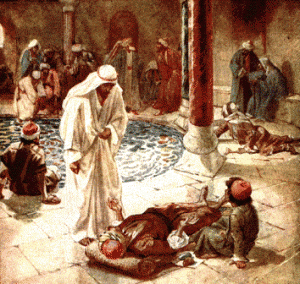
The fifth chapter of John, like all of the Bible, provides rich encouragement for the hungry soul. It’s a story of a lifelong paralytic who is instantly healed at the Words of Jesus (quoted below). Because of his awful condition, this man had spent the majority of his life pitifully-unable to fend for himself, provide for himself, or heal himself. When the water was stirred by the angel of the Lord, someone always made it to the fountain before him, and they were healed while he was not. He didn’t even have any friends to help! For this reason, this story is often told primarily in a negative light. We read about this man and our hearts often grow judgmental toward him and his circumstances: Surely he must have caused this chaos, right? We read and marvel that he has languished, help-free, for 38 years! Maybe he should just pick himself up by his bootstraps? Maybe not?

Recently, as I was reading this chapter again, the Lord began to show me this man’s story from a far different perspective: Jesus showed me just a glimpse of how He sees this pitiful, paralyzed man, and those like him. As I read more and more, this story began to display a vivid picture of a hungry people who, though obviously struggling with the infirmities of their flesh, are yet found waiting on the moving of the Holy Ghost! In fact, it becomes a privilege for them to wait on the Lord – it becomes a privilege to wait patiently for His true glory to be revealed within them. How precious! Just for a moment, let’s peak into this short story from a bit of a different angle – let’s see this man as one of patient expectation and endurance through suffering. Friends, Jesus is moved by this kind of people!

Let’s read John 5:1-9 to understand the context:

After this there was a feast of the Jews; and Jesus went up to Jerusalem. Now there is at Jerusalem by the sheep market a pool, which is called in the Hebrew tongue Bethesda, having five porches. In these lay a great multitude of impotent folk, of blind, halt, withered, waiting for the moving of the water. For an angel went down at a certain season into the pool, and troubled the water: whosoever then first after the troubling of the water stepped in was made whole of whatsoever disease he had. And a certain man was there, which had an infirmity thirty and eight years. When Jesus saw him lie, and knew that he had been now a long time in that case, he saith unto him, Wilt thou be made whole? The impotent man answered him, Sir, I have no man, when the water is troubled, to put me into the pool: but while I am coming, another steppeth down before me. Jesus saith unto him, Rise, take up thy bed, and walk. And immediately the man was made whole, and took up his bed, and walked: and on the same day was the sabbath.”

There are 5 Greek words the Bible uses to describe the awful state of this paralytic man, and those like him (underlined above). Let’s examine these Greek words together and see how accurately they may describe us!

Impotent

The Greek word used here is astheneo, and means, “To be feeble in any sense; to be diseased; to be impotent (unable to reproduce); to be made weak.” It comes from a root word, asthenes, which means, “To be strengthless literally, figuratively, or morally.”

The word astheneo is used throughout the New Testament, and not only to refer to natural ailments – its usage elsewhere will shed further light upon our narrative:

  • Paul uses the word astheneo to describe the weakness of the Law (Rom. 8:3). It could not remove the stain of man’s sin; it only covered it, and that temporarily.
  • This word is used to describe Jesus in 2 Corinthians 13:4. It says, “He was crucified in weakness“, meaning, Jesus purposefully abstained from the use of His divine strength during His crucifixion. He could have easily overcome His captors and His cross, but He chose to endure it all for “the joy that was set before Him” (Heb. 12:2).
  • Paul uses this word to describe our human weaknesses that must learn to rely upon the strength and power of God (2 Cor. 12:10). In fact, in 2 Corinthians 11:29, Paul uses this word to admit to his own weaknesses: “Who is weak, and I am not weak? Who is made to stumble, and I do not burn with indignation?” He even gloried in these infirmities (vs. 30) because he knew the promised fruit to come as a result, namely, divine strength which only God can provide!
  • The word astheneo is used to describe Abraham, who was not “weak in faith” (Rom. 4:19), as well as others who, in fact, were (Rom. 14:1-2, 21; 1 Cor. 8:9).

Notice how this word for impotent is used in both negative and positive contexts. So it is with us, I believe. The trouble and impotencies that we may face can actually become opportunities to overcome and be made more like Jesus. The only question is, will we allow God to have His perfect work in us? Or will we allow our impotencies to derail us? Reader, do we still have faith to wait upon the Lord when our weaknesses are staring at us in the face?

Blind

This Greek word tuphlos means, “To be physically or mentally blind; to see opaquely (as if smoky).” This word comes from a root word, tuphoo, which means, “To envelop with smoke; to inflate with self conceit; to be high-minded or proud”. The natural meaning is obvious, but let’s observe how else tuphlos is used in the New Testament:

  • Paul uses this word to describe those who are yet in darkness, that is, the unsaved (Rom. 2:19). Yes, the “god of this world” has blinded the minds of those who don’t believe (often by pride), and its only “the light of the glorious gospel of Christ” that can heal such awful, dark eyesight (2 Cor. 4:3-4; Jn. 9:40-41; 1 Jn. 2:9-11).
  • Peter also uses the word tuphlos to describe those who are spiritually “shortsighted, even to blindness“, having “forgotten that he was cleansed from his old sins” (2 Pet. 1:9).
  • John uses this word in Revelation 3:17 when he describes the church at Laodicea. He calls them “wretched, miserable, poor, blind, and naked“.

It is clear that blindness is an awful state – and spiritual blindness is even worse. It is also clear, however, that Jesus shows great mercy to the blind when they cry out to Him in repentance – He heals both natural and spiritual blindness. He both cures our physical ailments, and He equips the hungry with spiritual sight that no darkness can overpower.

The Spirit of the Lord is upon me, Because he hath anointed me to preach the gospel to the poor; He hath sent me to heal the brokenhearted, to preach deliverance to the captives, And recovering of sight to the blind, To set at liberty them that are bruised, To preach the acceptable year of the Lord” (Lk. 4:18-19).

Halt

This Greek word is cholos, and means, “Limping; to be cripple or lame; to be deprived of a foot, or maimed”. Let’s observe how else this word is used in Scripture:

  • Acts 14:8 translates cholos as “cripple“, that is, “a man without strength in his feet“. This can speak to us of both natural and spiritual lameness. Feet throughout Scripture are symbolic of one’s personal walk throughout life, either with Jesus or with the world (Ps. 119:32; Prov. 4:26-27; Isa. 35:3, 8-10; 52:7; Phil. 3:17). As such, spiritual lameness refers to our inability to do so. If we are spiritually halt and lame, then we are spiritually stagnant and immobile – we are not using our “feet” to run after the prize of the high calling of God in Christ Jesus (Phil. 2:16; 3:14; Heb. 12:1; 1 Pet. 4:4)! As always, the Lord can and will heal such lameness in our feet! All we have to do is ask!
  • The writer to the Hebrews uses this word to encourage his readers toward fruitfulness: “Now no chastening for the present seemeth to be joyous, but grievous: nevertheless afterward it yieldeth the peaceable fruit of righteousness unto them which are exercised thereby. Wherefore lift up the hands which hang down, and the feeble knees; and make straight paths for your feet, lest that which is lame be turned out of the way; but let it rather be healed” (Heb. 12:11-13). The implication is clear. To be cholos (lame/halt) is to be “turned out of the way” (vs. 13)! But Jesus heals our depravity by drawing us after Himself! As we follow Him, worship Him, and adhere to His Words, our paths begin to straighten under our feet, and our lameness is healed! What a merciful God we serve.

Withered

The Greek word used here for withered is xeros. It means, “Scorching or arid; shrunken due to a lack of water; to be deprived of one’s natural juices.”

  • This word signifies spiritual dryness and deformity, which are often the fruits of sin and disobedience: “Blessed is the man that walketh not in the counsel of the ungodly, nor standeth in the way of sinners, Nor sitteth in the seat of the scornful. But his delight is in the law of the LORD; And in his law doth he meditate day and night. And he shall be like a tree planted by the rivers of water, That bringeth forth his fruit in his season; His leaf also shall not wither; And whatsoever he doeth shall prosper” (Ps. 1:1-3).
  • Most of the time, it was the hands of a person that grew withered (Matt. 12:10; Mk. 3:3; Lk. 6:6). Hands throughout Scripture, much like feet, are often used symbolically to refer to a man’s works (Ps. 26:6; 24:3-4; 90:17; Prov. 6:10; Eccl. 4:5; 1 Tim. 2:8; Lam. 3:41; Ps. 141:2). Hands are the instruments of the heart: their visible works reveal the invisible motives of a man, whether they be good or bad, pure or evil. Withered hands, therefore, signify hands that cannot or will not properly serve, give, work, or help – they’ve been dried up by the wilderness of sin. This was the painful state of the paralytic (and those like him) as he waited for his healing. This was just a part of the pitiful mess in which he was found!

Waiting

The fifth and final word used to describe this paralyzed man is also found in verse 3. The Greek word is ekdechomai, and it means, “To await, expect, look for, or tarry for”. The man was waiting on the moving of the water, that is, the moving of the Holy Spirit to foster the miraculous. Though pitiful, he had an expectation that many do not. Like Paul, this man’s weakness was not unto fruitlessness:

So I am well pleased with weaknesses, with insults, with distresses, with persecutions, and with difficulties, for the sake of Christ; for when I am weak [in human strength], then I am strong [truly able, truly powerful, truly drawing from God’s strength]” (2 Cor. 12:10, AMP).

What good news for us! Our withered hands and lame feet do not have to dictate our future! Even staunch blindness can be met with divine mercy and empowerment! Our weaknesses do not have to be unto fruitlessness: Simply wait for Jesus to pass by!

Finally, let’s examine a few other instances in which ekdechomai is used in the New Testament. Again, as we observe its usage elsewhere, our study will be enlightened.

  • Ekdechomai is the same Greek word used in Hebrews 10:13 and 11:10. Though translated differently into English, the Hebrew epistle uses this same Greek word, ekdechomai, to describe the faithful and patient waiting of both Jesus (Heb. 10) and Abraham (Heb. 11).
  • And every priest standeth daily ministering and offering oftentimes the same sacrifices, which can never take away sins: but this man, after he had offered one sacrifice for sins for ever, sat down on the right hand of God; from henceforth expecting till his enemies be made his footstool” (Heb. 10:11-13).
  • “By faith Abraham, when he was called to go out into a place which he should after receive for an inheritance, obeyed; and he went out, not knowing whither he went. By faith he sojourned in the land of promise, as in a strange country, dwelling in tabernacles with Isaac and Jacob, the heirs with him of the same promise: for he looked for a city which hath foundations, whose builder and maker is God” (Heb. 11:8-10).

We know from these examples that such waiting does not guarantee to be an apathetic process. The sort of waiting that God honors is that which is done in faith, by the grace of God. Earthly-minded men will look at this mindset and scoff at people like the paralytic. “He should at least try and crawl to the water, right!?” However, when Jesus looks at the paralytic He sees a bit of a different scene. Yes, the man is terribly impotent, blind, halt and withered… But he’s also waiting! He is waiting with whatever meager portion of faith he can muster, and Jesus is stopped in His tracks because of it!

Friends, we learn from this story that there is no struggle too great where Jesus isn’t greater still. There is no shadow too dark, no hole too deep, no crookedness too bent, and no death too strong. Even time itself is in His hands – all 38 years of the paralytic’s life! Jesus has overcome all things: He owns all things and is the Heir of all things (Heb. 1:1-2). He even owns your ailments and troubles, and He will turn them into fruit! Don’t lose hope! Jesus is ever-faithful to His promises. He mercifully met the paralytic man even among his dire weaknesses, and He will meet with you and I just the same. His mercies are without partiality. He specializes in turning heaps of ashes into mountains of beauty. And for those heaps of ashes now reading this post, let’s call it a privilege to wait upon our Maker for mountains. For He always does what’s good, and He always arrives on time!

He raiseth up the poor out of the dust, And lifteth up the beggar from the dunghill, To set them among princes, And to make them inherit the throne of glory” (1 Sam. 2:8).

He raiseth up the poor out of the dust, And lifteth the needy out of the dunghill; That he may set him with princes, Even with the princes of his people. He maketh the barren woman to keep house, And to be a joyful mother of children. Praise ye the LORD” (Ps. 113:7-9).

Then Pharaoh sent and called Joseph, and they brought him hastily out of the dungeon: and he shaved himself, and changed his raiment, and came in unto Pharaoh… thou shalt be over my house, and according unto thy word shall all my people be ruled: only in the throne will I be greater than thou. And Pharaoh said unto Joseph, See, I have set thee over all the land of Egypt. And Pharaoh took off his ring from his hand, and put it upon Joseph’s hand, and arrayed him in vestures of fine linen, and put a gold chain about his neck; and he made him to ride in the second chariot which he had; and they cried before him, Bow the knee: and he made him ruler over all the land of Egypt” (Gen. 41:14, 40-43).

The Knowledge of the Holy, Part 5

Today I’d like to examine the Scriptural connections between one’s growth in the knowledge of God and one’s struggle with sin and spiritual apathy. As we’ve already seen, the knowledge of God is a specific reality. It refers to a personal and inward fellowship with God’s presence, and a deep knowing of His character, His will, and the desires of His heart. It is knowing Jesus’ ways and wants, and it is seeking to make His ways and wants your own (Jer. 15:16; 1 Jn. 2:3). As we continue, therefore, let us not lose grasp of this truth. When we speak of knowing Jesus we mean to know Him intimately, not superficially (Eph. 5:25-32). We want to know Him even as we ourselves are known (1 Cor. 13:12).

The Knowledge of God and Sin

What can be said of the connection that Scripture makes between eating up the knowledge of God and gaining strength to resist sin and worldliness? It should come as no surprise that Jesus uses an earthly, biological truth to highlight a far more important spiritual reality. Just as in the natural world, so it is in the spirit: We become what we behold. Naturally speaking, if we spend our days feasting on junk, then junk is likely to be subsequently produced: obesity, anxiety, poor health, addictions. But the opposite is also true: If we ingest good and healthy things into our bodies, then we will feel good and likely bear fruit. Spiritually speaking, if we conform to the rudiments of this world then the world’s pollution will be seen in and upon us. But, if we die to ourselves, then Jesus will be seen instead (Eph. 2:1-7)!

Let’s observe several Scriptures that display this truth in detail:

1 Thessalonians 4:1-2

Furthermore then we beseech you, brethren, and exhort you by the Lord Jesus, that as ye have received of us how ye ought to walk and to please God, so ye would abound more and more. For ye know what commandments we gave you by the Lord Jesus“.

Notice how the above verse connects sin to a refusal to eat the Words of God. We should be abounding “more and more” in the sanctification process simply because of verse 2: “For ye know what commandments we gave you by the Lord Jesus“. Simply put, a deeper and deeper dive into the knowledge of God, i.e. “the commandments we gave you by the Lord Jesus“, will prove to keep us from falling into sin and apathy! What good news! The Word of God is full of power! Truly eating it will cause us to absorb its endless, perfect qualities for ourselves. When sincerely eaten, we don’t simply hear God speak – we also discover the strength and gracious wherewithal to obey His instructions.

Dear reader, the opposite must also be true! Those who refuse to feast upon the knowledge of God will not only find themselves ignorant of who God is, they will also miss the opportunity to allow God to form and fashion His perfect qualities within their own hearts. They will struggle with sin and condemnation and will not know the Lord as He longs to be known (Matt. 7:23). How sad! What waste!

And since they did not see fit to acknowledge God or consider Him worth knowing [as their Creator], God gave them over to a depraved mind, to do things which are improper and repulsive, until they were filled (permeated, saturated) with every kind of unrighteousness, wickedness, greed, evil; full of envy, murder, strife, deceit, malice and mean-spiritedness. They are gossips [spreading rumors], slanderers, haters of God, insolent, arrogant, boastful, inventors [of new forms] of evil, disobedient and disrespectful to parents, without understanding, untrustworthy, unloving, unmerciful [without pity]” (Rom. 1:28-31, AMP).

1 Peter 1:14-16

[Live] as obedient children [of God]; do not be conformed to the evil desires which governed you in your ignorance [before you knew the requirements and transforming power of the good news regarding salvation]. But like the Holy One who called you, be holy yourselves in all your conduct [be set apart from the world by your godly character and moral courage]; because it is written, “You shall be holy (set apart), for I am holy” (AMP).

Before we knew the transforming power of the Gospel we were governed and enslaved by our ignorance! But now, having been called by the Holy One, we too can partake of His holiness, godly character, and moral courage. And how? Simply, “because it is written…” To seek Christlikeness via any other route is to possess a zeal for God, but not according to the true knowledge of Him (Rom. 10:1-2). Yes, the only way for these attributes to be multiplied unto us is through the knowledge of God (2 Pet. 1:2). The only way to escape the pollutions of the world is through “the knowledge of the Lord and Saviour Jesus Christ” (2 Pet. 2:20).

Awake to righteousness and sin not; for some have not the knowledge of God…” (1 Cor. 15:34).

When Thy judgments [are] in the earth, the inhabitants of the world will learn righteousness” (Isa. 26:9).

Ephesians 3:19

[I pray that you may come] to know [practically, through personal experience] the love of Christ which far surpasses [mere] knowledge [without experience], that you may be filled up [throughout your being] to all the fullness of God [so that you may have the richest experience of God’s presence in your lives, completely filled and flooded with God Himself].”

The Knowledge of the Holy, Part 4

O the depth of the riches both of the wisdom and knowledge of God! How unsearchable are his judgements, and his ways past finding out!” (Rom. 11:33).

We’ve already seen several truths about the knowledge of God. We’ve seen what the knowledge of God is, namely, it is the knowledge of God’s ways and nature, as well as the knowledge of His glory. We’ve also seen Paul’s admonition for us to pursue the knowledge and glory of God like riches! This is how we “win Christ“. This is how we’re to win or gain deeper places of intimacy with the Lord Jesus (Phil. 3.8).

Keep Pursuing the Knowledge of God!

Today, I’d like to ask, what were the means by which Paul sought to “win Christ“? We’ve already seen the value of such a desire, but what avenue did he take to pursue and keep pursuing this lofty goal? The Bible gives us quite a glimpse into his situation and it becomes a seedbed of instruction for those who dare to take note. Let’s observe.

But what things were gain to me, those I counted loss for Christ. Yea doubtless, and I count all things but loss for the excellency of the knowledge of Christ Jesus my Lord: for whom I have suffered the loss of all things, and do count them but dung, that I may win Christ” (Phil. 3:7-8).

“I count everything as loss compared to the priceless privilege and supreme advantage of knowing Christ Jesus my Lord [and of growing more deeply and thoroughly acquainted with Him—a joy unequaled]. For His sake I have lost everything, and I consider it all garbage, so that I may gain Christ” (Phil. 3:8, AMP).

I Count My Gains As Losses

What things were gain to me, those I counted loss for Christ“. For Paul, his “gains” were mostly related to his background, intellect, and cultural heritage. The prior verses recount his “confidence in the flesh” (Phil. 3:4). He once took pride in his outward, social status, but now enjoys making Jesus to be seen as glorious. For us, these “gains” may refer to many things: social or financial status, career, intellect, reputation, education. Regardless of what we count as “gain” in this life, the important part is to value Jesus all the more. When compared to Him, all other gains, though great, are likened to utter-loss! There is simply no comparison! Jesus is of far-surpassing excellency than any gain this life could offer!

This was Paul’s mindset. To value Jesus, he sought the intentional humbling of his own flesh. Like Abraham, Paul showed us an active and intentional “slaying” of his earthly passions – that flesh that was so easy for him to love and nurture (Gen. 22:2). He prized Jesus the highest and counted all other worldly idols as absolute dung! Reader, these are inspired examples for us to follow. Should we nurture our carnal tendencies? Will it foster true intimacy with Jesus, or will it hinder it? The answer is clear. Whatever things I value more than Jesus should be nailed to the cross and buried in death (Lk. 9:23). Nothing will better-catalyze true intimacy with the Lord than a radical and intentional refusal of the world and all its lucre!

I Suffer For His Namesake

Secondly, Paul tells us that he’s willing to suffer for Jesus’ sake. He is happy to lay down his life for the furtherance of God’s kingdom. And why? Because he is confident that such trials will ultimately bear fruit, namely, “that I may win Christ, and be found in Him…” (vs. 8-9a), and, “that I may know Him, and the power of His resurrection, and the fellowship of His sufferings” (vs. 10). Oh what sweet fruit this will be! But we can never truly know Jesus in the power of His resurrection if we do not first get well-acquainted with Him through seasons of suffering. Paul didn’t just allow suffering for the sake of suffering. Rather, he was intentionally submitted to the sovereign hand of God, knowing He would work all things together, even pain and suffering, for the good (Rom. 8:28). How many Christians lose faith at the first sign of a trial? Too many believers cannot ever grow intimate with Jesus because they refuse to follow Him to His cross. But oh what joy there is to be found as we decrease and allow His growth to come forth within us! Its incomparable! The trial of our faith possesses incredible value (1 Pet. 1:6-7).

But the God of all grace, who hath called us unto His eternal glory by Christ Jesus, after that ye have suffered a while, make you perfect , establish, strengthen, (and) settle you” (1 Pet. 5:10).

For our light affliction, which is but for a moment, worketh for us a far more exceeding [and] eternal weight of glory” (2 Cor. 4:17).

I Win Through Faith in Jesus – Not My Works

Finally, we see that Paul must employ his personal faith. I appreciate how he seems to balance himself out as he writes. He begins with revealing the incredible value to be found in dying-to-self and exalting Jesus. Yes, we may suffer with Him, but if we maintain our gaze upon the Lord there will be promised fruit at the end. Perhaps Paul realizes the complexities of human nature toward this idea – if all that he’s just said is true, then most people will try to earn their way – most people will try to pursue the riches of God’s glory in their own natural strength, after the flesh! So, like a great teacher, Paul adjusts to fit their assumptions: He concludes by saying we can only intimately know Jesus by faith! We can only maintain our gaze upon Him, and thereby bear fruit, by faith! He is the divine enabler (Phil. 2:13)! Our own carnal efforts to find Him will not be enough! He must draw us and we must respond in ever-increasing faith (Jn. 6:44; Jer. 31:3). Approaching the Lord with our own righteousness will always be judged according to the Law, which has proven to be an utter failure. But the “righteousness which is of God by faith” will be that which propels us deeper and deeper into the knowledge of His glory (vs. 9-10). What a promise!

For His sake I have lost everything, and I consider it all garbage, so that I may gain Christ, and may be found in Him [believing and relying on Him], not having any righteousness of my own derived from [my obedience to] the Law and its rituals, but [possessing] that [genuine righteousness] which comes through faith in Christ, the righteousness which comes from God on the basis of faith. And this, so that I may know Him [experientially, becoming more thoroughly acquainted with Him, understanding the remarkable wonders of His Person more completely]” (Phil. 3:8-10a, AMP).

The good news is, when we pursue Him in faith, we find Him all the more!

My son, if thou wilt receive my words, And hide my commandments with thee; So that thou incline thine ear unto wisdom, And apply thine heart to understanding; Yea, if thou criest after knowledge, And liftest up thy voice for understanding; If thou seekest her as silver, And searchest for her as for hid treasures; Then shalt thou understand the fear of the LORD, And find the knowledge of God” (Prov. 2:1-5).

To be continued…

The Knowledge of the Holy, Part 3

O the depth of the riches both of the wisdom and knowledge of God! How unsearchable are his judgements, and his ways past finding out!” (Rom. 11:33).

Pursuing the Knowledge of God

Paul was inspired by the Holy Spirit to liken the knowledge of God to deep riches! The Greek word used here for “riches” means, “wealth; an abundance of external possessions; fullness; plentitude; a good with which one is enriched”. And what do we typically do with riches? We pursue them! We seem to want them more and more! And why? Because we love them – they have the power to alter our lives, and this is the comparison being drawn by Paul. Possessing an intimate knowledge of Jesus is likened to a grand prize worth running after – run as if you’ve just discovered unspeakable riches at your disposal! Jesus counseled His followers to live with this mindset (Lk. 14:26). Paul seemed to obey this advice: he gave all that he had to pursue a deeply-intimate place with the Lord, and he is an apt model for us who likewise desire Jesus above all else. We too must intentionally lay down our lives for the excellency of truly knowing Him.

I count everything as loss compared to the priceless privilege and supreme advantage of knowing Christ Jesus my Lord [and of growing more deeply and thoroughly acquainted with Him—a joy unequaled]. For His sake I have lost everything, and I consider it all garbage, so that I may gain Christ” (Phil. 3:8, AMP).

It should be noted that Paul wanted to “gain Christ“. The King James Version says, “that I may win Christ“. It is clear that this cannot refer to Paul’s justification, but to something else – something beyond his initial salvation experience that must be sought after and pursued. Paul had already gained Christ – the Holy Spirit was alive within his heart. Therefore, I believe Paul wanted to find, “gain“, and “win” a deeper and deeper place of intimacy with Jesus, a deeper knowledge of God and His nature – one that can only be gained by laying down one’s own life for the glory of God (Matt. 16:25; Rev. 12:11). Paul had already gained Christ in his spirit, now he sought to win Him in every chamber of his soul as well:

By knowledge shall the chambers be filled with all precious and pleasant riches” (Prov. 24:4).

But we all, with open face beholding as in a glass the glory of the Lord, are changed into the same image from glory to glory, even as by the Spirit of the Lord” (2 Cor. 3:18).

And be not conformed to this world: but be ye transformed by the renewing of your mind, that ye may prove what [is] that good, and acceptable, and perfect, will of God” (Rom. 12:2).

But put ye on the Lord Jesus Christ, and make no provision for the flesh, to [fulfill] the lusts [thereof]” (Rom. 13:14).

For whosoever will save his life shall lose it: and whosoever will lose his life for My sake shall find it” (Matt. 16:25).

Let’s ask ourselves, do we likewise possess such a fervent desire for Jesus? Are we too pursuing the depths of the knowledge and glory of God? If not, the Holy Ghost will be our helper! He is the One who deposits hunger within the human spirit, and He will give liberally to all who humbly ask (Jas. 1:5).

Don’t forget – Jesus is worth pursuing! In the next post we’ll examine what this looked like in Paul’s life.

To be continued…

The Knowledge of the Holy, Part 2

In the last post, we defined only a small part of what the Bible declares “the knowledge of God” to be: It is the knowledge of His ways, not merely of His acts (Ps. 103:7). It is a deep and growing awareness of who Jesus is, what He’s like, and what He desires from humanity. It also includes a personal desire to house Jesus’ same nature within ourselves – when we truly find the knowledge of God, it will solicit a desire to absorb His loving qualities as our very own (Jer. 15:16; Job 23:12).

Today, as we continue learning of the Biblical definition, we will see this knowledge to be more of an experience than an intellectual reckoning. In short, the Bible defines the knowledge of God as the knowledge of His glory!

For God, who commanded the light to shine out of darkness, hath shined in our hearts, to give the light of the knowledge of the glory of God in the face of Jesus Christ” (2 Cor. 4:5-6).

For the earth shall be filled with the knowledge of the glory of the Lord, as the waters cover the sea” (Hab. 2:14).

What is God’s Glory?

The Hebrew word used predominately throughout Scripture for the “glory” of God is “kabowd“, and means, “honor, abundance, splendor, dignity, and reverence“. It comes from a root word, “kabad“, that means, “to be heavy; to be weighty; burdensome; to make honorable“. Much can be said of this topic, but I’d like to focus on a singular point: These definitions show us that God’s glory is something to be felt and experienced. Knowing Jesus is primarily a matter of the heart – not only the mind (Ezek. 36:26). Paul likened the influence of God’s glory to natural wine (Eph. 5:18). It refers to the tangible love of God that is made most evident as we seek Him whole-heartedly. We can discern when He manifests Himself and when He does not.

The Lord Jesus Christ be with thy spirit. Grace be with you. Amen.” (2 Tim. 4:22).

Now the Lord is that Spirit: and where the Spirit of the Lord is, there is liberty. But we all, with open face beholding as in a glass the glory of the Lord, are changed into the same image from glory to glory, even as by the Spirit of the Lord” (2 Cor. 3:17-18).

Moses’ experience with God in Exodus chapters 33 and 34 provides another detailed description of what God’s glory is. We see it to be the tangible outpouring of His goodness toward humanity:

And (Moses) said, I beseech Thee, shew me Thy glory. And (God) said, I will make all My goodness pass before thee, and will proclaim the name of the Lord before thee…” (Exod. 33:18-19).

From this verse we discover the very identity of God’s glory: It is His goodness, outpoured. It is His loving pleasure that’s to be felt as it flows from God’s heart to ours.

And the LORD descended in the cloud, and stood with him there, and proclaimed the name of the LORD. And the LORD passed by before him, and proclaimed, The LORD, The LORD God, merciful and gracious, longsuffering, and abundant in goodness and truth, keeping mercy for thousands, forgiving iniquity and transgression and sin, and that will by no means clear the guilty; visiting the iniquity of the fathers upon the children, and upon the children’s children, unto the third and to the fourth generation. And Moses made haste, and bowed his head toward the earth, and worshipped” (Exod. 34:5-8).

At Moses’ hunger, the Lord “descended in the cloud and stood with him“. God’s manifest presence then “passed by before him (Moses)” and proclaimed the truth about His own holy nature: “The LORD, The LORD God, merciful and gracious, longsuffering, and abundant in goodness and truth…” Yes, God’s glory is an overwhelming saturation of His loving nature. The presence and glory of God will proclaim His holy character and evoke a response from us in return. God’s glory is a thunderous proclamation of who He is, and we will either fall before Him in worship (Exod. 34:8), like Moses, or cry for the rocks to hide us from His glorious face (Rev. 6:16)!

Thou wilt shew me the path of life: In thy presence is fulness of joy; At thy right hand there are pleasures for evermore” (Ps. 16:11).

Now unto him that is able to keep you from falling, and to present you faultless before the presence of his glory with exceeding joy” (Jude 24).

Paul references the glory of God when he speaks of “the communion of the Holy Ghost” (2 Cor. 13:14). Quite simply, it refers to the spiritual love affair Christians should be experiencing with the Lord Jesus on a daily basis: We become “exceeding glad with (God’s) countenance” (Ps. 21:6)! The word Paul uses for “communion” in 2 Corinthians 13:14 literally means, “intercourse; fellowship; intimacy“. We know this isn’t a natural truth, of course not, but surely the Lord is trying to communicate something deeper to us – We’re to tangibly experience the love of God on a regular basis! This becomes part of truly knowing Him! This is why the Bible likens the Christian walk to an intimate, husband-and-wife relationship (Eph. 5:25-32; 2 Cor. 11:2). Yes, to truly know the Lord is to know His glory, and to know His glory is to fellowship with His manifest presence (Jn. 14:21-27). Oh what a God we serve!

To be continued…

The Knowledge of the Holy

The fear of the Lord is the beginning of wisdom: and the knowledge of the holy is understanding” (Prov. 9:10).

When I read the Bible, I often like to meditate upon the unspoken and implied connections made between verses of Scripture. Recently, I observed one such connection between sin and the knowledge of God. The Lord has been showing me a very sobering truth about it: If we are struggling with sin and apathy, it is because we do not yet know the Lord Jesus as we ought!

I was a bit taken aback by the above statement when I first pondered it. Yet, it is quite true! If we are struggling with sin today, it’s undoubtedly because we are not beholding the Lord Jesus as we ought! Instead, we too often find ourselves divided; We alternate between those fleeting pleasures of sin and the true knowledge of Jesus Christ as Lord of all (Rom. 7:22-25). And why do we wander back and forth between these two loves? Perhaps it’s because we do not yet know Jesus as He can truly be known? Perhaps we do not yet know Him as the Love of all other loves (Song. 5:9)?

If any man think that he knoweth any thing, he knoweth nothing yet as he ought to know” (1 Cor. 8:2).

This got me thinking about the knowledge of God in more general terms. What is meant by this phrase, “the knowledge of God“, as found throughout Scripture? Are we meant to seek after it and find it? How does it appear in everyday life? And what fruit is to be grown from pursuing it? These are important questions for any Christian. As always, let’s allow the Bible to speak for itself.

What is the knowledge of God?

The original Hebrew word used predominately throughout Scripture for “knowledge” is “da’ath” and means, “knowledge, perception, skill, discernment, understanding, and wisdom“. The Greek word most commonly used in the New Testament, “epignosis“, means, “precise and correct knowledge of things ethical and divine; moral wisdom“. These definitions speak for themselves – little exposition is necessary. Clearly, Biblical “knowledge” must be far weightier than how the world defines it. It doesn’t just refer to a collection of data within one’s brain.

Job 21

The Book of Job gives us further insight on the actual identity of this knowledge:

“They [the wicked] spend their days in wealth, and in a moment go down to the grave. Therefore they say unto God, Depart from us; for we desire not the knowledge of thy ways” (Job 21:14-15).

Here, Job tells us that the knowledge of God is, in fact, the knowledge of His ways. The Hebrew word used for “ways” here means, “Road, distance, journey, mannerisms, habits, character“. In other words, the knowledge of God is knowledge of His nature: It is an inward awareness of His character, His personality, and the desires of His heart! It is a deep concern for all that makes His heart tick, even as a bride knows her husband (Eph. 5:25-32). It should be significant to us that the wicked are repulsed by this knowledge: They plead with the Lord to depart! This is because finding the knowledge of God also involves a deep desire to absorb His loving qualities as our very own (Jer. 15:16; Job 23:12).

Hosea 4

Hosea too connects the knowledge of God with the knowledge of His ways:

“Hear the word of the Lord, ye children of Israel: for the LORD hath a controversy with the inhabitants of the land, because there is no truth, nor mercy, nor knowledge of God in the land” (Hos. 4:1).

Here, Hosea shows us a glimpse of what the knowledge of God looks like. It is knowledge of His ways: truth and mercy. Knowing Jesus isn’t knowing mere facts about Him – it isn’t just a historical knowledge. It isn’t even found in an outward display of Christian affections (Hos. 6:6; Prov. 21:3)! The Pharisees of Jesus’ day had more “knowledge” than anyone else – and yet God refused them! Clearly, then, we see the true knowledge of God to be something far deeper – far more substantial. Finding this “knowledge” is to experience God’s loving and merciful nature for oneself (Jn. 17:3). Like Moses found, it is an immersion into the gracious character of God for oneself (Ps. 103:7). This cannot be but a head-knowledge, a mental rationalization, nor a theological understanding alone (Matt. 7:21-23; 15:8-9). Rather, it must include a growing, personal, and inward realization of the beauty, all-sufficiency, and preciousness of Jesus Christ as Lord of all! Jesus said that such an intimacy with God is the very meaning of eternal life!

And we know that the Son of God is come, and hath given us an understanding, that we may know him that is true, and we are in him that is true, even in his Son Jesus Christ. This is the true God, and eternal life” (1 Jn. 5:20).

This is why the Bible likens such knowledge to “riches” (Job 28:12-28)!

O the depth of the riches both of the wisdom and knowledge of God! How unsearchable are his judgements, and his ways past finding out!” (Rom. 11:33).

To be continued…