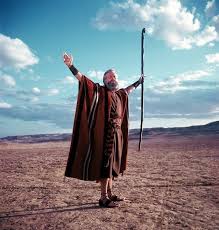
 Exodus chapters 2 through 4 give the diligent student great insight into the divine processes of fulfilling one’s calling. These verses relate to Moses, both before, during and after his trial on the backside of the desert, and they relate to you and I as well. We will see that Moses began his journey in the flesh and, as a result, wound up a dismal failure. Later, however, he undergoes an interesting change: it’s a change that proves to alter the course of his life and ministry. Let’s observe.
Moses and the Flesh
Personally, I believe Moses was well-aware of his spiritual calling long before he ever walked in it. He was awake to God’s purpose for his life long before he ever received divine confirmation on Mt. Horeb. Acts chapter 7 shed some light upon this fact:
“And Moses was learned in all the wisdom of the Egyptians, and was mighty in words and in deeds. And when he was full forty years old, it came into his heart to visit his brethren the children of Israel. And seeing one of them suffer wrong, he defended him, and avenged him that was oppressed, and smote the Egyptian: For he supposed his brethren would have understood how that God by his hand would deliver them: but they understood not” (Acts 7:22-25).
Moses knew of his calling to be a deliverer, albeit in part, and he supposed his Hebrew brethren would bear witness to it. They did not. The calling of God was alive deep within Moses’ heart, but he had to wait patiently for it to manifest in real-time. Sound familiar? Many of us have walked in such shoes. For Moses, this waiting period lasted 40 long years. He must have been quite frustrated as he witnessed the torture of his Hebrew family: He knew he was called to deliver them one day, but God had not yet released him. What is a man to do? Moses’ response to such turmoil proves to almost ruin him! He sought to fulfill his calling in the flesh. He sought to be God’s deliverer by the strength of his own hands, and he failed miserably!
“And it came to pass in those days, when Moses was grown, that he went out unto his brethren, and looked on their burdens: and he spied an Egyptian smiting an Hebrew, one of his brethren. And he looked this way and that way, and when he saw that there was no man, he slew the Egyptian, and hid him in the sand. And when he went out the second day, behold, two men of the Hebrews strove together: and he said to him that did the wrong, Wherefore smitest thou thy fellow? And he said, Who made thee a prince and a judge over us? intendest thou to kill me, as thou killedst the Egyptian? And Moses feared, and said, Surely this thing is known. Now when Pharaoh heard this thing, he sought to slay Moses. But Moses fled from the face of Pharaoh, and dwelt in the land of Midian: and he sat down by a well” (Exod. 2:11-15).
It’s very important to note the instruments of Moses’ failure: His hands. The original Hebrew reveals that Moses slew the Egyptian with his bare hands, not with a rock or a stone as so many interpretations suggest. Moses sought to become God’s deliverer with his own human hands, on his own carnal terms, by his own failing power, and on his own flawed timetable. His fleshy hands almost ruined his calling, and it’s these very hands that God will eventually alter and change. And why? Because “the gifts and calling of God are without repentance” (Rom. 11:29). This experience will prove to teach Moses the dire importance of walking by the Spirit.
“This I say then, Walk in the Spirit, and ye shall not fulfill the lust of the flesh” (Gal. 5:16).
Moses and the Spirit
Thankfully, beginning in Exodus chapter 3, Moses’ story starts to change. His calling to be a deliverer remains intact, but this time (another 40 years later) Moses does it God’s way.
“Now Moses kept the flock of Jethro his father in law, the priest of Midian: and he led the flock to the backside of the desert, and came to the mountain of God, even to Horeb. And the angel of the Lord appeared unto him in a flame of fire out of the midst of a bush: and he looked, and, behold, the bush burned with fire, and the bush was not consumed. And Moses said, I will now turn aside, and see this great sight, why the bush is not burnt. And when the Lord saw that he turned aside to see, God called unto him out of the midst of the bush, and said, Moses, Moses. And he said, Here am I. And he said, Draw not nigh hither: put off thy shoes from off thy feet, for the place whereon thou standest is holy ground. Moreover he said, I am the God of thy father, the God of Abraham, the God of Isaac, and the God of Jacob. And Moses hid his face; for he was afraid to look upon God. And the Lord said, I have surely seen the affliction of my people which are in Egypt, and have heard their cry by reason of their taskmasters; for I know their sorrows; And I am come down to deliver them out of the hand of the Egyptians, and to bring them up out of that land unto a good land and a large, unto a land flowing with milk and honey; unto the place of the Canaanites, and the Hittites, and the Amorites, and the Perizzites, and the Hivites, and the Jebusites. Now therefore, behold, the cry of the children of Israel is come unto me: and I have also seen the oppression wherewith the Egyptians oppress them. Come now therefore, and I will send thee unto Pharaoh, that thou mayest bring forth my people the children of Israel out of Egypt. And Moses said unto God, Who am I, that I should go unto Pharaoh, and that I should bring forth the children of Israel out of Egypt? And he said, Certainly I will be with thee; and this shall be a token unto thee, that I have sent thee: When thou hast brought forth the people out of Egypt, ye shall serve God upon this mountain” (Exod. 3:1-12).
Let us notice the radical difference between Moses’ initial failure and his present spiritual equipping. This time, quite different from before, Moses’ actions were spurred by God’s glory. His hunger for Jesus caused him to turn aside to behold the greatness of His Maker (Exod. 3:1-4). This time, unlike the first, Moses was not so consumed by the cries of his flesh. In fact, he removed his shoes as he stood among God’s holiness (Exod. 3:5). Scholars tell us that these shoes were made of dried flesh! What a lesson for us! This time, Moses acted according to the voice of God, as opposed to his own carnal and zealous affections (Exod. 3:6-10; Rom. 10:2). This time, much unlike before, Moses was given a “token” or “proof” of his calling (Exod. 3:12)! What a difference divine accreditation will make!
Finally, let us notice the change in Moses’ instruments: His hands. Before, Moses’ hands were the very vehicle of his failure: they were but carnal hands of flesh and empty hands of failure. This time, however, the story significantly changes. God asks Moses a very pertinent question:
“And the Lord said unto [Moses], What is that in thine hand?” (Exod. 4:2).
The answer to this question will prove to be a source of rich instruction. We can well-relate to Moses as God transforms him from hack to hero, and from wayward to victorious! We would be wise to take heed to Moses’ transformation as we too seek to make our own calling and election sure (2 Pet. 1:10). 40 years on the backside of the desert proved to humble Moses a great deal. Like Moses, we shouldn’t run from God’s furnace of change and renewal! It will be our hope for true fruitfulness and our catalyst for rich bounty. The languishing desert afforded Moses invaluable encounters with Almighty God, and the glory of such communion fitted his hands to be no longer empty!
“And Moses answered and said, But, behold, they will not believe me, nor hearken unto my voice: for they will say, The Lord hath not appeared unto thee. And the Lord said unto him, What is that in thine hand? And he said, A rod. And he said, Cast it on the ground. And he cast it on the ground, and it became a serpent; and Moses fled from before it. And the Lord said unto Moses, Put forth thine hand, and take it by the tail. And he put forth his hand, and caught it, and it became a rod in his hand: That they may believe that the Lord God of their fathers, the God of Abraham, the God of Isaac, and the God of Jacob, hath appeared unto thee” (Exod. 4:1-5).
The Rod of Authority
Yes, Moses hands are no longer empty! And why? Because he is given a rod (Exod. 4:1-5)! This was to be a sign of Moses’ divine accreditation (Exod. 4:5). Throughout Scripture, the “rod” symbolizes authority, ruler-ship, guidance, stability, strength, and correction (Ps. 2:9; Rev. 2:26-27; 19:15; 11:1-1-2; 12:5; Ezek. 42:15-20; Ps. 23:4; 89:32; 110:2; Mic. 7:14; Prov. 13:24; 22:15; 26:3; 29:15). As such, God would use Moses to be His authoritative mouthpiece, and His guide for the nation of Israel. For Moses, this rod would prove to equip him with divine ability, strength, boldness and capability. The fact that this rod transformed into a serpent and then back into a rod proves Moses’ newfound dominion over the devil. No longer could the enemy successfully condemn Moses nor dissuade him from his divine purpose (Acts 28:3-6; Lk. 10:19). Oh that we too would but wait for God to move! The difference is night and day! Moses’ hands were no longer empty!
“The LORD shall send the rod of thy strength out of Zion: rule thou in the midst of thine enemies” (Ps. 110:2).
Provision for Sin and Weakness
A final observation we will make concerning Moses’ hands is found in Exodus 4:6-7. Here, God tells Moses to put his hand into his bosom and then take it out. As he does, his hand becomes “leprous as snow” (Exod. 4:6). When Moses puts his leprous hand back into his bosom it becomes whole and healed again, as before. This was yet another sign that God was sending and endorsing him (Exod. 4:8).
“And the Lord said furthermore unto him, Put now thine hand into thy bosom. And he put his hand into his bosom: and when he took it out, behold, his hand was leprous as snow. And he said, Put thine hand into thy bosom again. And he put his hand into his bosom again; and plucked it out of his bosom, and, behold, it was turned again as his other flesh” (Exod. 4:6-7).
To properly interpret these miraculous events, we must consider the Scriptural use of leprosy. Similar to the “rod“, leprosy too carries thematic and spiritual significance as we consider it with open hearts (1 Cor. 2:11-16).
Throughout the Bible, leprosy symbolizes sin and transgression. It speaks of carnal uncleanness, defilement and filth (Matt. 8:3; 2 Chron. 26:19; Mk. 1:42; Lk. 5:12-13; Lev. 13:44; Num. 12:10; 2 Kgs. 5:27). The fact that Moses was now given divine power over the curses of leprosy are quite significant. Now, because he waited on God to fulfill his calling, Moses can no longer fret over the many weaknesses of his fallen flesh. He may still be defiled in his own eyes, and he may still wrestle with sin and uncleanness, but it no longer has to dictate the path that he walks. His calling and election can be made sure despite his countless human flops and failures! His leprous hand becomes whole as he obeys divine instruction. His calling too will become whole as he relies on God as the ultimate source of deliverance. God interposes His grace and cleansing power over the threat of filthy sin! What a wonder! Like Moses, we no longer need to rely on the ability and cleanliness of our own hands. We simply must trust and obey our great Guide. He will lead us to life everlasting and grow for us an abundance of fruit.
Oh what a difference the harsh desert will make! The hand of flesh caused Moses to fail, but the staff of his God made him prosper! Dear reader, what’s in your hand today? God has called you and set you apart; He is equipping you even now. But we mustn’t be hasty or zealous in a carnal sense. Just like with the Hebrew slaves, God is simply waiting for the earth to cry out to Him (Exod. 3:7-8). When they do, He’ll find a people in the furnace of preparation, hungry, ready and waiting in the glory. He will then fully equip us for our tasks, and gird us up completely. For Moses, 100 fold fruit was the proven result (Exod. 4:31), and it will be no different for us. God is trying to put something in our hands today, and whatever God does is forever. He doesn’t need our human hands, and neither do we (Col. 2:11-12; Mk. 14:58; Acts 17:24; 2 Cor. 5:1; Eph. 2:11)!
“It is God that girdeth me with strength, and maketh my way perfect. He maketh my feet like hinds’ feet, and setteth me upon my high places. He teacheth my hands to war, so that a bow of steel is broken by mine arms. Thou hast also given me the shield of thy salvation: and thy right hand hath holden me up, and thy gentleness hath made me great” (Ps. 18:32-35).
 The Hungry Soul