 Part 1 of 2
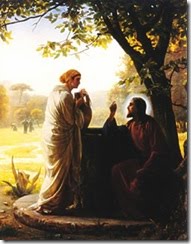
“Jesus therefore being wearied with his journey, sat thus on the well” (Jn. 4:6).
Dear friends, this short and simple verse of Scripture illustrates a supremely important principle of interpretation, the application of which will surely become a great aid toward a deeper and more profound understanding of a Biblical passage. In short, this verse is an example of the sort of truth that may be gleaned as we consider the location and scene in which a particular event has occurred, rather than limiting our view to words and characters only. Yes, the various locales of Scriptural events are often equally as important as the events themselves. Students of Scripture are well-acquainted with the idea that even the seemingly unimportant details of God’s Word will often prove to hold significant and eternal value. Biblical locations are no different. The specific details of a Biblical scene will often supply key information into the depth of meaning God has intended for us. We see this truth play out several times from cover to cover. We will observe but a few.
First, let’s consider Egypt. Because Egypt was the ancient place from which our Lord miraculously delivered the children of Israel, it thereby comes to symbolize our present-tense spiritual deliverance too. It typifies the awful place from which God’s mercy set us free upon our conversion. Before such deliverance, much like the Hebrew slaves, we were held in the harsh bondage of sin, groaning under the merciless taskmasters that pained us.
Secondly, consider the Bible’s use of its many deserts and wildernesses. In one instance, the Gospels portray the wilderness to be tied to John the Baptist’s message of repentance. This was the locale from which he proclaimed the coming Lamb of God, and the dire need of Israel’s attention to Him. The desert, therefore, comes to symbolize the spiritual barrenness and desolation of the Jewish people at that time, as well as any present-tense spiritual dryness and drought. Therefore, it should be quite clear that the scene in which a Biblical event transpired is often equally as important as the event itself.
So what does this have to do with John 4? What greater depth does it teach us about the verse of Scripture presently before us? Quite clearly, we see the very same degree of interpretive blessing! Let’s observe.
“He left Judaea, and departed again into Galilee. And he must needs go through Samaria. Then cometh (Jesus) to a city of Samaria, which is called Sychar, near to the parcel of ground that Jacob gave to his son Joseph. Now Jacob’s well was there. Jesus therefore being wearied with his journey, sat thus on the well” (Jn. 4:3-6).
This famous meeting at Jacob’s well between our Savior and the Samaritan adulteress occurred at a very particular and important place. Jesus was in “Sychar“. The word Sychar means “purchased“, and so well-purchased was the “gift of God” that Jesus offered the Samaritan woman. As He revealed her soul’s deep need for living water, He did so as He Himself “sat thus on the well” (Jn. 4:6). As we will see, this “well” would become a figure of Himself, and its water would become an emblem of the salvation that will be found in Him alone. Truly, the certain locale of this Gospel event proves, yet again, to catalyze our understanding of the Lord’s deeper message. He has “purchased” a living well for you and I to feast upon when weary!
Not surprisingly, the prophet Isaiah accredits the personification Jesus uses. He says,
“Behold, God is my salvation; I will trust, and not be afraid: for the Lord Jehovah is my strength and my song; He also is become my salvation. Therefore with joy shall ye draw water out of the wells of salvation” (Isa. 12:2-3).
What a remarkable statement! And how vital to our furthered understanding! As we couple John 4 with Isaiah 12, we witness an important interpretive key to the typical significance of many Old Testament passages. The “well” that’s discussed throughout the Old Testament serves as a foreshadowing of Christ Jesus, and as a directive toward what will be found in Him, namely, the most refreshing waters of life! As we continue to observe this theme a bit further, we will discover how remarkably the Bible foreshadows Jesus as the One who exchanges our bitter waters for sweet! This was true for the Samaritan woman and it remains true for the earth still today. Let’s begin.
(1.) The very first time a “well” is mentioned in Scripture is in the book of Genesis:
“But Abram said unto Sarai, Behold, thy maid is in thy hand; do to her as it pleaseth thee. And when Sarai dealt hardly with her, she fled from her face. And the angel of the Lord found her by a fountain of water in the wilderness… And she called the name of the Lord which spake unto her, Thou God seest me… for she said, Have I also here looked after Him that seeth me? Wherefore the well was called, The well of him that liveth and seeth me” (Gen. 16:6, 7, 13, 14).
Here in Genesis, we see that the “well” and “fountain of water” was the place where the angel of the Lord found Hagar, a poor outcast. It was the place to which Hagar ran to escape her worldly woes and distresses. The present truth could not be more clear! Like Hagar, the well will be our crossroad too. Jesus is God’s well personified, and He must be seen as the only true place where God may meet with lost humanity, for “No man cometh unto the Father” but by Him (Jn. 14:6).
Not surprisingly, the well which Hagar fled to was located in the wilderness – a perfect symbol of this barren world, as we’ve just aforementioned. The “wilderness well” depicts the awful state of heart we were in when we first met our Lord for a drink! As such, this well becomes the place where God is revealed. As a result, Hagar termed it “the well of Him that liveth and seeth me“. We too will experience this reality, for Christ Jesus is the only true revelation of God, His Father (Jn. 14:9). All we must do it meet Him at His well!
(2.) Secondly, let us observe Genesis 21. Here, in verses 14 through 19, we read of yet another instance in which our Lord’s merciful “well” becomes most-manifest and apparent. Here, we learn further details regarding His well’s provision.
“And Abraham rose up early in the morning, and took bread, and a bottle of water, and gave it unto Hagar, putting it on her shoulder, and the child, and sent her away: and she departed, and wandered in the wilderness of Beersheba. And the water was spent in the bottle, and she cast the child under one of the shrugs. And she went, and sat her down over against him a good way off, as it were a bow shot: for she said, Let me not see the death of the child. And she sat over against him, and lift up her voice, and wept. And God heard the voice of the lad; and the angel of God called to Hagar out of heaven, and said unto her, What aileth thee, Hagar? fear not; for God hath heard the voice of the lad where he is . . . and God opened her eyes, and she saw a well of water.”
Oh reader, how very dense is this passage in its typical suggestion! We have before us again an outcast, Hagar. She is seen as the one whose water had been lost, wasted and spent. She had but a small amount, a mere bottle, and it proved insufficient for the harshness of her long journey. Similar to the parable of the prodigal son, Hagar too “began to be in want” (Lk. 15:14). Hagar was in so much distress, in fact, that she chose to cast away her child to die! Wearied and broken, she gave up, sat down, and wept at her great misery. What a clear picture of the poor, desolate and despairing man lost in his own awful ways! Thankfully, the story does not end there. God suddenly “opened her eyes,” but what for? It was in order that she might see the “well” that had been there the whole time! Was this not the case with us too? Surely. Our betterment was and is never the result of our own mental elevation. Like Hagar, the fallen flesh will never discover that glorious One of whom the “well” here speaks. Rather, it was God who opened Hagar’s eyes to see Him, and it is God who will equip our needs just the same. He is the one and only answer to all human desperation, and He is the single-most source of life that will prove to propel us along our long journey (Phil. 4:13). He is the only healthy provision, and by Him alone will we be able to find it, for “The hearing ear, and the seeing eye, the Lord hath made even both of them” (Prov. 20:12). A thorough attachment to Jesus is the world’s only hope!
“We know that the Son of God is come, and hath given us an understanding, that (in order that) we may know Him that is true” (1 Jn. 5:20).
(3.) Thirdly, in the very same chapter of Genesis (chapter 21), the “well” is seen in somewhat of a different light, that is, a covenantal light:
“And Abraham took sheep and oxen, and gave them unto Abimelech; and both of them made a covenant. And Abraham set seven ewe lambs of the flock by themselves. And Abimelech said unto Abraham, What mean these seven ewe lambs which thou hast set by themselves? And he said, For these seven ewe lambs shalt thou take of my hand, that they may be a witness unto me, that I have digged this well. Wherefore he called that place the well of the oath; because there they sware both of them” (Gen. 21:27-31).
Here, we learn that the “well” is related to covenant and promise. This particular covenant, like all covenants, was ratified by an oath, and the well was therefore named “the well of the oath” (vs. 31). The symbolism for modern saints is quite rich. Jesus not only leads us toward the great well that resides within Himself, He also secures its provision and guarantees its efficacy! The blessings God bestows upon His children are super-abundant and dispersed beyond measure! He opens our eyes that we may discover His river, and He promises that it will never dry up or be lost. The covenant that He cut upon Calvary is our surety! Jesus simply will not repent of the water that gushes from His willing wounds! Paul brings this out in his letter to the Hebrew saints:
“And inasmuch as not without an oath he was made priest: (For those priests were made without an oath; but this with an oath by him that said unto him, The Lord sware and will not repent, Thou art a priest forever after the order of Melchisedec:) By so much was Jesus made a surety of a better testament [covenant]” (Heb. 7:20-22).
(4.) Next, we see the “well” to be a place of prayer. In Genesis 24:10-12 we read,
“And the servant took ten camels of the camels of his master, and departed; for all the goods of his master were in his hand: and he arose, and went to Mesopotamia, unto the city of Nahor. And he made his camels to kneel down without the city by a well of water at the time of the evening, even the time that women go out to draw water. And he said, O Lord God of my master Abraham, I pray thee, send me good speed this day.”
Because Jesus is our source of rich life, He also becomes the answer to life’s needs. The glorious well within Him is our place of communion and our help for every need. When we commune with God all our enemies will be scattered and our earthly needs will fade (Ps. 68:1; 23:1-6). Paul tells us to pray always and without ceasing, not with demands for God to be our errand-boy, but with a heart enveloped in the waters of the Holy Spirit (1 Thess. 5:17). It’s from this realm of glory, the well, that our prayers will be most appropriate and fruitful. Do we realize that the Bible actually links our communion with the Holy Spirit to God’s blessing us with “all things“? It’s true!
“And be not drunk with wine, wherein is excess; but be filled with the Spirit; Speaking to yourselves in psalms and hymns and spiritual songs, singing and making melody in your heart to the Lord; Giving thanks always for all things unto God and the Father in the name of our Lord Jesus Christ” (Eph. 5:18-20).
“Then Jacob went on his journey, and came into the land of the people of the east. And he looked, and beheld a well in the field, and, lo, there were three flocks of sheep lying by it; for out of that well they watered the flocks.”
“Jesus answered and said unto her, If thou knewest the gift of God, and who it is that saith to thee, Give me to drink; thou wouldest have asked of him, and he would have given thee living water. The woman saith unto him, Sir, thou hast nothing to draw with, and the well is deep: from whence then hast thou that living water? Art thou greater than our father Jacob, which gave us the well, and drank thereof himself, and his children, and his cattle? Jesus answered and said unto her, Whosoever drinketh of this water shall thirst again: But whosoever drinketh of the water that I shall give him shall never thirst; but the water that I shall give him shall be in him a well of water springing up into everlasting life” (Jn. 4:10-14).
“Then Jacob went on his journey, and came into the land of the people of the east. And he looked, and beheld a well in the field, and, lo, there were three flocks of sheep lying by it; for out of that well they watered the flocks” (Gen. 29:1-3).
“The Lord is my shepherd; I shall not want. He maketh me to lie down in green pastures: he leadeth me beside the still waters. He restoreth my soul: he leadeth me in the paths of righteousness for his name’s sake. Yea, though I walk through the valley of the shadow of death, I will fear no evil: for thou art with me; thy rod and thy staff they comfort me. Thou preparest a table before me in the presence of mine enemies: thou anointest my head with oil; my cup runneth over. Surely goodness and mercy shall follow me all the days of my life: and I will dwell in the house of the Lord for ever” (Ps. 23:1-6).
“I am the door: by me if any man enter in, he shall be saved, and shall go in and out, and find pasture. The thief cometh not, but for to steal, and to kill, and to destroy: I am come that they might have life, and that they might have it more abundantly” (Jn. 10:9-10).
“Now when Pharaoh heard this thing, he sought to slay Moses. But Moses fled from the face of Pharaoh, and dwelt in the land of Midian; and he sat down by a well. Now the priest of Midian had seven daughters: and they came and drew water, and filled the troughs to water their father’s flock. And the shepherds came and drove them away: but Moses stood up and helped them, and watered their flock” (Exod. 2:15-17).
(8.) Next, we learn that the “well” is made the object of song! The personified “well” evokes praise!
“And from thence they went to Beer: that is the well whereof the Lord spake unto Moses, Gather the people together, and I will give them water. Then Israel sang this song, Spring up, O well; sing ye unto it” (Num. 21:16, 17).
What a word is this! No interpretation is needed here.. Reader, are you singing unto the living well today?
(9.) Further, the Bible shows the “well” to very particular and distinct. The living well within King Jesus cannot be duplicated, copied, replicated or counterfeited. No other pseudo route to true water has ever existed, and nor ever will. David shows us this illustration in 2nd Samuel:
“And David longed, and said, O that one would give me drink of the water of the well of Bethlehem, which is by the gate!” (2 Sam. 23:15).
For David, nothing but water from the well of Bethlehem would ever truly satisfy. And why? Because the sort of well God’s saints are drinking from is particular and certain. It is a famous fount and cannot be falsified. All other streams must be fed by our Lord’s own before any thirst will be quenched or any crop will be grown. The countless pseudo-streams of man-made religion and worldly philosophy are but stagnant pools of waste. They feed from the human intellect, from carnal ambition, and they spring from evil heritage. The fallen nature of these far-lesser wells assures us that they can hold no water: They are but broken cisterns.
“For my people have committed two evils; they have forsaken me the fountain of living waters, and hewed them out cisterns, broken cisterns, that can hold no water” (Jer. 2:13).
“Jesus saith unto him, I am the way, the truth, and the life: no man cometh unto the Father, but by me” (Jn. 14:6).
(10.) Lastly, but certainly not least, the Bible informs us that this great “well” is to become our own! What a man partakes of day by day will be the very thing he transforms into (Prov. 23:7). Those continually feasting on alcohol become alcoholics, those abiding with drugs become addicts, and those given over to perversion become adulterers. Thankfully, this tendency is true for spiritual habits too (Rom. 8:29; 2 Cor. 3:18). A man who attaches his heart to the living well within King Jesus will be a man who grows that well within his very own heart too! He will become the very life-source Jesus has dispersed upon him years before.Jesus’ well will be called “thine own“!
“Drink waters out of thine own cistern, and running waters out of thine own well” (Prov. 5:15).
What a blessed climax to our study! The living “well” flowing from Jesus is not an object of greed for Him. Of course He reserves all the glory unto Himself, but His image is to be patterned and grown deep within us. All we must do is partake! We can even “encamp” by His waters, and make it home of homes (Exod. 15:27)! The more we encamp by His waters the more His waters will flow from us. The world is waiting to feast on the sweet fruit Jesus is growing in you and I (Rom. 8:18-22)! We will see this truth in greater detail very soon.
Oh the wonder of Scripture’s counsel! I’m so grateful! Jesus makes wise use of every single jot and tittle! Dear reader, I pray we never take it for granted. The plethora of divine cohesiveness seen today could never be merely imaginative. The Bible contains no accidents or coincidences, for even the minute details will feed the hungry. I pray that we will learn to sit upon God’s “well“, like Jesus, and receive strength for our journey and rest for our weariness. Jesus is the pattern Son, and we would be wise to model our lives after His words and actions. The well of salvation awaits us!
 The Hungry Soul
One thought on ““The Well of Salvation””