 Part 13
Paul not only revealed Jesus’ supremacy to be on account of His few priestly duties, but he also declared such preeminence to be on account of His newly-borne rank of priesthood. Jesus, as high priest, did not perform a few great tasks and then stop, but rather, He’s enacted an all-new priestly order, one far better than the Levitical or the Aaronic. It’s a priesthood of spiritual priests, not mere natural. We know the Father has called Jesus to such a high priestly office (Jn. 8:54), but do we realize He’s also the chief of a new, corporate order?
“And being made perfect, he became the author of eternal salvation unto all them that obey him; Called of God an high priest after the order [rank] of Melchisedec” (Heb. 5:9-10).
“…Which hope we have as an anchor of the soul, both sure and stedfast, and which entereth into that within the veil; Whither the forerunner is for us entered, even Jesus, made an high priest for ever after the order of Melchisedec” (Heb. 6:19-20).
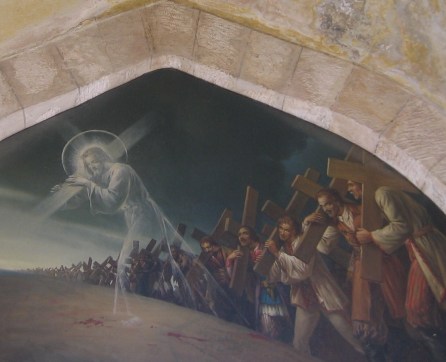
The fact that our Lord is called a “forerunner” is evidence of His new priesthood’s corporate nature. Jesus is the forerunner because He’s made provision for us to likewise follow Him. A “forerunner”, by definition, is he who first spies out the land, and he who enters first to prepare for others to soon-follow. Like Jesus, we’re also called to be New Covenant priests: those who serve His New Covenant priesthood:
“Ye also, as lively stones, are built up a spiritual house, an holy priesthood, to offer up spiritual sacrifices, acceptable to God by Jesus Christ” (1 Pet. 2:5).
“But ye are a chosen generation, a royal priesthood, an holy nation, a peculiar people; that ye should shew forth the praises of him who hath called you out of darkness into his marvelous light: Which in time past were not a people, but are now the people of God: which had not obtained mercy, but now have obtained mercy” (1 Pet. 2:9-10).
“But ye shall be named the Priests of the Lord: men shall call you the Ministers of our God: ye shall eat the riches of the Gentiles, and in their glory shall ye boast yourselves” (Isa. 61:6).
“And [God] hath made us kings and priests unto God and his Father; to him be glory and dominion for ever and ever. Amen” (Rev. 1:6).
Reader, not only does this spiritual priesthood readily exist, it is also seen as vastly superior! Paul declares such superiority on several accounts. We’re made better New Covenant priests because of our Lord’s better New Covenant terms. Let’s observe.
Firstly, we serve a priesthood of higher order. Melchizedek’s rank is much higher than the Levitical or Aaronic. Paul shows this to be true by his explanation of our new priesthood’s title, “the order of Melchizedek”, and the era in which it appears.
In Genesis 14, we find Melchizedek’s story and significance. He’s called the “king of Salem”. Melchizedek ministered bread and wine unto Abraham, and Abraham, in turn, paid him tithes of all his possessions (Heb. 7:1-2; Gen. 14:18-20). The ministration of communion and reception of tithes are considered priestly duties, and therefore Melchizedek is said to be both “king of Salem” as well as priest, existing long before Aaron’s priesthood ever came into existence. It’s because of this priestly time-lapse that Scripture teaches the ultimate identity of Melchizedek to be Christocentric. In other words, his appearance in Genesis 14 was but a Christophany, that is, a veiled Old Testament appearance of Christ in human form. The Lord Jesus is the only eternal King-Priest, and thus it was Jesus who met with Abraham in the Genesis account, as Melchizedek. His priesthood exists on an eternal plane, and therefore must be of highest order and honor (Ps. 110:4). The Levitical priesthood proved but earthly and temporary, while that of Melchizedek is called “forever” (Heb. 5:6).
Secondly, Paul shows it to be a priesthood of better power. The Melchizedek priesthood is not a priesthood of mere human terms, like that of the Levites, but a priesthood of priests “made like unto the Son of God” (Heb. 7:3). Unlike the Aaronic, it isn’t made “after the law of a carnal commandment”, but after great power, that is, “after the power of an endless life” (Heb. 7:16).
Thirdly, it’s a priesthood of better honor. It receives such high honor because of its most-honorable high priest, God Himself. Melchizedek (Jesus) is called “great” because he received tithes of Abraham, whom the Jews greatly revered (Heb. 7:4). When Abraham paid tithes to Melchizedek, he did so while holding the entire Aaronic priesthood in his loins, still yet to come. This was a signal of the Aaronic priesthood’s submission to Melchizedek’s far-greater authority. When Melchizedek later blessed Abraham, he “blessed” the Aaronic priesthood within him as well. And if “the less is blessed of the better”, we know Melchizedek (Jesus) must be of far greater honor (Heb. 7:7; 11:20-21).
Next, it is a priesthood that’s better-ordained by an oath (Heb. 7:20-22, 28). While we do have record of all the ceremony that went along with the Aaronic priesthood, we have no evidence of any divine oath to seal it (Exod. 28-30). It was not affirmed as Melchizedek was because it wasn’t meant to be eternal. It was only the coming Melchizedek priesthood that God would swear over and never repent of!
“And inasmuch as not without an oath he was made priest: (For those priests were made without an oath; but this with an oath by him that said unto him, The Lord sware and will not repent, Thou art a priest for ever after the order of Melchisedec” (Heb. 7:20-21).
Next, it is a priesthood with divine duty and charge. This priesthood will minister to the needs of creation. How do we know? Because Melchizedek ministered bread and wine unto Abraham, whose name means, the “father of nations” (Gen. 14:18). Paul reveals this to be but a divine foreshadowing of our Lord’s better priesthood which ministers the very life-blood of God unto creation, found only in feasting upon the body and blood of Jesus:
“I am the living bread which came down from heaven: if any man eat of this bread, he shall live for ever: and the bread that I will give is my flesh, which I will give for the life of the world. The Jews therefore strove among themselves, saying, How can this man give us his flesh to eat? Then Jesus said unto them, Verily, verily, I say unto you, Except ye eat the flesh of the Son of man, and drink his blood, ye have no life in you. Whoso eateth my flesh, and drinketh my blood, hath eternal life; and I will raise him up at the last day. For my flesh is meat indeed, and my blood is drink indeed. He that eateth my flesh, and drinketh my blood, dwelleth in me, and I in him. As the living Father hath sent me, and I live by the Father: so he that eateth me, even he shall live by me. This is that bread which came down from heaven: not as your fathers did eat manna, and are dead: he that eateth of this bread shall live forever” (Jn. 6:51-58).
And lastly, it is a priesthood of better fruit, even the fruit of perfection (Heb. 7:11). According to Paul, the mere fact that another priesthood has arisen is evidence enough of the former priesthood’s insufficiency! The weak and former priesthood, and the little fruit born thereof, has been duly “changed” into something far greater, and thereby perfected (Heb. 7:12). An all new “tribe” is coming forth, and the rite of priesthood is no longer according to mere human heritage and pedigree (Heb. 7:14). These priests will, instead, be priests “made after power”, and they will disannul all former weakness and “unprofitableness” (Heb. 7:16, 18). They are a priesthood of “peace” and of “righteousness” (Heb. 7:2). They are a priesthood unchangeable (Heb. 7:24). They will minister not from an altar of bloody judgment, but from an altar of great glory! Such fruit could never be borne from a priesthood that was imperfect and passing away. The Aaronic priesthood was but for the harvest of a single race of people, the Jews. The rich glories realized among our Lord’s superior priesthood will answer the totality of creation’s ailments, because it is a priesthood made in God’s image, not Aaron’s (Rom. 8:18-23; Jn. 1:12; Gal. 4:19; Jn. 6:51-58).
To be continued…
 The Hungry Soul