 Part 1 of 2
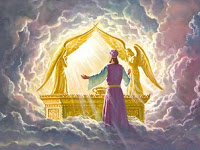
What can be meant by the Bible’s use of the word “Zion”? Naturally and geographically speaking, Zion most-commonly refers to a specific mountain near Jerusalem, on which stood a Jebusite fortress by the same name, which was conquered by King David. The term “Zion” later became a metonym for Solomon’s Temple, and even for the city of Jerusalem itself. It was often the locale of God’s holy Ark, a symbol of His throne (1 Kgs. 8:1; 2 Chron. 5:2). This was Zion’s natural significance, as referenced under various old covenants, for natural Jews. But what about today? What has Zion come to represent for the New Covenant people of God, that is, for spiritual Jews and for the “Jerusalem which is above” (Gal. 4:26). Let’s find out!
Most modern saints, upon seeing the word “Zion”, will automatically revert to the natural and earthly hill near Jerusalem. Yet, as students of the Word of God, we are directed toward Zion’s far-deeper truth, that is, truth upon a spiritual plane. The Bible assures us of such heavenly significance:
“For ye are not come unto the mount that might be touched, and that burned with fire, nor unto blackness, and darkness, and tempest, And the sound of a trumpet, and the voice of words; which voice they that heard entreated that the word should not be spoken to them any more: (For they could not endure that which was commanded, And if so much as a beast touch the mountain, it shall be stoned, or thrust through with a dart: And so terrible was the sight, that Moses said, I exceedingly fear and quake:) But ye are come unto mount Zion, and unto the city of the living God, the heavenly Jerusalem, and to an innumerable company of angels, To the general assembly and church of the firstborn, which are written in heaven, and to God the Judge of all, and to the spirits of just men made perfect, And to Jesus the mediator of the new covenant, and to the blood of sprinkling, that speaketh better things than that of Abel” (Heb. 12:18-24).
Despite this clear and substantial distinction, many Christians continue to force mere natural and geographical qualities upon Zion’s New Covenant meaning and application. They insist that the natural mount, though earthly, must be declared as the eternal dwelling place of God, and therefore chiefly directed toward earthly Jews and an earthly Jerusalem. The Bible does say, in fact, that Mount Zion is the hill which God “will dwell in… for ever” (Ps. 68:16). However, as we work to compare Scripture with Scripture, “rightly dividing the Word of truth” (2 Tim. 2:15), we recognize the certain avenue by which Mount Zion can be deemed truly eternal: It is by elevation, not by abolition. This is true for many Old Testament truths.
Earthly and geographical Zion has been elevated to a higher and spiritual plane under the New Covenant. It hasn’t been abolished, as so many assume. Rather, it has simply been lifted up out of the strict boundaries of the earthly and temporal, now to be identified according to its heavenly, spiritual, and eternal significance. Though we should of course give honor wherever honor is due, it should never direct us toward a “cherry-picking” of the Scriptures. While we appreciate the varied significance of earthly Mount Zion, we must acknowledge Scripture’s clear direction toward the superior truth in the heavens. Paul declared such a stubborn adherence to the earthly to be “bondage” (Gal. 4:25). What was once a literal and natural location has become a superior locale in the Spirit: Earthly mounts have now hermeneutically morphed into spiritual and heavenly mounts. In fact, the earthly is said to be but the pattern and “shadow” of superior heavenly things (Heb. 8:5). This method of spiritual elevation is the only means by which Zion can ever be deemed eternal and forever, for earthly hills and mounts will one-day pass away (1 Jn. 2:17; 1 Pet. 4:7; 2 Pet. 3:13; Rev. 21:1). We no longer approach a mere literal mountain of literal fire and literal touch (Heb. 12:18). Our God is so much bigger than that! The Lord Jesus cut a new covenant upon His bloody cross; He now makes “all things new” (Rev. 21:5). The lesser, literal, and earthly has been absorbed by the better, spiritual, and heavenly: The shadow has been consumed by the better substance that it pointed to (Rom. 15:4; 1 Cor. 10:11). Paul instructs us toward such truth by comparing spiritual Zion to earthly Sinai. He tells how Mount Sinai has given way to Mount Zion, that is, the earthly has given way for the heavenly, and the temporal has given way for the eternal. Literal fire becomes spiritual flame, mere natural smoke becomes thick glory, legal bondage becomes adoption, fear of death gives way to liberty, and external Law moves aside for a better and inward engraving upon the heart (Deut. 5:22-26; Rom. 6:14; 8:15; Ps. 119:120)! Mount Sinai was the place of restricted communion, and now Mount Zion points us toward bountiful communion by the Spirit (Exod. 19:12-19; 20:18; 24:17; Ps. 103:7). We now feast upon a New Covenant mountain found in a New Covenant Jerusalem (Heb. 12:22; Rev. 14:1).
So what does New Covenant Zion represent? It has come to represent a few things, being referenced more than 150 times throughout the Bible. It represents the dwelling place of God (Ps. 135:21), the object of God’s attention (Ps. 87:2), the object of God’s blessing and favor (Ps. 133:3), as well as the object of God’s judgment (Jer. 26:18). Throughout Scripture, Zion is seen as the focus of God’s presence and promises (Ps. 48:1-14), and as a symbol of spiritual Israel, that is, the church of the New Testament (Heb. 12:22-23; 11:16; Rom. 9:33; 1 Pet. 2:6; Isa. 8:14; 28:16; Rev. 14:1). Today, for the sake of brevity, we will observe only two principle points about spiritual Zion’s identity and locale: (1) Zion represents the realm of God’s out-poured glory, and (2) Zion represents a people of God’s glory.
ZION REFERS TO THE REALM OF GOD’S TANGIBLE GLORY
The Bible defines spiritual Zion as the place where the Lord dwells: “Sing praises unto the Lord which dwelleth in Zion…” (Ps 9:11). This is where God abides and “appears” in His glory (Ps. 102:16; 74:2; 76:1-2; Joel 3:16, 21; Isa. 8:18). Experimentally, we march up Mount Zion as we worship King Jesus in spirit and in truth (Jn. 4:24). Every time the manifest presence of God breaks forth, you are in spiritual Zion: the place of God’s enthronement and the realm of His glory! Sadly, most of Christendom doesn’t even realize this realm exists! For most, Zion remains but a natural hill in the Middle East. Why should we cling to the shadow when the true substance is beckoning us onward? Friends, Zion is a spiritual place! It is the realm of God’s weighty presence, and, as such, has become a source of much strength for God’s people:
“Send thee help from the sanctuary, and strengthen thee out of Zion…” (Ps. 20:2-3 with Ps. 84:4-7).
Zion’s glory is the place of joy (Ps. 48:2, 11; 97:8; 149:2; Isa. 61:3), the place of singing, shouting, fellowship and comfort (Isa. 12:5-6; 51:11; 35:10; Zech. 1:17; 2:10; Joel 2:1, 15, 23). Zion is the place where Jesus reigns supreme (Ps. 99:1-2), the place where He is truly worshiped (Ps. 65:1; 147:12), and the place from whence His great goodness shines forth:
“Out of Zion, the perfection of beauty, God hath shined” (Ps. 50:2; Lam. 2:15)!
Zion is where the glory cloud abides (Isa. 4:5-6). It’s called the place God loves (Ps. 78:67-68)! In fact, Zion is the place (and the people) which God loves more than any other:
“The LORD loveth the gates of Zion more than all the dwellings of Jacob” (Ps. 87:1-3).
In Zion, the realm of God’s glory, true sons are born and established (Jn. 1:12). And why? Because Zion bears much fruit (Ps. 87:5)… “As soon as Zion travailed, she brought forth her children” (Isa. 66:8).
From this place of glory, the sons of God will shine and come forth (Obad. 21; Neh. 9:27). These sons will be manifested in the very image of King Jesus, to a dead and dying world (Rom. 8:18-20; 2 Cor. 3:18). They will be the human vessel by which the glory of God moves in the earth:
“And it shall come to pass, that whosoever shall call on the name of the LORD shall be delivered: for in mount Zion and in Jerusalem shall be deliverance, as the LORD hath said, and in the remnant whom the LORD shall call” (Joel 2:32; Acts 2:21).
It should be quite evident that the fullness of Zion’s significance simply cannot be restricted to the geographical mount. Who can fail to recognize the deeper spiritual identity? Zion is God’s realm of glory!
ZION REFERS TO A PEOPLE OF GOD’S GLORY
Finally, Scripture tells us that Zion is a people. We know God dwells in Zion (Joel 3:21; Isa. 8:18; Zech. 2:10-11; Ps. 9:11; Num. 35:34; Ps. 74:1-2; Isa. 33:5), and we know God dwells within the believer too (Ps. 22:3; Eph. 2:22; 1 Cor. 3:16; 1 Jn. 4:16). Our conclusion, therefore, is that Zion refers to a people and a place: They are called holy people, the redeemed of the Lord, the city not forsaken (Isa. 62:11-12). Glorious things are spoken of them who choose to dwell in Zion’s midst (Ps. 87:3; Zech. 8:8)! Those who live there have become Zion itself: they are God’s abiding glory in the earth (Col. 1:27; Acts 3:6; Rom. 12:1-2)! And why? Because they’ve chosen to partake of Zion’s resident glory.. God is now enthroned upon them, exalted within them, and shining brightly among them:
“…And say unto Zion, thou art My people” (Isa. 51:16).
“But thou art holy, O thou that inhabitest the praises of Israel” (Ps. 22:3).
What was once but a natural hill has now morphed into the fleshy hills of human hearts! You and I are now people of Zion: We’re the place where God is enthroned, and the place where God’s holy Ark dwells (1 Sam. 4:4; Isa. 60:14)! Such honor will be the testimony of all those who overcome (Rev. 3:12) because they will have made Zion their chiefest home and identity. God will be fully-sanctified and exalted among them!
“But sanctify the Lord God in your hearts…” (1 Pet. 3:15).
To be continued…
 The Hungry Soul